
Why so many people will be pregnant in February next year

A baby boom has been predicted for February 2027 - and the reason why might surprise you.
If you’re finding yourself feeling particularly, ahem, ‘in the mood’ today, statistics show you’re far from being alone.
MailOnline has reported that official birth statistics show that more babies are born nine months after the UK’s May bank holiday than at any other time.
The most recent Office for National Statistics figures show that a higher than average number of babies were welcomed to the world on 23 February 2024, which was 270 days, AKA nine months, after the Spring bank holiday the year before, which fell on 29 May.
Advert
To be specific, 1,880 little ones were born, which is quite a lot more than the annual daily average of 1,625.

So, if that’s anything to go by, we can expect that a lot of people might be spending today (25 May) in the bedroom, rather than enjoying the sunny weather, in turn, meaning that thousands of February babies are likely being conceived right now and will pop out in nine months time.
Relationship expert and broadcaster Lucy Beresford told the Daily Star: “People will be having more sexual activity now and in the coming days.
“With temperatures suddenly up into the early 30Cs, people are wearing fewer clothes, feeling spontaneous and playful, and enjoying feel-good hormones released by the impact of the sun on the skin.”
She added: “And it's a Bank Holiday, so people are off work and able to plan evening activities together, which is very arousing.”
It comes as today (25 May), the UK has recorded its all-time hottest May temperature as a part of London hit 33.5 degrees.
The high was at Heathrow, in the capital’s west, the Met Office confirmed shortly after 1pm on the bank holiday.

Meanwhile, Kew Gardens, south-west London, reached 32.3C on Sunday and the UK then recorded its warmest night in 81 years.
Temperature records are usually broken by tenths of a degree, not several degrees, with Met Office meteorologists warning that climate change is boosting the heat.
Expert Greg Dewhurst said, “We see these changes happening so much more dramatically. In the past, heatwaves built and built and built and built over days and days and days – these now just develop so quickly.”
He added: “It’s huge sort of swinging temperatures, and obviously records being broken by day and by night, so it just shows sort of how extreme the weather can change, and how quickly it can change as well.”
How to cool down in a heatwave
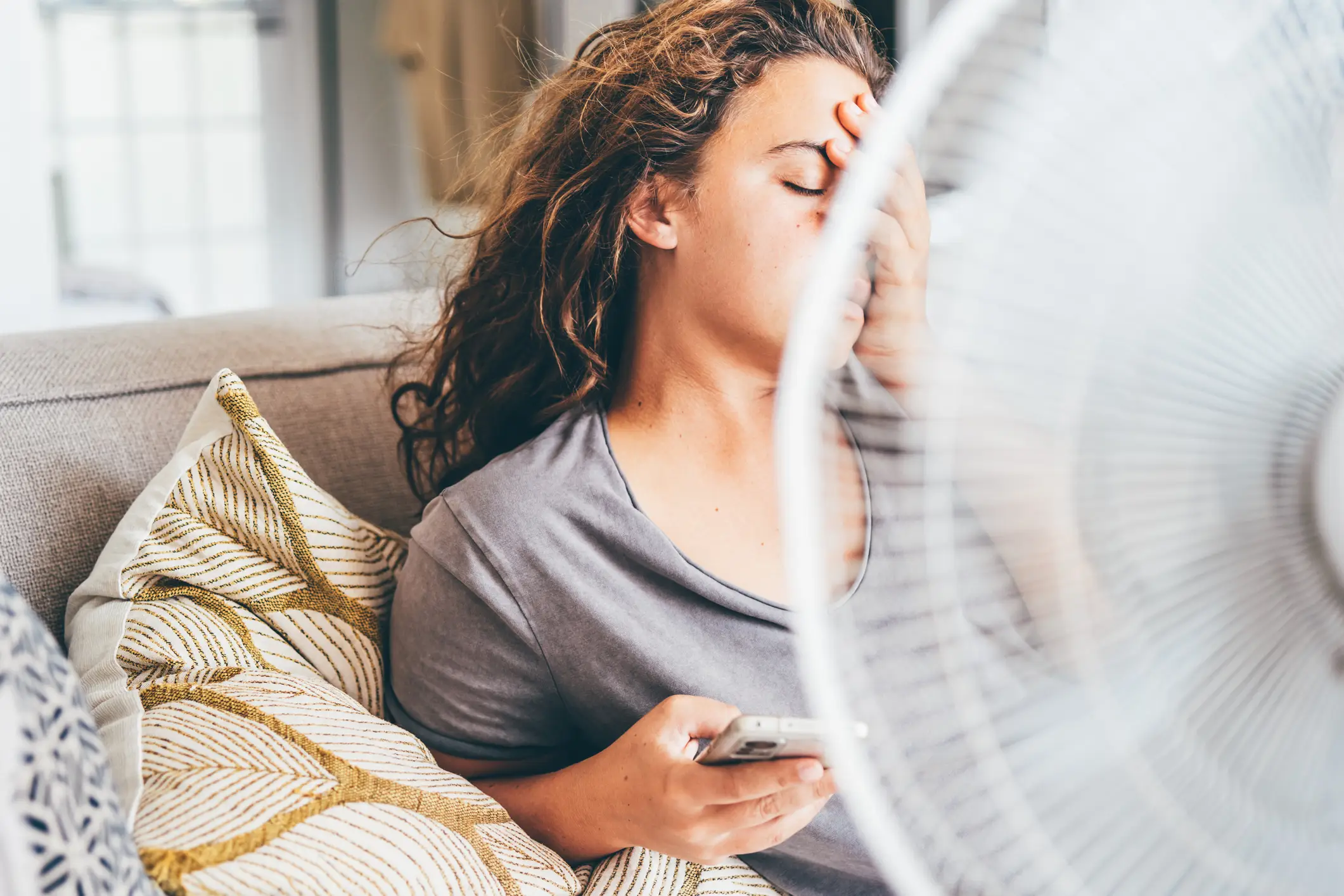
We’re all aware of the basics of keeping cool during the warmer weather, such as avoiding the sun between 11am and 3pm, staying hydrated, wearing light clothing, taking cold showers and avoiding physical activity, but have you tried these little-known hacks to beat the heat? (Thank us later).
The correct way to sleep with a fan on
A good night's sleep is almost never guaranteed during a heatwave, leaving many of us turning to our trusty fan to get through the night. However, it could be having a hidden impact on your health.
But rest assured, as Dr Anis Khalaf has explained how to overcome this, the correct way.
"The key is to not have any of the wind blowing on you,” he said. “So try facing it away from your body, and the air will still circulate around the room."
Though bear in mind that electric fans only tend to work when the temperature is below 35 degrees.
Drinking milk
Thanks to the sugars, proteins and fats in milk, Dr Natasha Fernando claimed that a glass of the liquid ‘may be more hydrating than water’.
She told Metro: “Milk also contains sodium which allows your body to hold onto water for longer, aiding hydration levels.”
The Egyptian sleep method
Forget the Military sleep method, because this hack claims to keep you cool as well as help you nod off.
Psychiatrist Alex Dimitriu, MD, told VeryWellMind: "The Egyptian sleep method involves sleeping under a damp sheet, which cools off from evaporation.”
Just make sure the sheet is damp and not drenched, and the room is well-ventilated.
Keeping windows shut during the day
While it may sound counterproductive, you’re essentially inviting the hot air inside by leaving them open. And since most houses in the UK are designed to keep the heat in, you could be making the situation a whole lot worse.
Instead, wait until temperatures have dropped (such as in the late evening) to open your windows to allow cooler air to circulate. Keeping your blinds and curtains shut can also help.
Topics: Weather, UK News, Pregnancy, Sex and Relationships, Life
 Madison Burgess