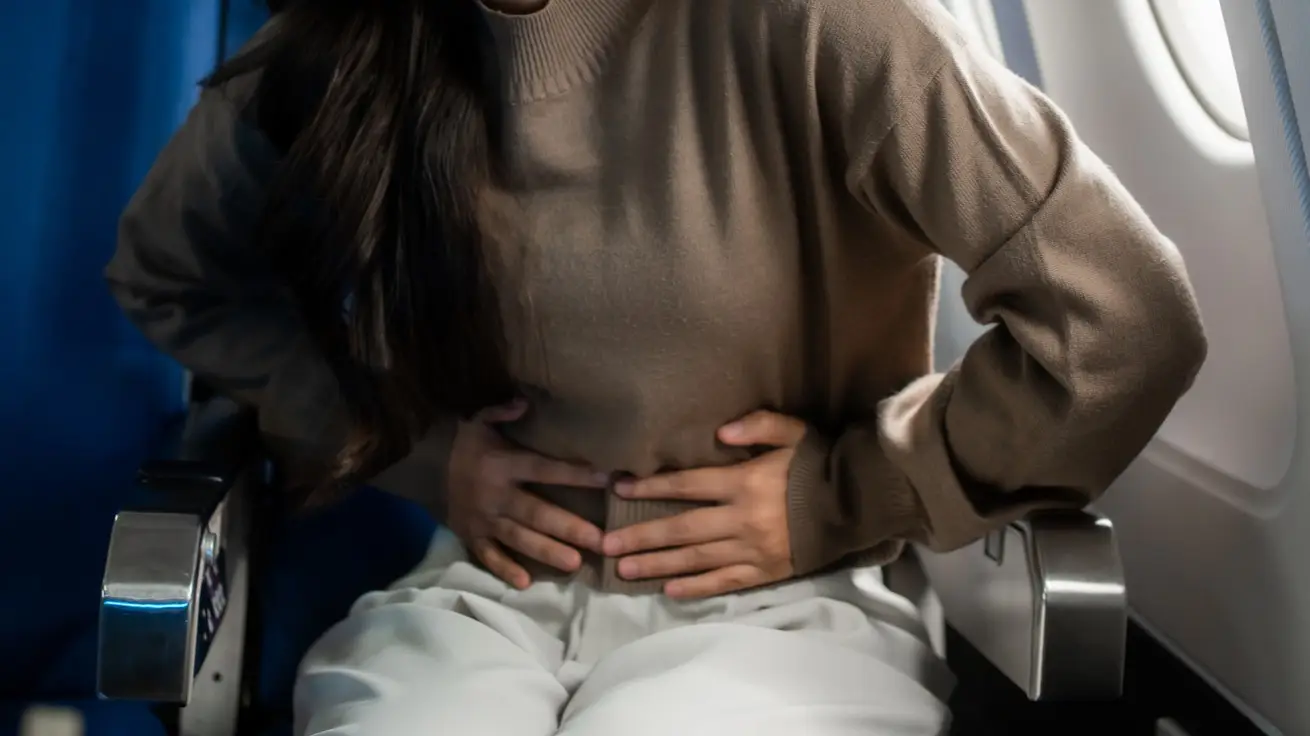
‘Airplane belly’ explained as women complain about odd side effect of flying

There's nothing worse than being all excited for your summer holiday with a suitcase packed full of cute outfits and an appetite for all the yummiest food and drink a brand new country has to offer, only to become the most bloated you've ever been in your life.
A number of women have shared their experiences across social media about how their stomach seems to swell like nothing else during and after taking a flight, and it turns out it's not just a coincidence, as 'airplane belly' is actually a thing.
Dr Hugh Coyne, GP and co-founder of Coyne Medical, exclusively explained to Tyla all we need to know about the pesky phenomenon which seemingly threatens our holiday happiness year after year, as well as when you actually need to see a doctor about it.
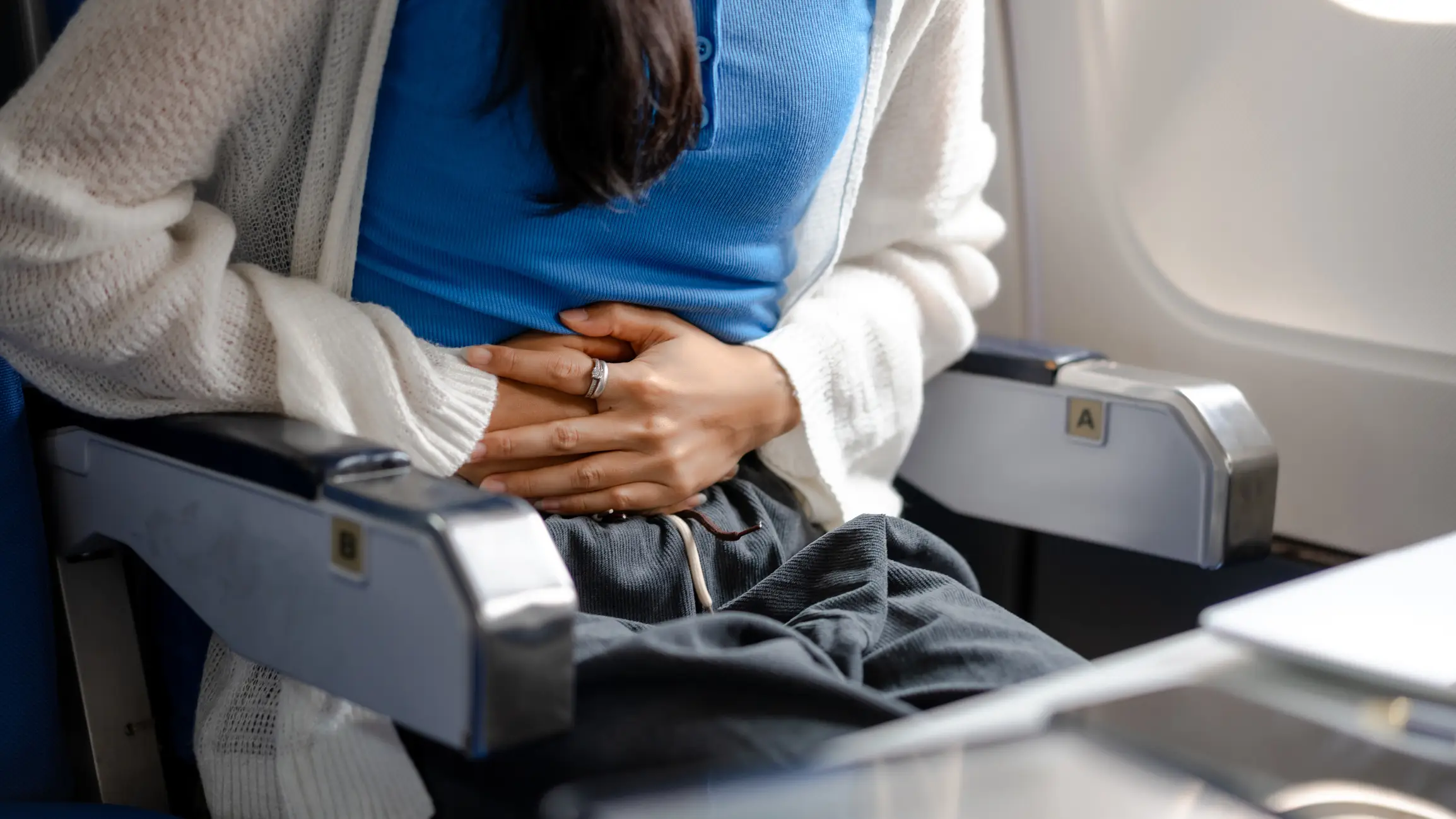
Is bloating during or after a flight normal?
Dr Coyne tells Tyla that bloating during or after air travel is common and is mainly caused by gas expansion within the bowel due to reduced cabin pressure.
Advert
"However," he explains, "dehydration, prolonged immobility, and dietary factors can all contribute to bloating during or after a flight."
The expert notes that the core mechanism of bloating during a flight is explained by 'Boyle's law', saying: "Commercial aircraft cabins are pressurised to an equivalent altitude of 5,000–8,000 feet.
"This causes gas in enclosed body cavities to expand by approximately 30%. For healthy passengers, this expansion of gas within the intestines produces minor abdominal cramping, a sensation of fullness, and flatulence."
He continued: "Reduced cabin pressure also significantly reduces the speed at which food and liquids move from your stomach into the small intestine and induces indigestion-like symptoms. "This can occur particularly after a meal that is rich in fibre."
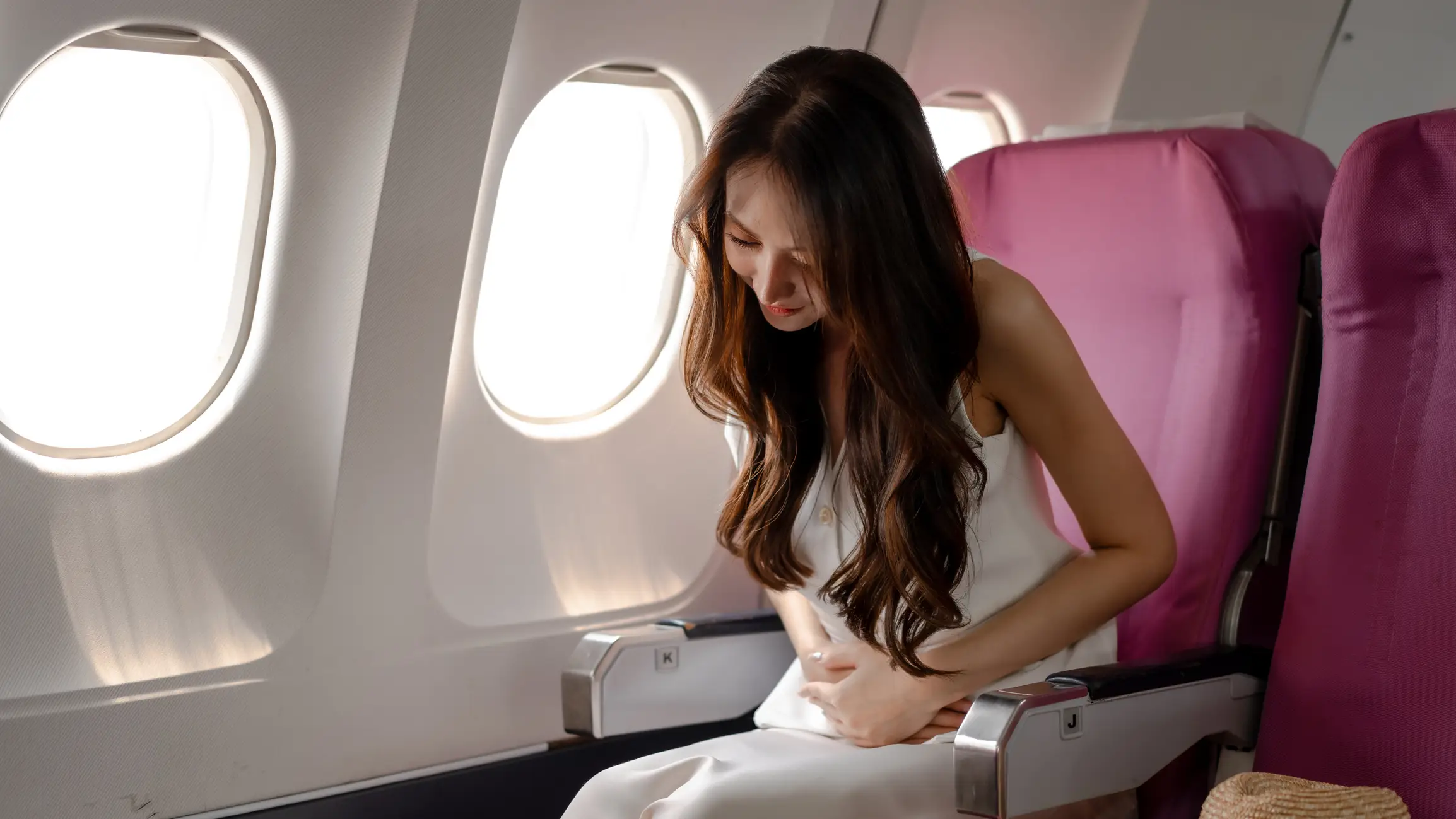
How does flying contribute to bloating?
The super-dry air on planes can also leave you dehydrated, which slows digestion and makes bloating worse.
Sitting still for hours doesn't help either, as your digestive system slows down and gas gets trapped more easily.
There's another reason your stomach can feel puffier too, Dr Coyne says.
Staying seated means blood and fluid collect in your legs instead of circulating properly, which can lead to swelling and fluid shifts that contribute to that bloated feeling.
Your in-flight snacks could also be making things worse, as fizzy drinks, nuts and foods like beans, onions, garlic, apples and some dairy can all increase gas, which expands even more at high altitude.
Getting up for a short walk every couple of hours and doing simple leg exercises in your seat can help keep things moving.
Why are some people more susceptible to bloating while flying than others?
"Unfortunately, some people are more likely to feel bloated when they fly," Dr Coyne warns.
"This includes people with irritable bowel syndrome (IBS), functional bloating or other disorders of gut-brain interaction. In these conditions, the gut can be more sensitive to normal amounts of gas. This is known as visceral hypersensitivity. Even a relatively small increase in gas inside the bowel can produce a much larger sensation of bloating or visible abdominal distension."
Others may have a condition called abdominophrenic dyssynergia, or APD, that causes the stomach to visibly stick out when bloated, while intolerances to sugars like lactose and fructose can also make symptoms worse as gas builds up during a flight.
People with SIBO may experience similar issues, and if you've recently had abdominal surgery or been treated for bowel problems, it's worth speaking to your doctor before flying.
Ways to reduce bloating before, during and after a flight
There are a few simple steps that can reduce the chances of feeling uncomfortably bloated on a flight.
The doctor states: "In the 24 hours before flying, it may help to avoid foods that are more likely to produce gas. These include high-FODMAP foods, fizzy drinks, and very large, fibre-rich meals. They are not a problem for everyone, but in people who are prone to bloating or IBS, they can increase gas production in the bowel. Less gas before take-off means less gas available to expand in the cabin.
"Hydration also helps. Cabin air is very dry, so drinking water before the flight and avoiding too much alcohol may reduce the chances of constipation, bloating and that uncomfortable "stuck gas" feeling."
Dr Coyne also stressed the importance of movement during a flight as this 'can help stimulate gut movement and also supports venous return, which is the flow of blood back from the legs to the heart'.
"Seated exercises, such as ankle circles, calf raises and gentle trunk movements, can also help when walking is not practical," he added.
"Keep the in-flight food fairly simple. Large, fatty meals can slow stomach emptying, while high-fibre meals and carbonated drinks can increase gas. For people prone to bloating, a simple lower-fibre, lower-fat meal is the safer option before or during a flight.
After landing, rehydrating, walking, and returning to normal gentle activity can all help gas pass through the bowel and restore normal gut movement."
When bloating may be a sign of an underlying medical problem rather than a normal consequence of travel
"In most cases, flight-related bloating is uncomfortable rather than dangerous," Dr Coyne tells Tyla. "If it comes on during a flight and settles within a few hours of landing, it is usually nothing to worry about.
"However, bloating should not always be dismissed as merely 'just gas'. Medical advice is recommended if bloating persists and is accompanied by warning symptoms such as unintentional weight loss, blood in the stool, new or worsening abdominal pain, persistent vomiting, or chronic diarrhoea."
He concluded: "The key distinction is whether the bloating behaves like a short-term travel symptom or whether it persists, progresses, or represents a clear change from baseline. If it does not settle after travel, or if it is becoming more frequent or severe, it should be assessed properly."
Topics: Travel, Life, Health, Tyla Exclusive, Women's Health
 Rhiannon Ingle