
Most googled weight loss jab questions of 2025 revealed

In recent years, one 'wellness' trend has totally eclipsed diet plans, exercise routines and herbal supplements in terms of hype - weight loss injectables.
Practically overnight, this once-tabboo'd 'hack' to achieving the ultimate glow-up became the internet's latest obsession. Celebs were raving about the results, viral TikToks were showing off staggering physical transformations, and group chats were buzzing with talk of how to obtain these 'medical marvels'.
As demand for jabs have suddenly surged, however, so have the questions, especially those regarding safety features and long-term effects.
And now, fresh new data has revealed exactly which topics potential users were the most curious about throughout the duration of 2025, which itself has offered a further insight into how quickly the trend has gripped the human race's collective imagination.
Advert
Let's get into it.
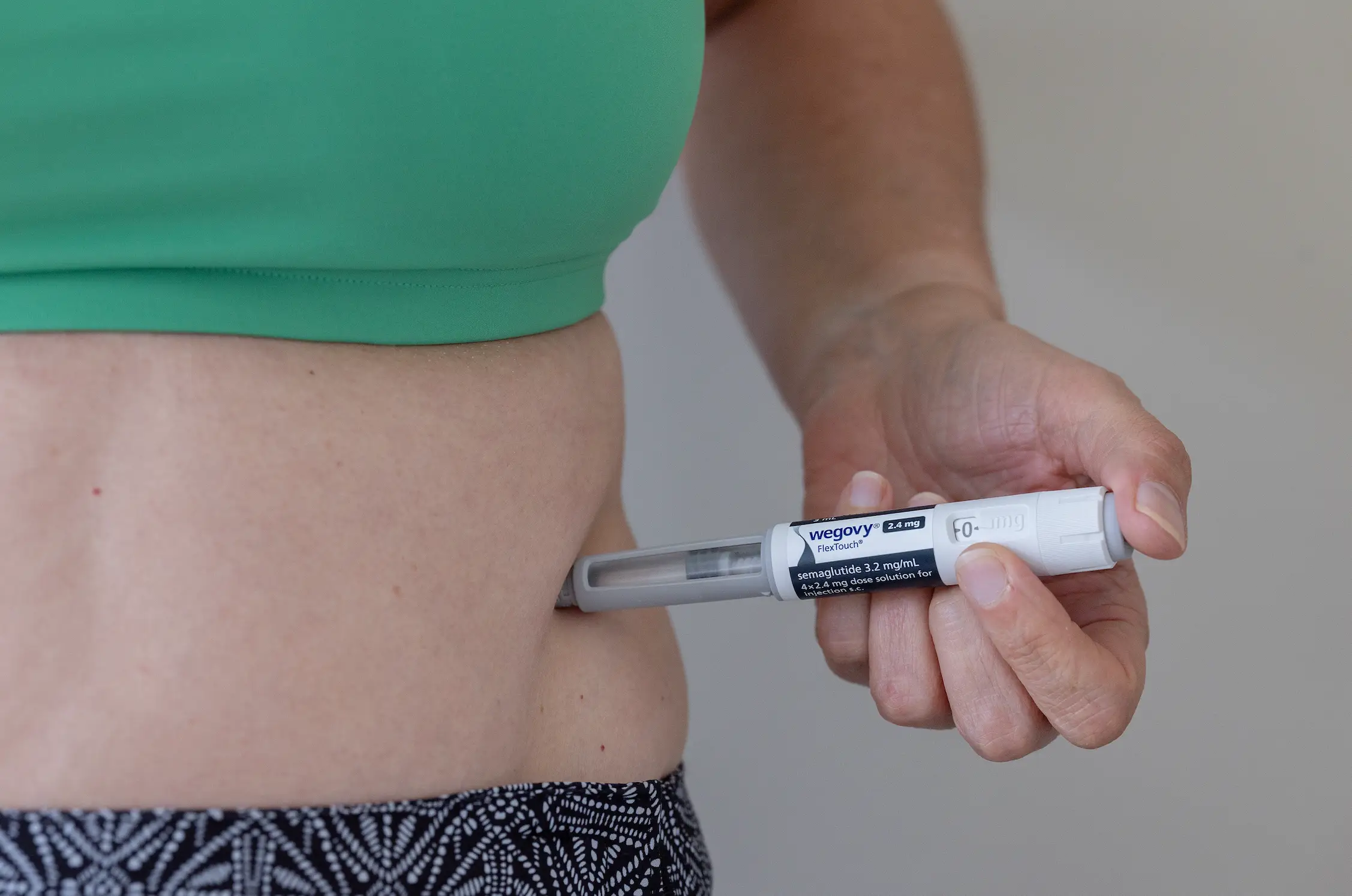
Effectiveness and comparison
Apparently, the most commonly searched query when it comes to weight loss injectables surrounds their effectiveness - especially when being compared to one another.
Curious internet-users were Googling questions like, 'Is Mounjaro better than Wegovy for weight loss?', 'How much weight can you lose on Mounjaro/Wegovy?', given that, of all these variants, there two work most differently.
While tirzepatide inside the former uses dual GIP and GLP-1 receptor agonists to suppress appetite, the latter's active ingredient, semaglutide, relies on a single action GLP-1 receptor agonist.
As we say, people were also curious as to the types of timeframes they'd be looking at ahead of booking an appointment with their GP, adding things like 'in three months' to searches involving how much mass they should expect to shift.

In terms of effectiveness, Google users also wanted to know, 'When will Retatrutide be available?', referring to the emerging triple-action drug retatrutide, also nicknamed 'Triple G'.
In clinical trials for this particular drug - which has not yet been rolled out on a prescription basis, the observation of up to 24 percent weight has certainly peaked people's interest. You can read more about this incoming medication right here.
Safety and side effects
As is understandably the case, research also shows that huge proportions of potential jab-users wanted to know exactly what they would be getting themselves into before getting their hands on a prescription - especially, in terms of side effects.
People were reportedly searching questions like, 'What are the common side effects of GLP-1 drugs?', as well as 'How long do side effects of weight loss injections last?'.
In terms of the former query, Gov.uk warns that the most frequently-observed side issues surrounding these types of medication are gastrointestinal in nature, and can consist of nausea, vomiting, diarrhoea, and constipation.

Other, lesser discussed side effects can include headache and fatigue, however, with rapid weight loss also having the potential to trigger skin sagging in some of the body's formerly-fatty area, and muscle loss.
With regards to how long a patient can expect to endure these consequences, experts say this can vary, eventually coming to an end when the body adjusts to the demands of the jab.
But usually, this ranges from a few days to a few weeks, potentially kicking back in again if the dosage is ever increased.
Lastly, in this category, was the question, 'Is Mounjaro/Wegovy safe for long-term use?'.
According to the Oxford Online Pharmacy, as far as doctors know, both of these drugs appear same for long-term use, as long as continued under medical supervision, with early trials showing that weight loss is sustained with good tolerability.
This said, however, there have been a handful of cases recorded, where high risk side effects like pancreatitis, thyroid C-cell tumours, gallbladder issues, and kidney problems have been recorded.

Cost
Another major point of interest from those considering the pros and cons of weight loss jabs, was finance.
Apparently, top searchers included the likes of 'How much is Mounjaro per month?', 'Can I get Mounjaro/Wegovy on the NHS (or via my GP)?', and 'Are Zepbound savings cards or coupons available in 2025?'.
For reference, right now in the UK, getting hold of weight-loss injectables is still a bit of a lottery. This is because Wegovy is already available on the NHS for tightly defined high-risk groups, and Mounjaro has technically been approved for NHS use.
The latter said, however, only a small number of patients who meet strict BMI and health-condition criteria can actually access it through their GP.
For everyone else, it’s still a case of going private, with Wegovy tending to cost around £150-£300 per month, depending on dose, with a maintenance-dose pen often at the higher end, at between £250-£300/month).

For Mounjaro, customers can expected to fork out as much as £350 for a monthly supply - again depending on dose.
Also, on the latter query, 'Zepbound savings cards' are strictly a US thing, which sees manufacturers offering discount schemes.
Lifestyle integration
Other internet-users raised concerns as to how the medications can fit into their daily lives, asking Google things like, 'Will I gain weight after stopping Mounjaro?', 'How long will I have to take the medication?', and 'Can you drink alcohol on Mounjaro?'.
As a reminder, most people do experience some degree of weight regain after stopping Mounjaro. This is because the medication's appetite-regulating effects don’t continue once treatment ends.
It's also why an increasing amount of medics are beginning to view the treatment as a long-term or even ongoing therapy, as we already mentioned above. How long you'll need to inject yourself depends entirely on your health needs, however, as well as how well you respond to the drug.
Oh, and, in terms of booze; while alcohol isn't strictly off-limits when taking weight loss drugs, it can intensify common side effects like nausea, dizziness or low blood sugar.
Topics: Life, Mounjaro, Ozempic, Real Life, True Life, Health
 Rhianna Benson