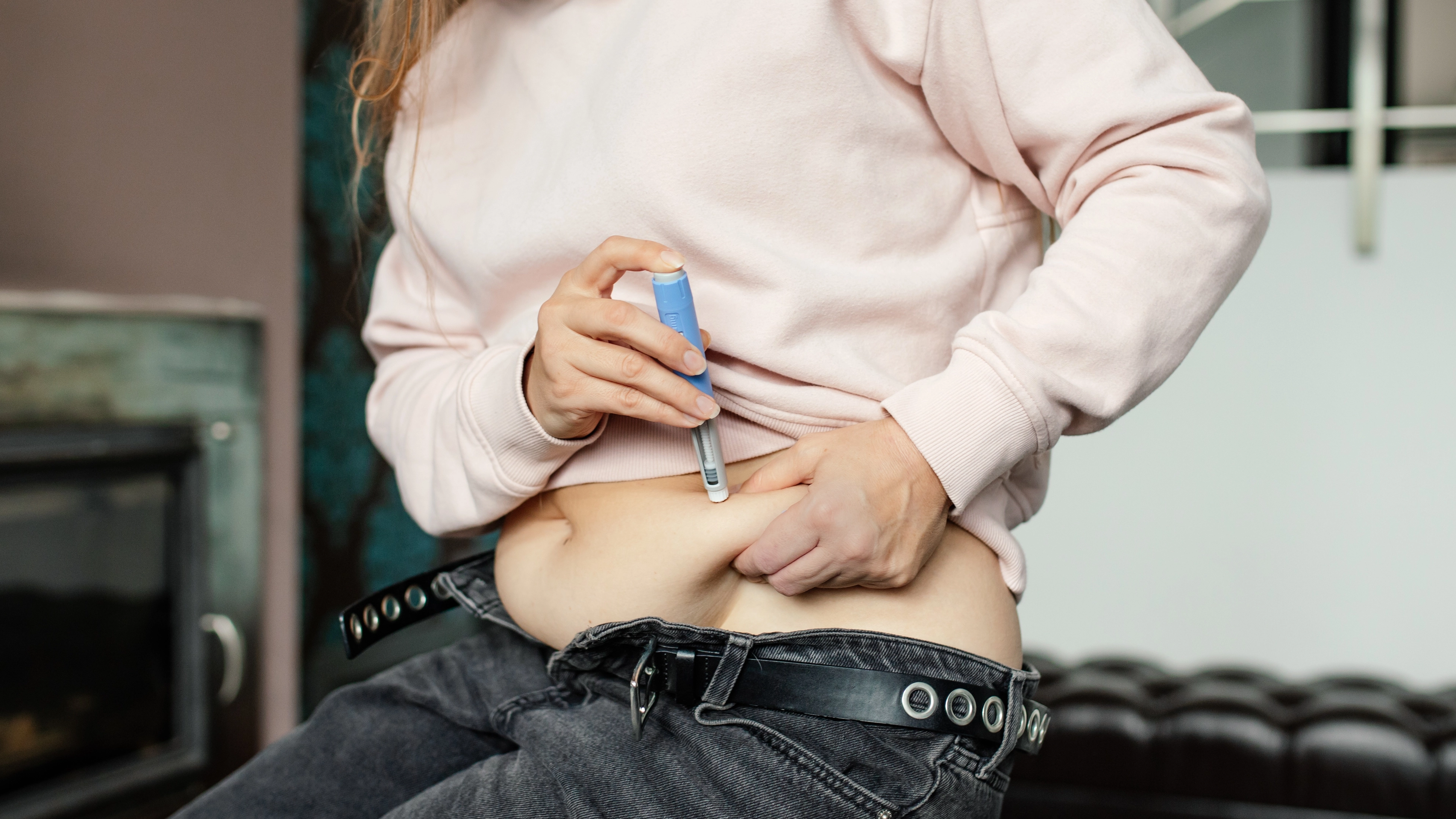
Weight loss jab users warn of terrifying 'eye stroke' side effect

A number of weight loss jab users have spoken out after suffering a 'life changing' side effect that affected their vision.
Nicknamed an 'eye stroke', this medical phenomenon has been officially linked by doctors to several popular GLP-1 medications, raising concerns about a possible connection between these drugs and vision problems.
The likes of Ozempic, Wegovy and Mounjaro skyrocketed in demand recently, especially within the celebrity realm, despite first being rolled out to tackle type 2 diabetes symptoms.
Now provided by the NHS - albeit under strict eligibility criteria - these weekly, appetite-suppressing injectables are now more accessible than ever.
Advert
They don't come without their side effects, however - many of which have reportedly become permanent.
The most commonly experienced side effects are gastrointestinal, like nausea, constipation, diarrhoea, stomach discomfort and heartburn. But some patients are enduring what they've dubbed an 'eye stroke'.
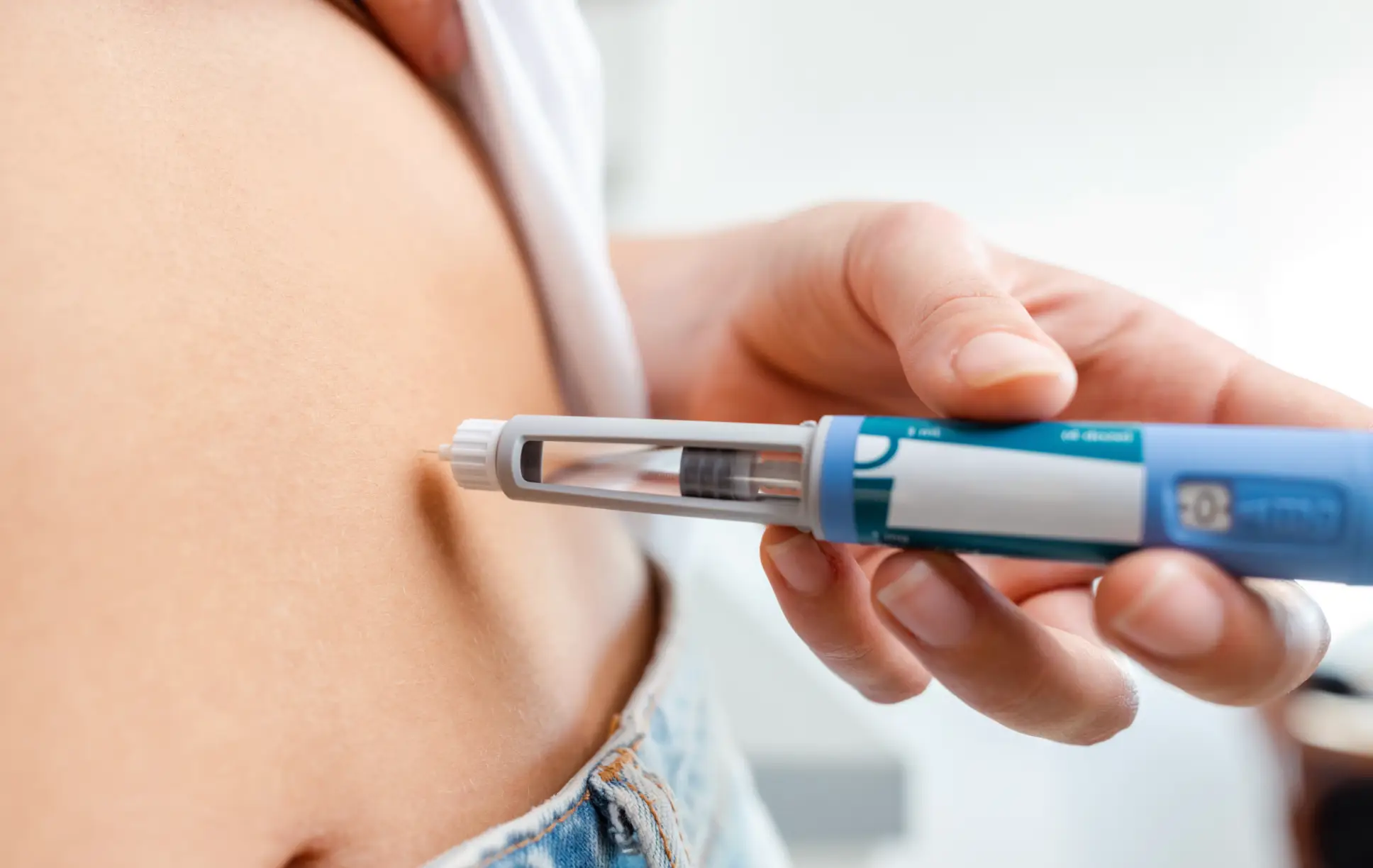
Known officially as NAION (Non-Arteritic Anterior Ischemic Optic Neuropathy), the condition describes an incurable, sudden loss of vision.
Though not painful, it can affect both eyes, having the potential to leave patients permanently blind.
It's caused by a reduced flow of blood to the optic nerve caused by inflammation, which doctors believe to be associated with weight loss jab use.
Specifically, it's the NHS-approved drug Wegovy that many medics are majorly concerned about, though conversations are also being had over the impact Ozempic may have on the body.
Speaking to ITV News, 68-year-old Peter Osler, from Harrogate, UK, revealed he's one of the unlucky few who've had the vision in both eyes affected.
"The common thread going through NAION is you wake up with it," he explained. "But I wasn’t asleep when it happened.
"I didn’t have high blood pressure, I’ve never had high blood pressure. In my mind, [Ozempic] is the only thing that caused it."

Peter is now living without any peripheral vision, telling the British news outlet that it feels as though he's permanently looking through a pair of binoculars.
Having been prescribed Ozempic for his diabetes, as opposed to weight loss purposes, he now fears the detrimental impact that this drug could have on individuals using it for aesthetic purposes.
"I was on 1 milligram a week, that’s injected into your stomach. People taking it for weight-loss can take up to 12 pens a week," he continued. "In my view, I was only taking a very small dosage of Ozempic, and I’ve gone blind through it.
"What are the risks of someone taking ten times that amount?"
Peter went on: "My experience is very frightening. Very life changing. It’s the loss of mobility, the loss of freedom, and having to depend on others."
Another NAION sufferer is Todd Engel, from the US. He's one of the 20 Americans currently taking action against Ozempic and Wegovy's manufacturing firm, Novo Nordisk, claiming he's also lost his vision in both eyes.

Like Peter, Todd was prescribed Ozempic to treat his diabetes, but subsequently suffered from two 'eye strokes'.
Given that he relies on his vision for his livelihood as a heavy goods vehicle driver, he claimed he now feels no choice but to sue the medical manufacturer.
Also speaking to ITV, he declared: "This is not just a side effect. This is a catastrophic life-changing injury. I will never ever be able to see my wife’s beautiful face, any of my children or grandchildren. I won’t be able to play ball with my grandkids."
Todd's wife, Shelley, also spoke to the publication, claiming her husband's health battle has robbed the couple of their retirement plan to travel.
"We are hoping that NAION will become part of the warning label, to give people the choice to make this decision on their own," she hit out. "Had Todd known this would be the effect of medication that was supposed to help him, he wouldn’t have taken it.

Their testimonials come weeks after medicine regulators issued a warning to those taking the weekly injectables over the emergence of this new pattern.
Dr Alison Cave, the Chief Safety Officer of the Medicines and Healthcare products Regulatory Agency, previously said: "Patient safety is the MHRA’s top priority, and we continually monitor the safety and efficacy of all licensed medicines.
"While the potential risk of NAION for patients prescribed semaglutide is extremely small, it is important that patients and healthcare professionals are alert to the associated symptoms."
She went on to advise: "If you, or someone you care for, is taking semaglutide and you notice sudden loss of vision in one eye, then we advise you to urgently attend eye casualty (if available in your area) or A&E and report it via our Yellow Card scheme."
A spokesperson for Novo Nordisk also told LADbible Group last month: "Patient safety is our top priority, and we take any reports about adverse events from the use of our medicines very seriously.

"We work closely with authorities and regulatory bodies from around the world to continuously monitor the safety profile of our products."
They added: "Based on the totality of evidence, we concluded that the data did not suggest a reasonable possibility of a causal relationship between semaglutide and NAION and Novo Nordisk believes that the benefit-risk profile of semaglutide remains favourable."
Tyla has contacted Novo Nordisk and Eli Lilly for further comment.
Topics: Ozempic, Wegovy, Health, Life, Real Life, True Life, UK News
 Rhianna Benson