
tyla homepage
  • News
  • Life
  • TV & Film
  • Beauty
  • Style
  • Home
  • News
    • Celebrity
    • Entertainment
    • Politics
    • Royal Family
  • Life
    • Animals
    • Food & Drink
    • Women's Health
    • Mental Health
    • Sex & Relationships
    • Travel
    • Real Life
  • TV & Film
    • True Crime
    • Documentaries
    • Netflix
    • BBC
    • ITV
    • Tyla Recommends
  • Beauty
    • Hair
    • Make-up
    • Skincare
  • Style
    • Home
    • Fashion
    • Shopping
  • Advertise
  • Terms
  • Privacy & Cookies
  • LADbible Group
  • LADbible
  • UNILAD
  • SPORTbible
  • GAMINGbible
  • UNILAD Tech
  • FOODbible
  • License Our Content
  • About Us & Contact
  • Jobs
  • Latest
  • Archive
  • Topics A-Z
  • Authors
Facebook
Instagram
X
Threads
TikTok
Submit Your Content
Scientists finally know why girls are getting their periods at a younger age now

Home> Life> True Life

Published 17:36 11 Nov 2024 GMT

Scientists finally know why girls are getting their periods at a younger age now

The amount of girls getting their periods sooner is increasing

Mia Williams

Mia Williams

google discoverFollow us on Google Discover
Featured Image Credit: Getty stock images

Topics: Health, Periods, Science, Women's Health, Parenting

Mia Williams
Mia Williams

Advert

Advert

Advert

New research shows that girls are starting their periods younger than ever before, but parents are curious to know why.

A new study conducted in the US has revealed that girls are getting their periods about six months earlier on average than they did in the 1950s and 60s.

And while the age of a woman's first menstruation varies massively depending on a whole host of contributing factors, more education is needed to prepare girls for what they can expect.

After all, there are a lot of unanswered questions.

How early are girls starting their period?

The age at which girls are getting their period is getting younger. (Getty stock images)

Advert

The journal JAMA Network Open stated that more girls are starting their period before the age of nine, which is considered extremely early.

The study’s co-author Dr. Shruthi Mahalingaiah, explained: "The younger you are when you get your first period, it's very confusing.

"There's still a lot of stigma and silence around it."

She added: "It's important to educate caregivers, parents, and care providers on this trend so that we can also prepare our children."

The study is based on the experiences of 71,000 women.
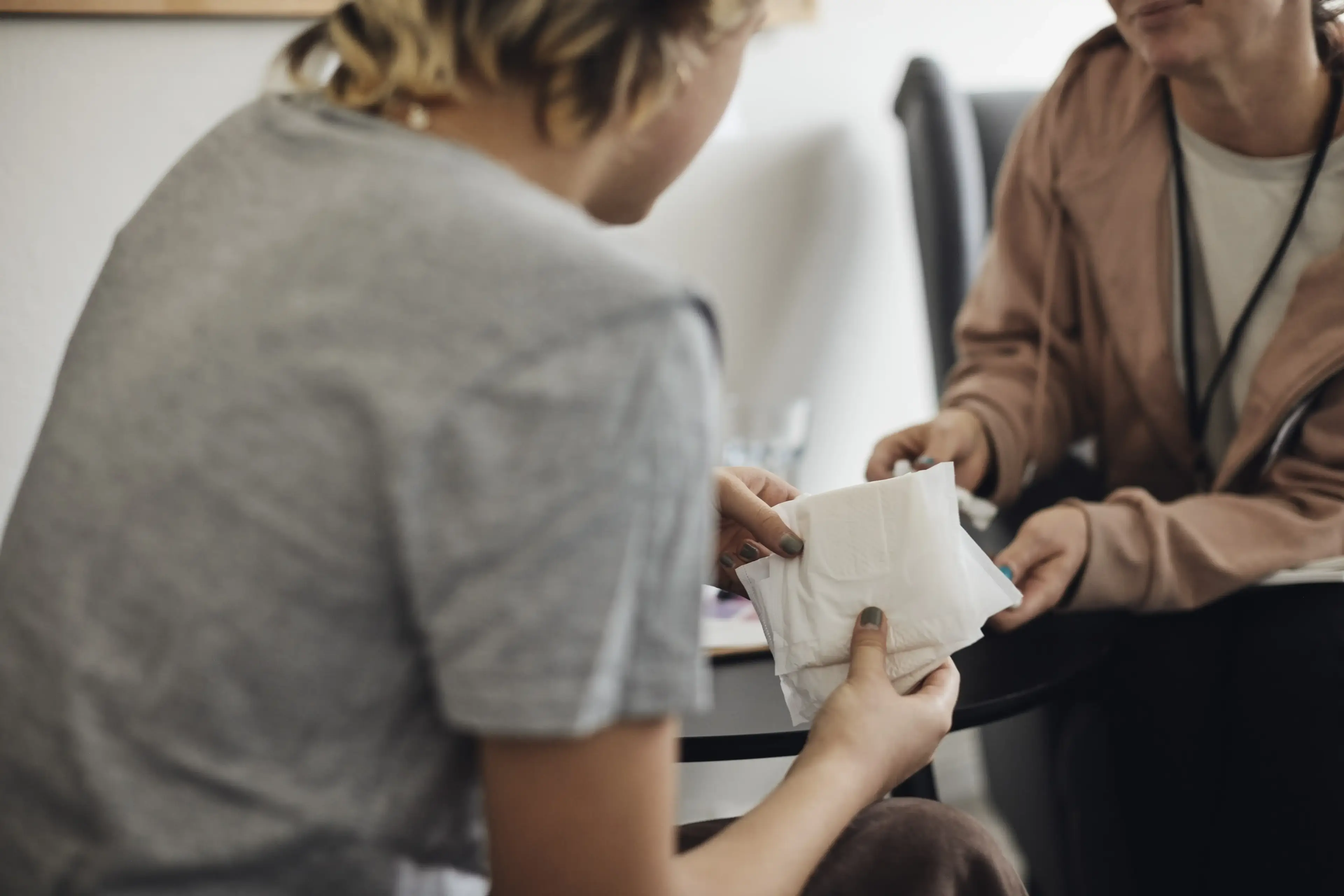
Parents need to be 'mentally prepared' according to the expert. (Getty stock images)

Researchers found that on average, menstruation was starting at 11.9 years of age in 2000 to 2005.

This is down from 12.5 years of age in the period between 1950 to 1969.

What does this mean?

The age of your first period tells more about your general health than you might think.

Lauren Houghton, an assistant professor of epidemiology who wrote a commentary accompanying the new study, said: "If someone reaches their first period before the age of 12, they are at a 20 percent increased risk for breast cancer."

Why is it happening?

“When we're looking for causes or explanations, it's not just one thing. It's multiple factors,” Houghton said.

Obesity is one contributing factor that leads girls to start their periods sooner, but stress can also be another reason.

She added: "When we have higher stress we get higher cortisol hormones, we get higher androgen hormones.

"And fat tissue converts those hormones into estrogen. And it's estrogen which signals the body to grow breasts."

What can parents do?

Ensuring children are eating a balanced diet can minimise the chances of puberty starting early, as well as exercise and a good amount of sleep per night.

The professor also warned parents not to be shocked if their child's period comes sooner than expected - adding that being 'mentally prepared' is key.

Choose your content:

2 days ago
3 days ago
  • Getty Stock Images
    2 days ago

    Cardiologist reveals six things you should ‘never’ do after 6pm

    Your evening routine could be affecting your heart more than you think

    Life
  • Smith Collection/Gado/Getty Images
    2 days ago

    STI unknown to most people is nearly as common as chlamydia

    Mycoplasma genitalium, or Mgen, affects 2 per cent of sexually-active Brits per year

    Life
  • Getty Stock Image
    2 days ago

    You can actually earn shocking amount of money to sell your poo

    Faecal Microbiota Transplantation (FMT) could see you take home a whopping £900 ($1,209) in a single month

    Life
  • Getty Stock Image
    3 days ago

    Why everyone is all of a sudden getting the ‘chicken ick’

    The 'chicken ick' has taken over social media - here's why it's happening to you and how to get over it

    Life
  • Surprising theory behind why boys are more likely to diagnosed with autism than girls
  • Women are less likely to receive life-saving CPR, doctor explains why
  • Why some people are getting botox 'down there' - and how it actually works
  • Doctors finally reveal why the second day of your period is so brutal