Women with a devastating health condition are finally getting validation after years of being dismissed or misunderstood

An expert said a devastating health condition being renamed is a ‘welcome step forward’ for patients as it now fully captures the condition’s ‘complexity’.
On Monday (12 May), polycystic ovary syndrome (PCOS) was officially renamed to polyendocrine metabolic ovarian syndrome (PMOS) following a 14-year project featuring thousands of patients and health professionals alike.
According to a global consensus published in The Lancet, PMOS - affecting at least one in eight women - corrects the inaccurate implication that the health condition is ‘a gynaecological or ovarian disorder’.
PMOS’ rollout is currently underway in health systems, research institutions, funding bodies, education providers, clinical guidelines, and disease classification systems like ICD coding, as per the rationale.
Advert
The experts reasoned in the study that by ‘aligning nomenclature with scientific evolution and improving accuracy’, awareness, diagnosis, care quality, research coherence, and patient experience, strengthening policy, advocacy, and health outcomes will be enhanced globally.

Dr Victoria Sephton, Chief Medical Officer at Care Fertility, has hailed the move as a ‘significant and welcome step forward for both patients and clinicians’.
She claimed that for many years the former PCOS moniker failed to ‘fully capture the complexity of the condition’, particularly its impact on metabolic, hormonal and reproductive health, as well as insulin resistance and long-term wellbeing.
“Importantly, many women with PCOS do not actually have ovarian cysts, which has often led to confusion, delayed diagnosis and misunderstanding around symptoms and fertility implications,” the expert alleged.
Dr Sephton said that the shift towards the term PMOS is particularly important where fertility care is concerned, claiming that ‘successful treatment’ is about far more than just ‘achieving pregnancy’.
“It’s about supporting patients’ health before, during and after fertility treatment,” the expert said.
“This renaming also helps validate the experiences of patients who have historically felt dismissed or misunderstood. Increased awareness and clearer language can play an important role in encouraging earlier diagnosis, more personalised care pathways and better fertility outcomes.”
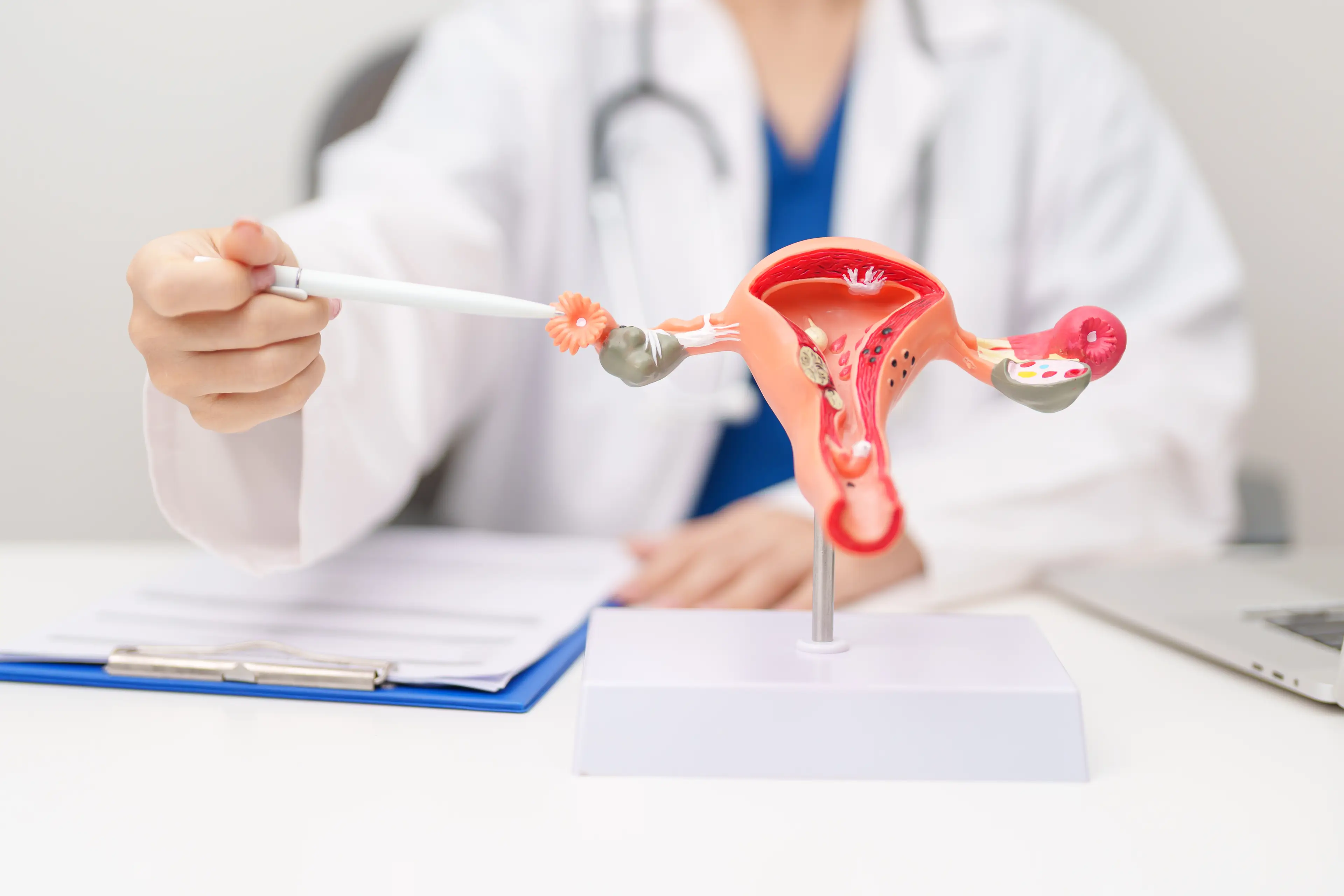
Earlier this year, Dr Thaïs Aliabadi, an endometriosis and medical weight loss expert, claimed that the condition, shaped by hormonal imbalance, chronic inflammation, and neurological disruption, is frequently overlooked.
People who have PMOS can often have their symptoms dismissed or are sometimes misunderstood and overlooked, as per the expert.
This can cause poor mental health, weight gain, and even infertility without answers for more than 170 million people with periods during their reproductive years.
On an episode of the Jay Shetty Podcast in March, Dr Aliabadi explained that it can take an average of ‘nine to 11 years’ for people with PMOS to be taken seriously, claiming doctors often ‘don’t know enough’ about the condition.
This is because symptoms can manifest in a variety of ways.
"Some are lean, some are overweight, some have irregular periods, some have acne, some have hair loss, some have facial hair and some have body hair," she explained. "They present differently. So, it's very confusing to doctors.”
The doctor added that such symptoms can impact a person’s entire body.

"It's not just a fertility issue, it's not just a period issue, it's a total body issue," she said. "It affects your mental health, it affects your reproductive health, it affects you metabolically, it affects your hormones.
"And until [doctors] address every single underlying pillar of the driver of these symptoms, [they] can't make these patients feel better."
While PMOS cannot be cured, a mixture of medication and lifestyle changes can lessen symptoms, as per Dr Aliabadi.
One possible treatment is the use of insulin-sensitising drugs.
"These drugs are normally used to treat patients with diabetes, but they can help women with PCOS by facilitating the body’s response to insulin.
"They can also help jumpstart ovulation by reducing levels of androgens, which helps put the menstrual cycle back on track.”
Topics: Health, Women's Health, Science
 Ella Scott