
25-year-old woman with rare disease explains decision to end life with medical aid

Warning: This article contains discussion of assisted dying which some readers may find distressing.
A 25-year-old woman with a 'debilitating' rare disease has explained why she wants to die by euthanasia.
Annaliese Holland, from Adelaide in South Australia, spent much of her childhood in hospital with an illness doctors were never able to pin down.
Her health condition worsened as she grew older, as she dealt with chronic pain that hit her every day, along with constant nausea and vomiting.
Advert
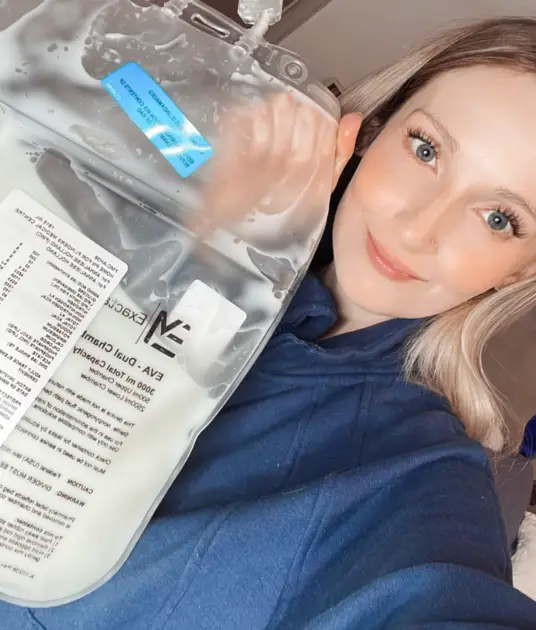
Annaliese has relied on total parenteral nutrition (TPN) for the past decade, taking all her nourishment through IV lines.
"My bowel acts as if it’s blocked, but there’s nothing actually blocking it. It’s just the nerves don’t work so, as gross as this is, my stools would back up so much that I would throw it up or drain out my tummy," she told News AU.
"I had feeding tubes placed in me, and I was still vomiting, and then we discovered that my stomach wasn’t emptying, so I was put on TPN," she continued. "Because of the line straight into your bloodstream, if you get an infection, it turns to sepsis really quickly, which is very, very, dangerous."
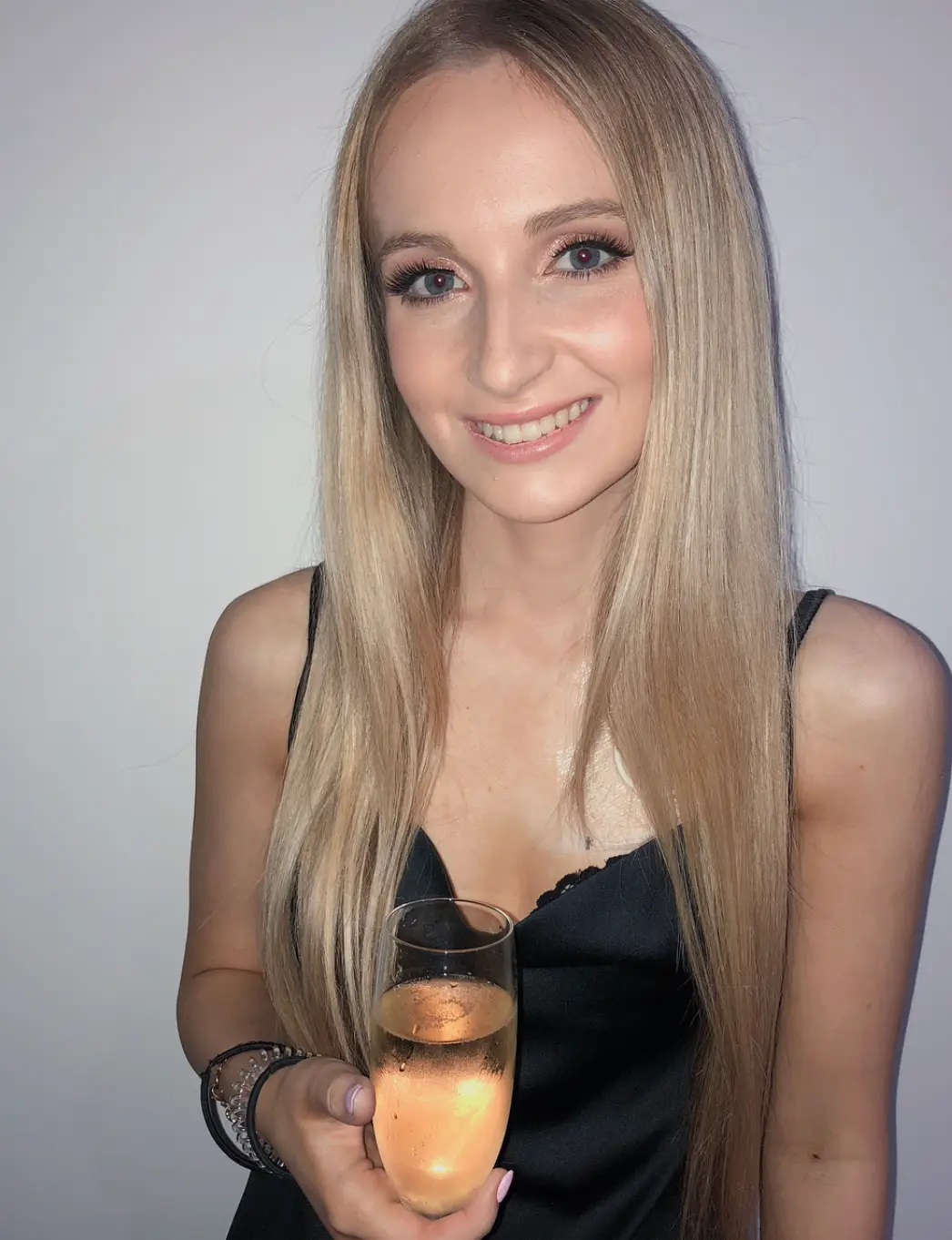
Annaliese's diagnosis
Annaliese finally received a diagnosis at 18, after moving from paediatric care to the main hospital.
Doctors told the then-teen she had Autoimmune Autonomic Ganglionopathy, a rare neurological disorder that damages the nerves responsible for heart rate, blood pressure, digestion and urination.
They also added that her illness was terminal by the time she reached 22.
She now lives with multi-organ failure and has survived sepsis 25 times with the heavy medication load, leaving her with severe osteoporosis. And that's not all, as Annaliese has also fractured her spine in four places, split her sternum and has come close to crushing her heart and lungs.
On top of experiencing nausea and vomiting daily, and having her stool back up so badly, she'd vomit it out, long-term steroid use has also caused bone tissue to die, turning her teeth black before they began to fall out.
The mental toll
"I was so miserable," she continued. "You can’t change it, so you have to just deal with it, really. Even though there are beautiful moments in my days, they are exhausting and long. I’m in chronic debilitating pain."
"I missed out on formals, graduations, my 18th, 21st [birthdays], they were all in hospitals, being really sick. All my friends they’re having babies, getting engaged, and married. Everyone’s life is moving, and I’m just stuck. I’m not living. I’m surviving every day, which is tough."
Annaliese added that her disease is like 'walking on a field of landmines'.
'I don't want this anymore'
Annaliese has candidly explained that she now no longer wants to endure the pain, sharing with her family that she wants to 'die on my own terms' with medical aid in dying.
She came to the decision after seeing herself in the mirror one day while hospitalised and not even recognising herself.
"It wasn’t me and I was so exhausted," she recalled. "Life for me now is getting up each day, doing what I need to do medically, taking the painkillers, trying to get through the day, just to go to bed and do it all again."
"I have the most incredible team of doctors and nurses who have watched what I have been through and I told them I don’t want this anymore," she admitted.
Understandably, such a notion is utterly heartbreaking for Annaliese's family.
Her family's reaction
Her mother, Armanda, has said she’s always hoping for a miracle, but she 'knows realistically what challenges' her daughter faces. Meanwhile, her father, Patrick, told the outlet that he’s seen his daughter overcome every setback and knows she can get past the illness.
"Every time she goes to the hospital, she fights for her own life," Patrick said, holding back tears. "The amount of times Annie has been in hospital and on her deathbed… to have to sit there and watch her go through it … but she is amazing."
Annaliese added: "I remember talking to my dad in the kitchen one night, and I said, 'Dad, I’ve had enough.' And he went, 'So you’re giving up?'"
She also recalled that the moment that helped her dad come to terms with her decision was when she was in the hospital after being resuscitated by doctors.
"Dad, please let me go," she pleaded with him at the time. "I will not hate you if you let me go."
"I said, 'If this happens again, I don’t want anything. And please know that in my heart, you letting me go and saying no to treatment…I’m happy with and that’s what I want,'" she recalled, bursting into tears.
"He turned to me and goes, 'I don’t know how you do it, and I totally understand that you’ve had enough'."
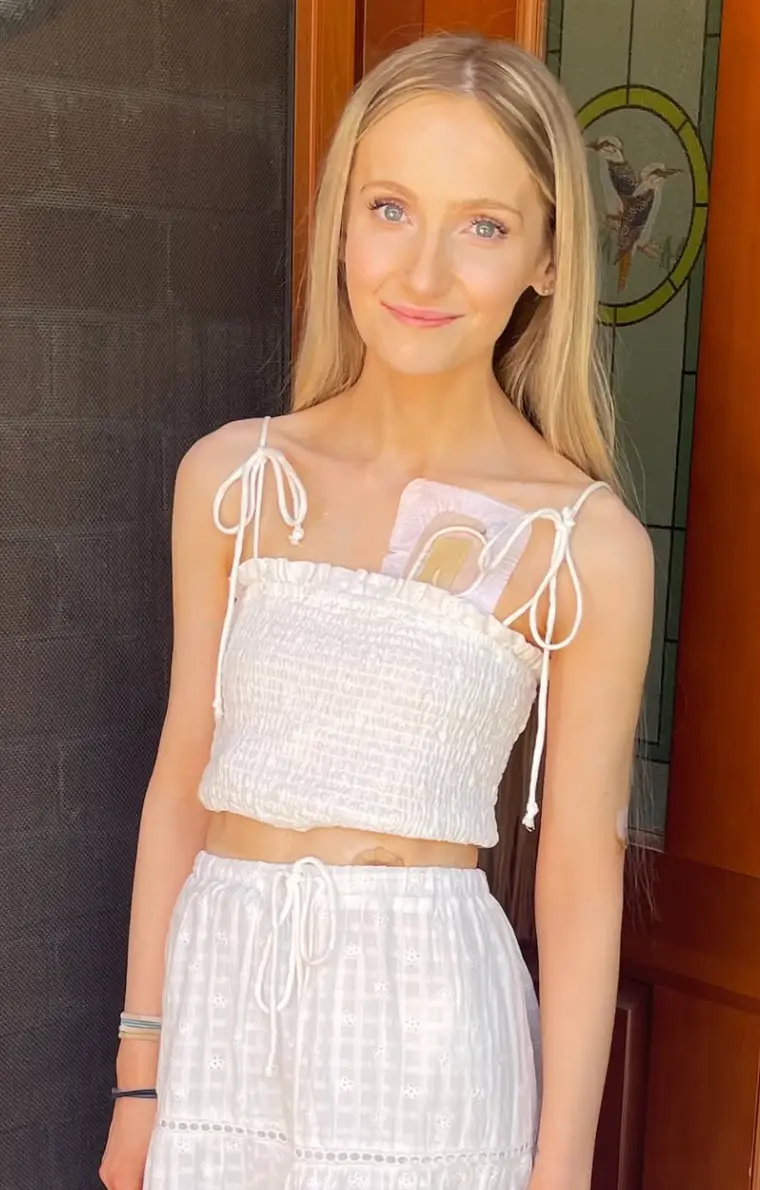
Voluntary assisted dying
Just three weeks after meeting psychologists and completing the assessment process, Annaliese was approved for voluntary assisted dying (VAD), something she has called her 'safety blanket', which has lifted a weight she had carried for years.
"I think it’s so weird to be happy, but I was so happy when I found out I was approved, I was crying," Annaliese said. "It’s hard because for me, I am in pain and then I am at peace, but then I put the pain onto my family. You have this battle in your head of not wanting to hurt them, so I will put some thought into how it will happen."
"For me, I don’t want to have to wake up every day with anxiety about the pain that I know is ahead for me. The pain of starving to death when they can’t feed me anymore, or the horror of sepsis. Knowing I can go when the time is right is just a huge relief,” she explained. “I feel so lucky that I do have this choice."
The Aussie concluded: "It’s one of the bravest things you could ever do, to say I want VAD. It’s not giving up. You’ve had enough, and you fought bloody hard."
Medical aid in dying (MAID) is legal across Australia for terminally ill adults who can make their own decisions. MAID and VAD differ from euthanasia, which remains illegal, because the person takes the prescribed medication themselves rather than a doctor administering it.
If you’ve been affected by any of these issues and want to speak to someone in confidence, please don’t suffer alone. Call Samaritans for free on their anonymous 24-hour phone line on 116 123 or contact Harmless by visiting their website https://harmless.org.uk.
 Rhiannon Ingle