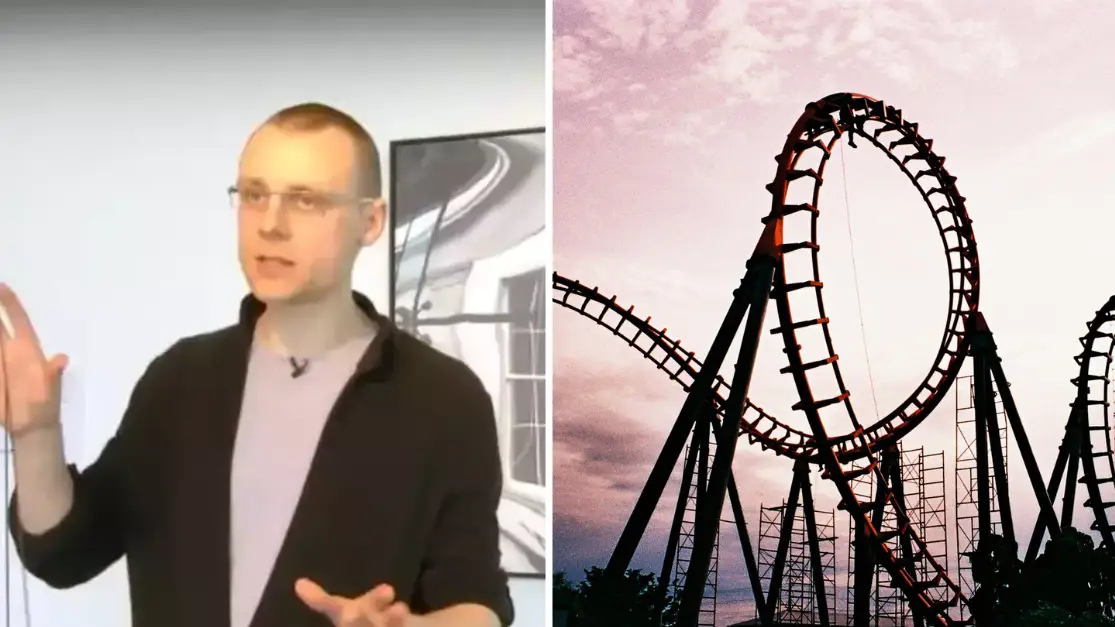
‘Euthanasia rollercoaster’ that you can only ride once is truly terrifying

Warning: This article contains discussion of suicide which some readers may find distressing.
News of Switzerland's 'suicide pod' has dominated headlines over the past week, but have you heard of Julijonas Urbonas' 'Euthanasia Coaster'?
The 'suicide pod' has become common knowledge after one couple became the first British citizens to sign up - and people are now thinking about euthanasia in more detail.
Advert
Euthanasia, also referred to as assisted suicide or assisted dying, is the means of passing away in a controlled environment through your own choice.
Illegal in England, many people see it as a way of retaining dignity in death when faced with an incurable or degenerative disease such as dementia.
Urbonas, from Lithuania, came up with the idea for the 'Euthanasia Coaster' in 2010, and now there's a simulation - just in case you wanted one.
Urbonas described the contraption as a 'hypothetic death machine in the form of a rollercoaster, engineered to humanely - with elegance and euphoria - take the life of a human being'.
Those brave enough to endure the ride experience a series of loops which decrease in size as it goes on.
Using maximum force, riding the rollercoaster would eventually result in the passenger's death.
For a long time, there were simply diagrams and words to refer to that explained what riding the rollercoaster would be like - but now there's a video.
The simulation illustrates what it's like to ride the 'Euthanasia Coaster', and offers a step by step to what your body would go through - and it's scary.
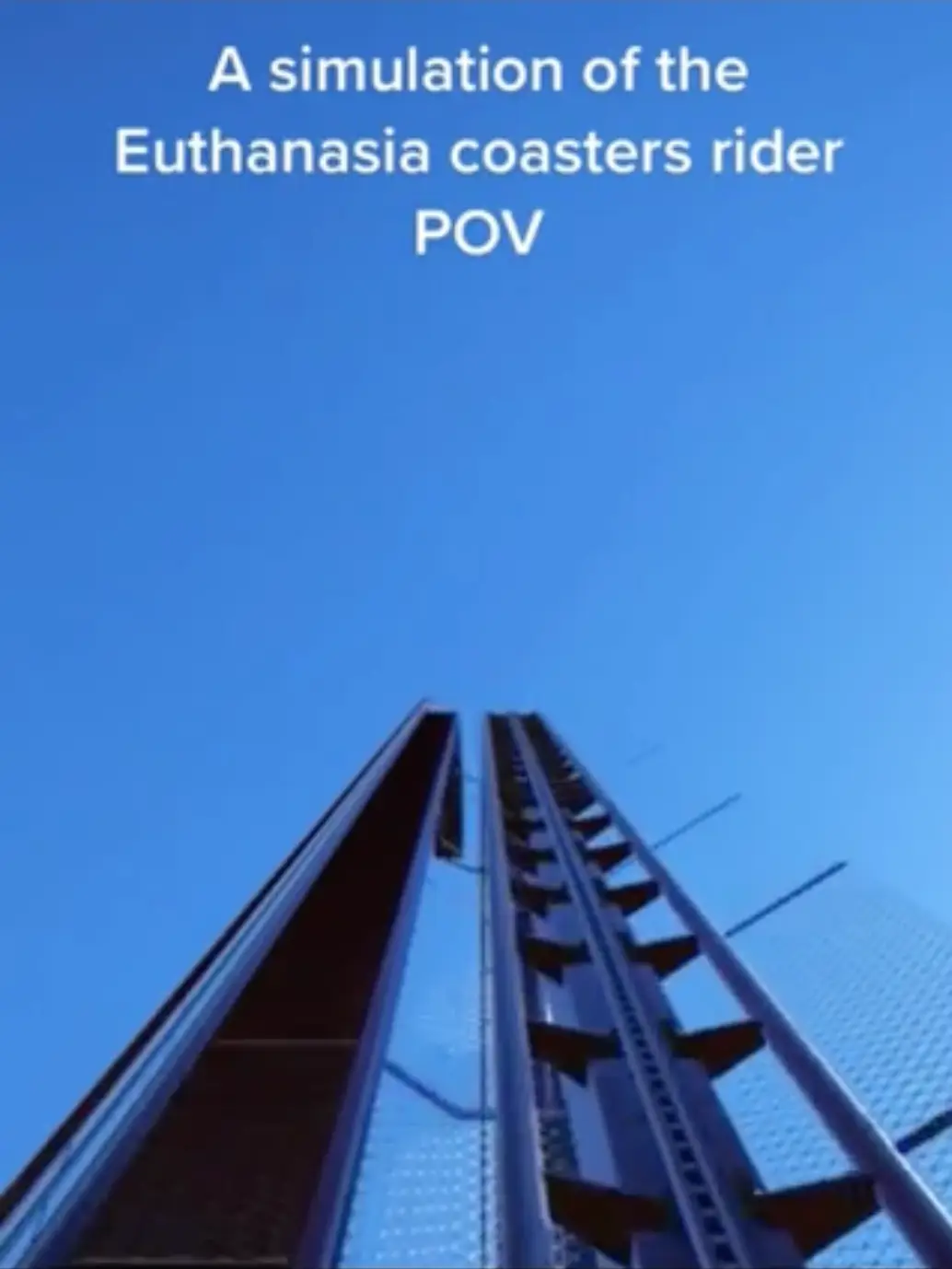
TikTok user @ridesnslides posted the bone-chilling simulation that allows you to experience what it would be like in the front seat.
The video explains: "The train would plummet over the side of the hill, hurtling down at a speed of 360kmh, close to its terminal velocity.
"After the 500-metre initial drop, the track flattens out and begins the first of seven inversions in a row. And this is the deadly part.
"It would take 60 seconds for the train to go through all seven of these inversions, and each inversion gets a gradually smaller and smaller diameter in order to maintain 10Gs of force to all the passengers during the entire 60-second experience."
They went on to use Formula One cars as a comparison.
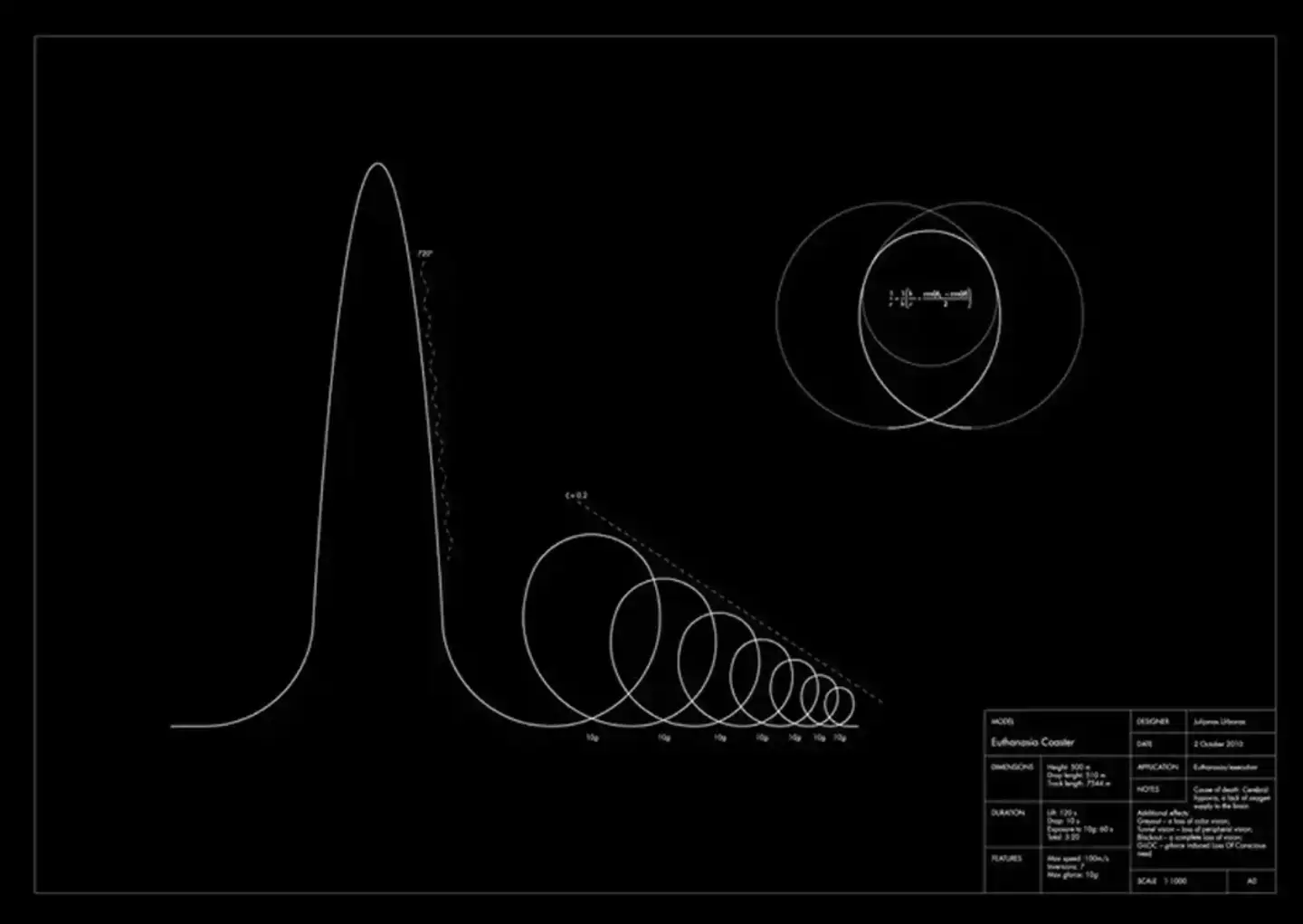
FYI, they reach a G-force of above 6Gs when taking a bend at high speed - whereas the 'suicide rollercoaster' would reach 10Gs.
Scary stuff.
The video explains further: "You would gradually begin experiencing worsening cases of cerebral hypoxia, meaning your blood would rush to the lower parts of your body, and so your brain wouldn't be getting enough oxygen to survive.
"The first thing that you would notice is your vision greying out which would then gradually turn to tunnel vision.
"From there, you would begin experiencing a blackout and ultimately you would eventually lose consciousness and die."
If you’ve been affected by any of these issues and want to speak to someone in confidence, please don’t suffer alone. Call Samaritans for free on their anonymous 24-hour phone line on 116 123.
Topics: Health, Mental Health
 Kya Buller