tyla homepage
  • News
  • Life
  • TV & Film
  • Beauty
  • Style
  • Home
  • News
    • Celebrity
    • Entertainment
    • Politics
    • Royal Family
  • Life
    • Animals
    • Food & Drink
    • Women's Health
    • Mental Health
    • Sex & Relationships
    • Travel
    • Real Life
  • TV & Film
    • True Crime
    • Documentaries
    • Netflix
    • BBC
    • ITV
    • Tyla Recommends
  • Beauty
    • Hair
    • Make-up
    • Skincare
  • Style
    • Home
    • Fashion
    • Shopping
  • Advertise
  • Terms
  • Privacy & Cookies
  • LADbible Group
  • LADbible
  • UNILAD
  • SPORTbible
  • GAMINGbible
  • UNILAD Tech
  • FOODbible
  • License Our Content
  • About Us & Contact
  • Jobs
  • Latest
  • Archive
  • Topics A-Z
  • Authors
Facebook
Instagram
X
Threads
TikTok
Submit Your Content
STI and STD differences explained as sexual health experts fight stigmas

Home> Life> Sex & Relationships

Published 10:32 15 Apr 2026 GMT+1

STI and STD differences explained as sexual health experts fight stigmas

Sexual health experts are attempting to raise awareness of the key differences to improve accuracy and remove harmful stigmas

Rhianna Benson

Rhianna Benson

google discoverFollow us on Google Discover
Featured Image Credit: Getty Stock Image

Topics: Health, News, Women's Health, Sex and Relationships, True Life, Real Life, Advice

Rhianna Benson
Rhianna Benson

Rhianna is an Entertainment Journalist at LADbible Group, working across LADbible, UNILAD and Tyla. She has a Masters in News Journalism from the University of Salford and a Masters in Ancient History from the University of Edinburgh. She previously worked as a Celebrity Reporter for OK! and New Magazines, and as a TV Writer for Reach PLC.

X

@rhiannaBjourno

Advert

Advert

Advert

For decades, the terms 'STI' and 'STD' were used interchangeably.

Apparently, however, a number of key differences actually exist between the two of them, which doctors are now emphasising in a bid to improve accuracy and remove harmful stigmas.

The first and more obvious difference is their names. STIs refer to sexually transmitted infections, while STDs refer to sexually transmitted diseases.

Previously, the term STD was used to cover all bases.

Advert

Despite it being a more accurate description in most instances statistically, in recent years, doctors have become increasingly concerned with the negative way the term has been interpreted.

Their issue was primarily aimed at the way youngsters had been educated about sexually transmitted diseases, with the latter word sounding like a life sentence, or something a person should be shamed for in the streets.
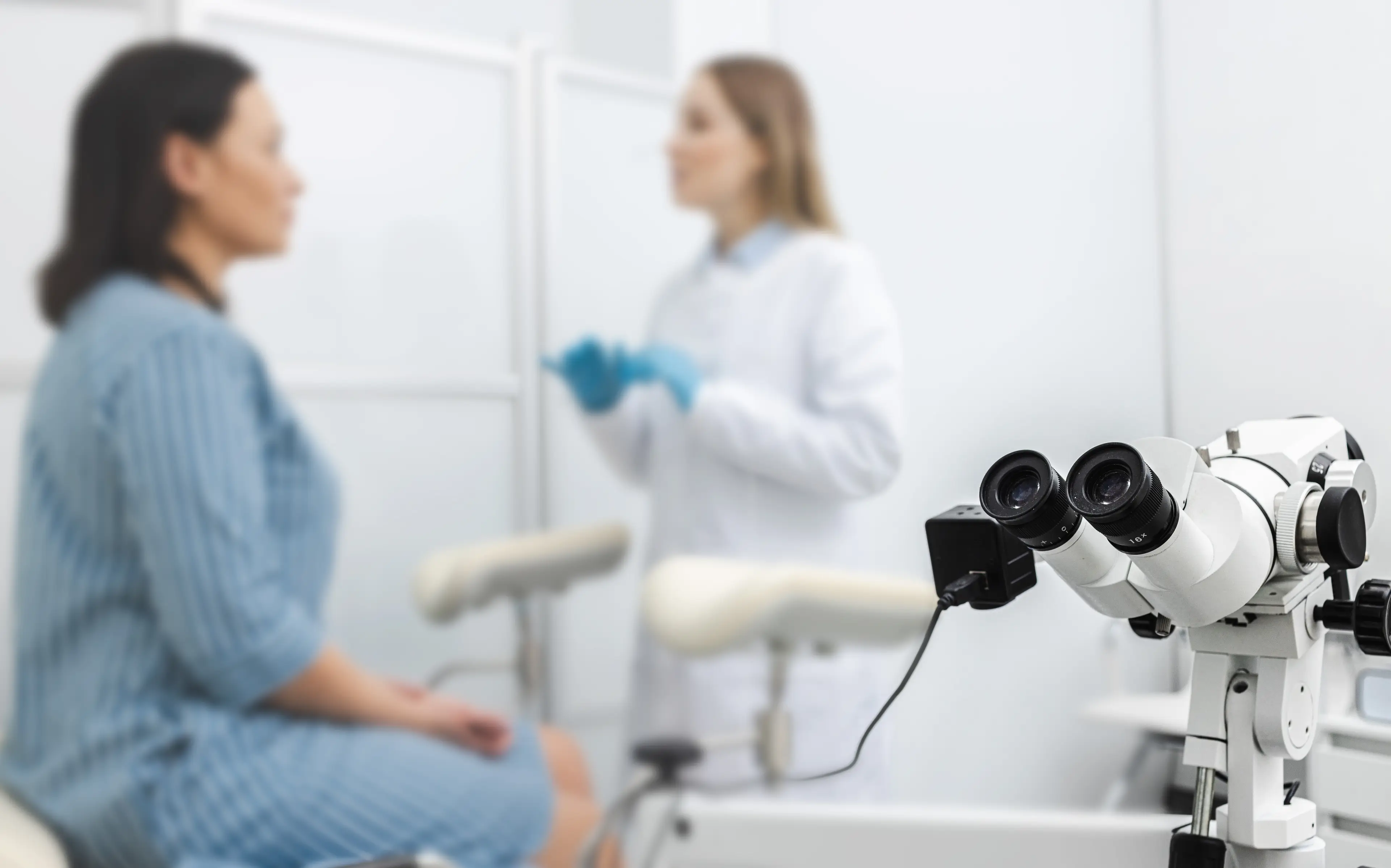
Infections usually precede sexually transmitted diseases (Getty Stock Images)

What sexual health experts are now attempting to highlight is that an infection precedes a disease.

In the initial state of infection, when symptoms often go unnoticed, a person isn't yet battling a disease. As such, the term 'STI' is being pushed as a better descriptor of their condition.

For reference, the most common STIs are chlamydia and gonorrhoea, the symptoms of which don't always show themselves.

In cases of infection, a virus, bacteria or parasite has entered the body and begun multiplying. This can happen in numerous different ways - through skin-to-skin contact, or the transmission of bodily fluids, for example.

Using 'STD' to describe these early stages suggests that a patient has a medical problem that comes hand-in-hand with several symptoms, which technically, they don't. Therefore, it's seen as misleading.

An infection should only constitute as a disease when it starts to cause symptoms - only once the infection has begun inflicting damage onto cells.

An infection should only constitute as an 'STD' when symptoms appear (Getty Stock Images)

What often catches people out, however, is that not all diseases started off as infections. This only applies to sexual health cases.

On top of this, not all infections develop into diseases.

An example of this is the super-common HPV (human papilloma virus), which often doesn't present any symptoms and which clears up on its own over time. Therefore, it's an STI, not an STD.

Only when the body fails to clear up the infection on its own can it cause symptoms like genital warts to appear, making it a disease.

Though symptoms of STDs can vary greatly depending on their nature, the most common to look out for are:

  • Sores, lesions or rashes around the genitals
  • A change in the colour, amount or smell of vaginal discharge
  • Penile discharge
  • Unusually bleeding
  • Pain during sex
  • Pelvic pain
  • Swollen testicles
  • Tingling or itching of the genitals
  • Rectal bleeding
  • Swollen lymph nodes.

Choose your content:

a day ago
2 days ago
  • Getty Stock Image
    a day ago

    Subtle symptom in your fingernails that could be early warning sign of two serious health conditions

    A phenomenon called 'Terry's nails' can be a warning sign of early-stage heart failure or liver disease, such as cirrhosis

    Life
  • Getty Stock Images
    a day ago

    High blood pressure could be caused by a hidden source of salt, scientists say

    Sodium forces the body to retain water to dilute it, increasing blood volume and placing extra pressure on blood vessel walls

    Life
  • Instagram/@hillside_farmhouse
    a day ago

    Parenting influencer Kelly Hopton-Jones shares update after accidentally running over 23-month-old son

    The devastated mother has taken to Instagram to issue a lengthy statement on the 'nightmare' ordeal

    Life
  • Getty Stock
    2 days ago

    One ‘smelly’ IBS symptom that has nothing to do with the bathroom

    We all known that IBS can be embarrassing, but there's another symptom to be mindful of

    Life
  • Early warning signs of erectile dysfunction - a 'silent' sexual health issue that men often ignore
  • Bacterial vaginosis isn't recognised as an STI despite affecting millions of women - doctors are calling for change
  • STI unknown to most people is nearly as common as chlamydia
  • Women are blaming 'butt floss' for unpleasant cysts down there