
Wimbledon reintroduces extremely rare rule for players

Amid the backdrop of a scorching British summer, competitors at The Wimbledon Championships may have to abide by a heat-based rule set by officials to ensure Grand Slam players' safety.
Today (29 June), the All England Club sees some of tennis’s rising stars, homegrown icons, and legendary competitors, including Serena Williams, returning to SW19 for two weeks of grass greatness.
Reigning champion Iga Świątek, No. 1 seed Aryna Sabalenka, and Japan’s Naomi Osaka are all set for first-round action today; on the men’s side, expect to see Jannik Sinner and Novak Djokovic on Centre Court.
The latter venue, where Catherine, Princess of Wales, and her husband William, Prince of Wales, set up shop in the Royal Box and ‘broke rules’ last season, is a 15,000-seat dome with a retractable roof.
Advert

And the roof may play a big factor at the third Grand Slam of the season if hot weather continues across Britain.
Last week’s heatwave, which caused some people to experience ‘heatwave belly’, is expected to continue throughout the summer, as per The Met Office.
And as a result, Wimbledon organisers have a strict rule that athletes must follow.
Wimbledon reintroduces heat breaks
Those who have been keeping up with the FIFA Men’s World Cup or watched Wimbledon last year should already be well accustomed to the idea of a hydration break.
At the tournament, football players are subjected to a three-minute ‘hydration break’ midway through each half.
Similarly, to help tennis players beat the heat, Wimbledon organisers have adopted a similar stance, allowing competitors to sit during the match and hydrate if it gets too hot.
Heat stress index explained

However, unlike the World Cup, the so-called hydration breaks at Wimbledon aren’t mandatory and will be granted by the umpire depending on the heat stress index.
The heat stress index, also known as ‘apparent temperature’ or the ‘feels-like temperature’, measures how hot it feels to the human body when air temperature and relative humidity are combined, as per ISGlobal.
If the index is deemed to exceed 30.1 degrees Celsius, then a player can ask for a break, as per the rules.
Only one of the players participating in the match needs to request the break for the rule to be implemented.
When will the Wimbledon breaks take place
These heat breaks will apply to all singles matches, including men's, women's, wheelchair, boys and girls.
Those competing in the doubles tournament will not be permitted to ask for a break.
ESPN reported that the pauses will be taken between the second and third sets in a best-of-three match.
In a best-of-five match, you can expect players to have a breather between sets three and four.
How long will the breaks be

If a player requests a break, they will be allowed to rest for 10 minutes during men's, women's, boys and girls matches.
Those competing in the wheelchair events will be allowed 15 minutes to rest during the break.
How roof will impact breaks
Wimbledon’s Centre Court and No. 1 Court both have retractable roofs, which may impact whether or not a player can opt in on the 10-minute rests.
If there is a match on either of the major Championship grass stadiums and the roof is closed, play will continue even if the heat stress index exceeds the 30.1-degree threshold, as per ESPN.
It has also been noted via the official Wimbledon website that the heat rule will ‘not be introduced for matches that were suspended overnight if one set has been completed in a best-of-three sets match or two sets have been completed in a best-of-five sets match’.
What expert says about the heat breaks
Last year, Nick Hird, co-founder and managing director of electrolyte brand Vidrate, told the Standard that the heat breaks are essential, as athletes may be at risk of serious health issues.
"Sport can become unsafe when the heat stress index tops around 30°C WBGT (Wet Bulb Globe Temperature scale)”
“Once conditions rise above these temperatures, the risk of heat exhaustion, dehydration, and heat stroke increases, especially in endurance-based or high intensity sports like football, tennis, and cycling.”
How to cool down in a heatwave
We’re all aware of the basics of keeping cool during the warmer weather, such as avoiding the sun between 11am and 3pm, staying hydrated, wearing light clothing, taking cold showers and avoiding physical activity, but have you tried these little-known hacks to beat the heat? (Thank us later).
The correct way to sleep with a fan on
A good night's sleep is almost never guaranteed during a heatwave, leaving many of us turning to our trusty fan to get through the night. However, it could be having a hidden impact on your health.
But rest assured, as Dr Anis Khalaf has explained how to overcome this, the correct way.
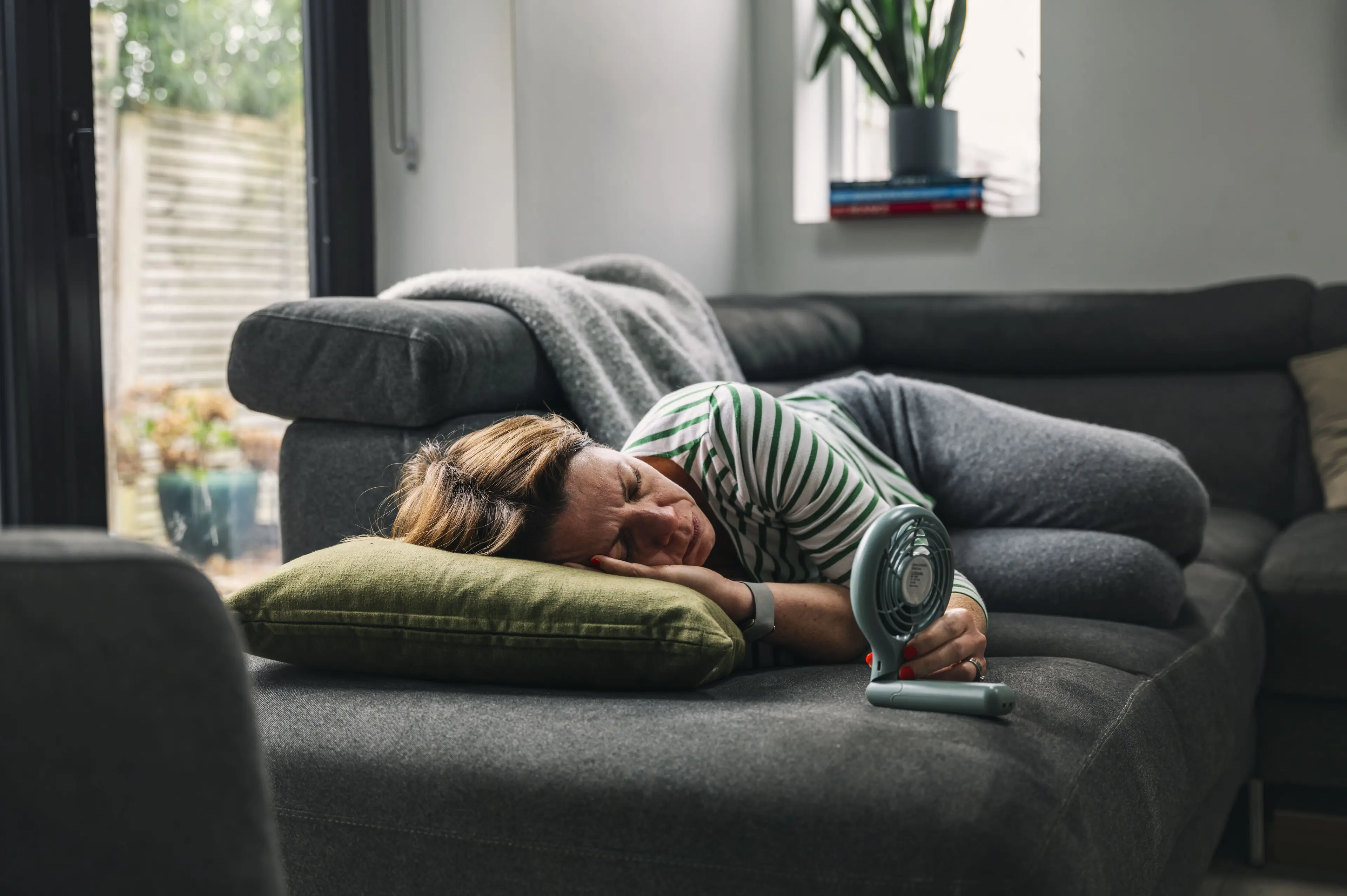
"The key is to not have any of the wind blowing on you,” he said. “So try facing it away from your body, and the air will still circulate around the room."
Though bear in mind that electric fans only tend to work when the temperature is below 35 degrees.
Drinking milk
Thanks to the sugars, proteins and fats in milk, Dr Natasha Fernando claimed that a glass of the liquid ‘may be more hydrating than water’.
She told Metro: “Milk also contains sodium which allows your body to hold onto water for longer, aiding hydration levels.”
The Egyptian sleep method
Forget the Military sleep method, because this hack claims to keep you cool as well as help you nod off.
Psychiatrist Alex Dimitriu, MD, told VeryWellMind: "The Egyptian sleep method involves sleeping under a damp sheet, which cools off from evaporation.”
Just make sure the sheet is damp and not drenched, and the room is well-ventilated.
Keeping windows shut during the day
While it may sound counterproductive, you’re essentially inviting the hot air inside by leaving them open. And since most houses in the UK are designed to keep the heat in, you could be making the situation a whole lot worse.
Instead, wait until temperatures have dropped (such as in the late evening) to open your windows to allow cooler air to circulate. Keeping your blinds and curtains shut can also help.
What is the law around working in a heatwave?
Unfortunately, according to Gov.uk, there’s no legal maximum working temperature for us Brits, so you don’t have the right to stop work because it’s simply too hot.
However, it does note that the temperature in all indoor workplaces ‘must be reasonable’ while employees are on the clock.
This is because employers have a ‘duty of care’ to protect the well-being of staff under UK employment law.
When it comes to the warmer weather, this can include:
- Ensuring the temperature is at a comfortable level
- Providing clean and fresh air
If you have any concerns about the temperature of your workplace, it's advised to speak with your employer.
 Ella Scott