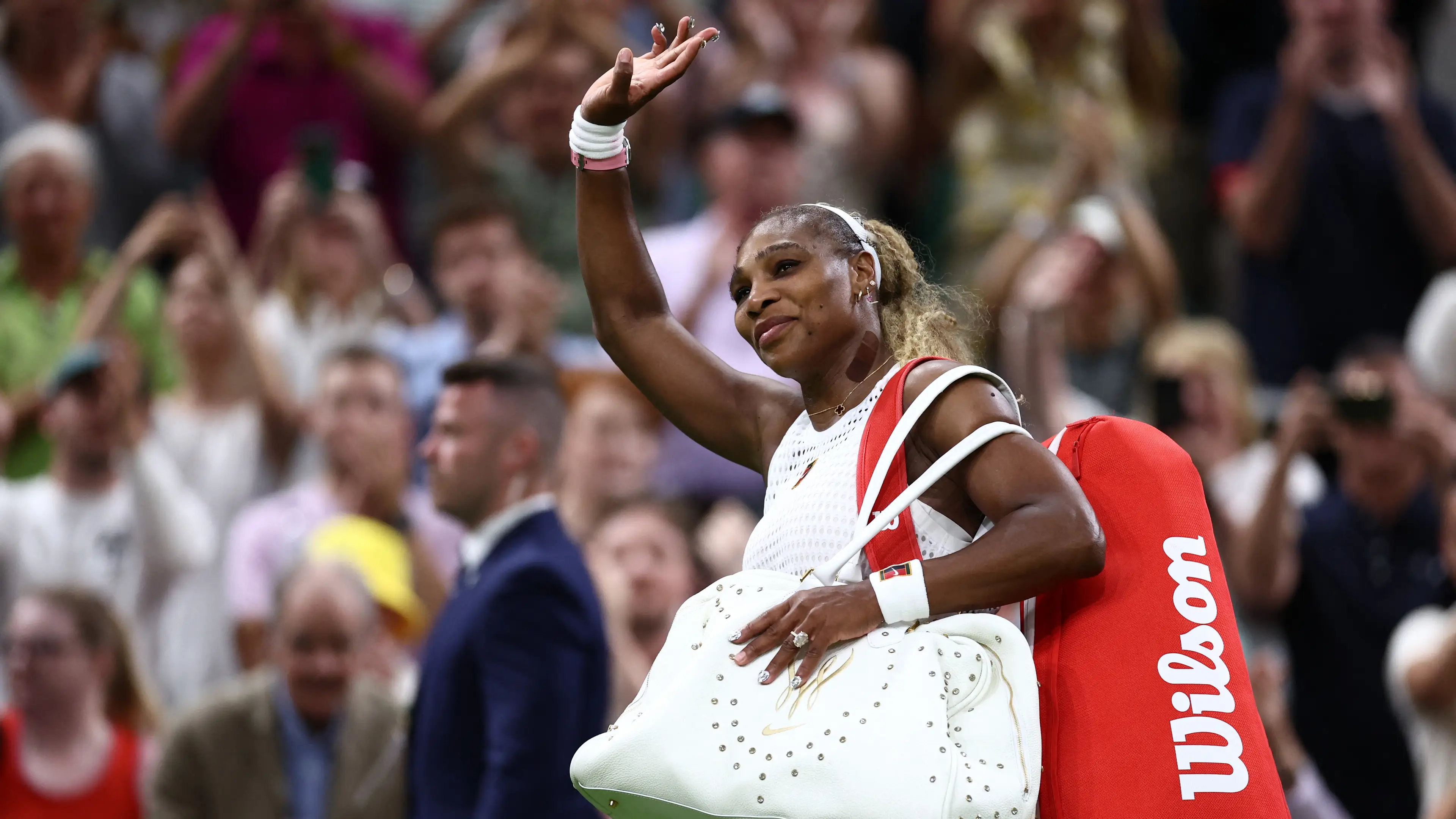
Why Serena Williams was allowed to break strict Wimbledon rule

Serena Williams' agent has explained why she was allowed to break a strict Wimbledon rule during her highly anticipated return to Centre Court earlier this week.
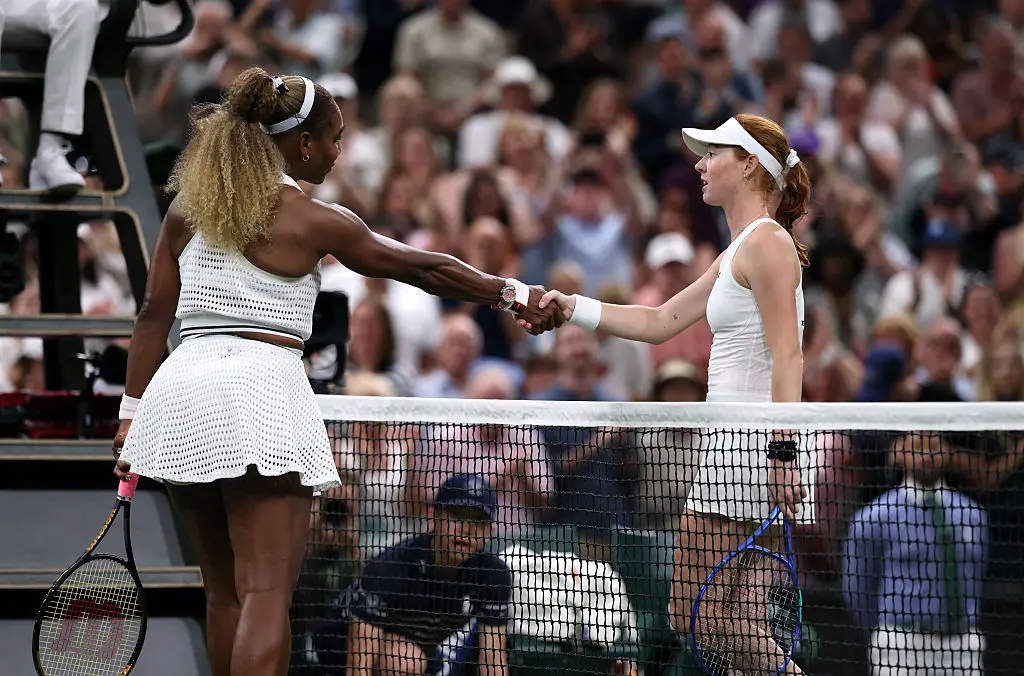
On Tuesday (30 June), the 44-year-old tennis legend took on Australia's Maya Joint but ultimately fell to a 6-3 6-7 (6) 6-3 defeat against the 20-year-old.
However, after her defeat, Williams didn't attend the press conference.
She instead opted to share a written statement distributed to the press, which read: "It was really great to be back at Wimbledon.
Advert
"I never expected to be here. The atmosphere was amazing. Walking out was amazing. I definitely relished it and missed it and enjoyed the moment more than anything."
But according to the 2026 Grand Slam rule book, which Wimbledon has to abide by, 'both winning and losing players or teams will be required to attend post-match media opportunities following the conclusion of each match'.
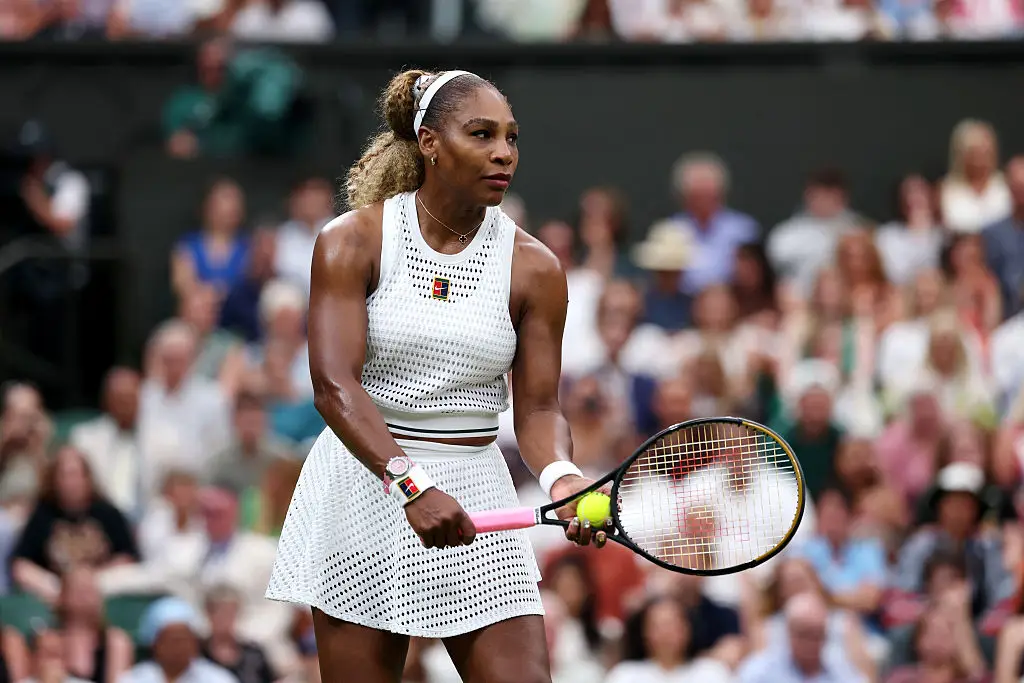
The rule book outlines how press opportunities 'enable players to put across their opinions on their performance and provide valuable exposure to the media and fans', as well as 'helping to drive engagement with the sport'.
The strict regulation is usually in place unless the contender is 'unable to appear on reasonable grounds (for instance, illness or injury)'.
"If a player is unable to appear, the appropriate level of direct communication is requested. Violation of this Section shall subject a player to a fine up to $50,000," players are warned.

But, as there hadn't actually been any confirmation of an official rule-break, it looks like Williams' reasoning for missing the press conference has been deemed acceptable.
Additionally, Jill Smoller, agent of Serena Williams, has since offered an explanation behind the sporting legend's absence.
"Serena tweaked her right knee at the end of the first set and was therefore excused from her media obligations by the Wimbledon and WTA medical teams," Smoller explained.
"She left site that night unaided and is doing everything she can to be ready for her doubles match later this week."
Wimbledon started on Monday (29 June) and is set to go on until later this month (12 July).
Williams had previously planned to team up with her sister Venus in the doubles later this week.
But, on Wednesday afternoon (1 July), she confirmed she is suffering from a knee injury.
"It felt so good to be back on the grass at Wimbledon. I'm incredibly thankful for the wild card - and even more grateful my daughters got to see that it's never too late to chase something you love," she wrote on Instagram.
"I tweaked my knee late in the first set, but I'll be doing everything I can to be ready for doubles with Venus Williams."
Wimbledon’s strangest rules
Wimbledon has strict rules and regulations for pretty much everything - from the length of the grass to the temperature of the tennis balls, and you can be fined thousands of pounds for certain conduct violations.
Curfew
While at other grand slams, play continues late into the night, at Wimbledon there’s a strict 11pm curfew.
This means tennis fans sometimes have to go to bed on a cliffhanger.
Novak Djokovic and Rafael Nadal’s 2018 semi-final clash was suspended after the third set. Meanwhile, Andy Murray was particularly peeved when he was in the lead against Stefanos Tsitsipas in 2023, but went on to lose when the game was paused overnight and restarted the following morning.
Timed toilet breaks
Players are limited to one toilet break for matches up to three sets, and two if it goes on for longer.
They can only go during a set change and they have to be back within three minutes, or they risk giving a point to their opponent.
The longest ever Wimbledon match lasted a whopping 11 hours over three days, so players better get their nervous wees in before the match.
Temper tantrums
Players can be fined up to £36,900 for smashing their rackets. Djokovic is believed to have smashed over 60 of them over the course of his career.
Bad language can also result in the same maximum fine.
Countdown to serve
As soon as the ball goes out of play, the serving player has just 25 seconds to hit their serve, or the umpire can call a violation which could potentially grant a point to their opponent.
Fines for not trying hard enough
Players must demonstrate they’re giving their all to win the match. Australian player Bernard Tomic was fined an eye-watering £45,000 after he was accused of not putting in enough effort to beat French player Jo-Wilfried Tsonga, losing after just 58 minutes.
Age limits
Players have to be at least 14 to compete, which means youth sensations like Coco Gauff were initially barred from taking part.
Spectators, meanwhile, have to be accompanied by a guardian if they’re under 16. Under-fives aren’t permitted at all onto show courts.
This meant Serena Williams' two-year-old daughter Adira River couldn't watch her mum's comeback at this year's grand slam, while not all of Andy Murray's four children could watch his final doubles appearance in 2024.
The grass and the balls
Everything at Wimbledon is just so. The grass is cut to 8mm, which is apparently best suited for modern tennis play and for the grass to survive.
Meanwhile, the tennis balls are kept in a fridge in order to maintain a constant temperature of 20°C. A consistent temperature is important because it apparently affects the way the balls bounce. The more you know.
Tennis whites
It was originally just female players who were required to wear all-white on the court. According to Tennis Fashions: Over 125 Years of Costume Change, the rule was introduced because it was ‘quite unthinkable that a lady should be seen to perspire’. OK then…
Eventually, the rule was imposed on men too.
A single trim of colour is allowed around the neckline and sleeve cuffs, but this must be no thicker than 1cm.
In 2022, an exception was made so women could wear dark undershorts to feel more comfortable if they were on their periods.
 Rhiannon Ingle