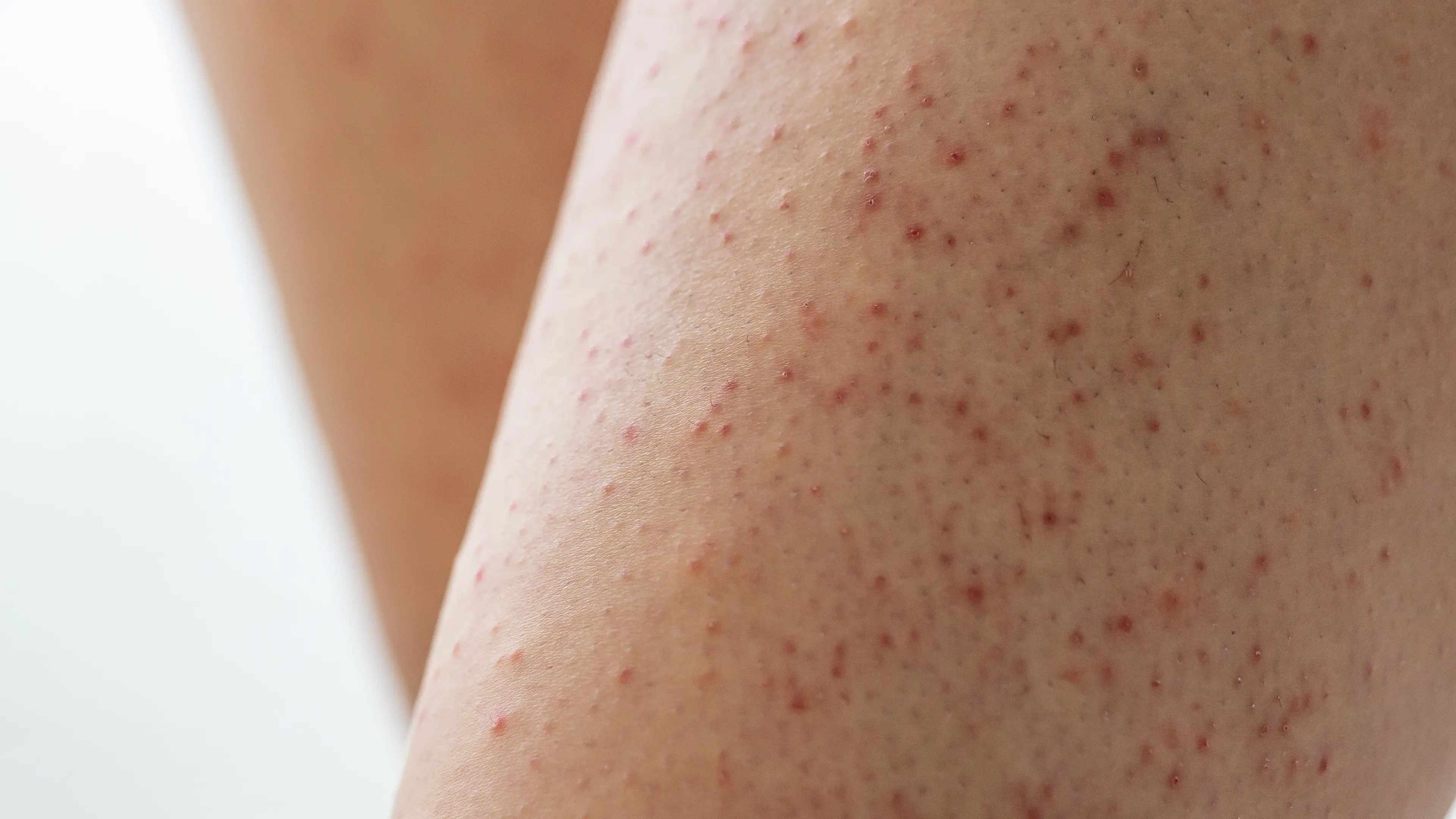
Dermatologist explains how to identify keratosis pilaris on your arms and legs

Did you know there's actually a name for the tiny, red, goosebump-like spots that appear on your skin?
When it comes to noticing skin changes, there are so many different conditions that it can be difficult to identify exactly what's going on and whether it's something to worry about.
A dermatologist has revealed everything you need to know about one extremely common, harmless condition that is widely underreported.
According to The New York Times, approximately 40 percent of adults and 50 to 80 percent of teenagers suffer from a skin condition called keratosis pilaris.
Advert
As we say, it's a very common, harmless condition where small bumps appear on your skin.
You usually get patches of small bumps on your arms, thighs, or bottom, but they can appear in other places, as explained by the NHS.
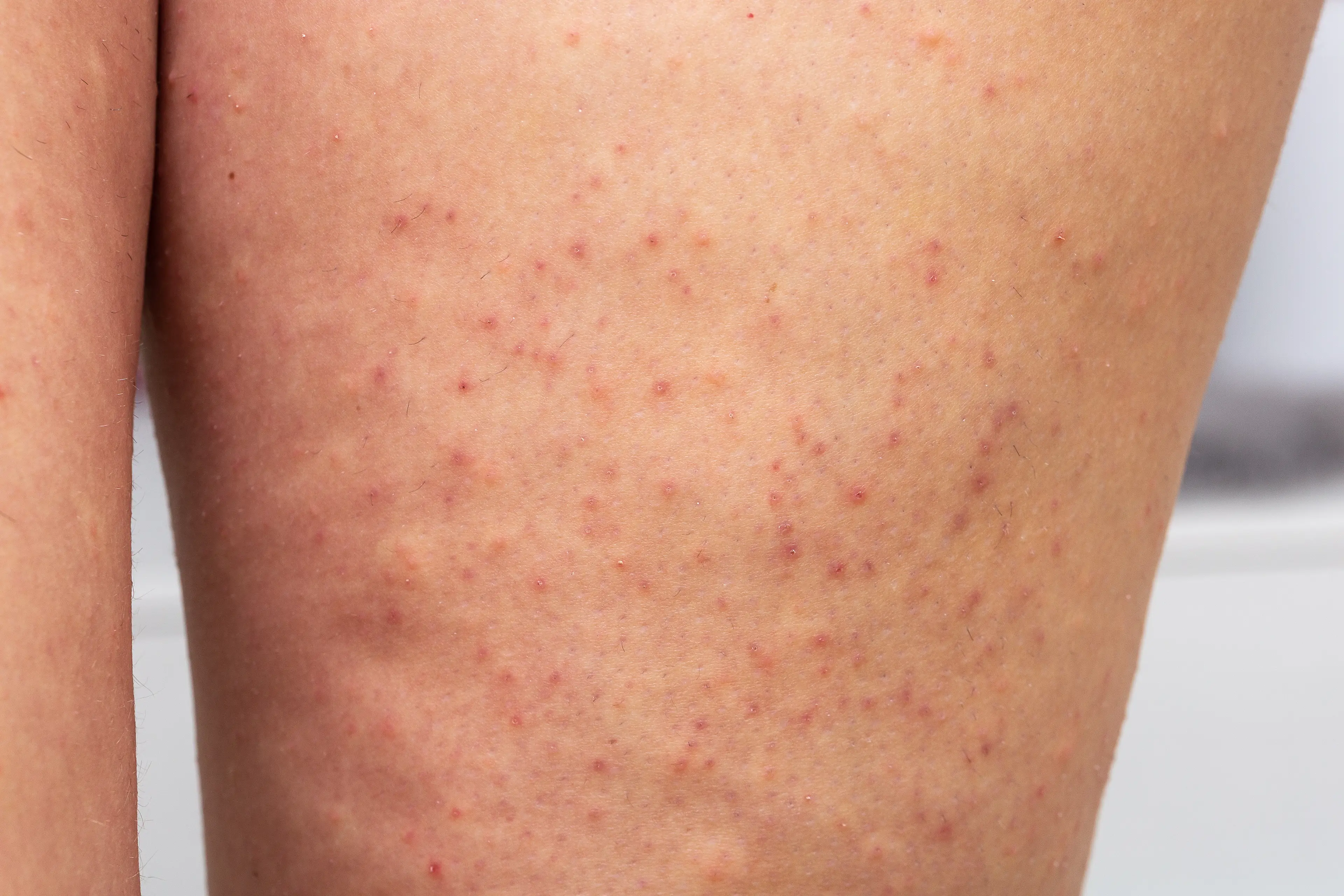
The bumps in question are usually the colour of your skin, and they can also be red if they're on white skin, or darker on brown or black skin.
Your skin may sometimes feel itchy, and it might be better in summer and worse in winter.
So, what exactly is it? Well, keratosis pilaris appears when your hair follicles become blocked with a build-up of keratin, a substance found in skin, hair, and nails.
While nobody knows exactly why keratin builds up, the condition is thought to run in families, so if your parents have it, chances are you may get it too.
Dr. Aegean H. Chan, a dermatologist and dermatopathologist, spoke to E! News about how to identify keratosis pilaris, including how you can treat it if you wish to do so.
Explaining more about the condition, the expert said, "It’s not poor hygiene or contagious. It’s simply a genetic tendency toward how your skin forms and sheds keratin.
"It occurs most frequently on the backs of the upper arms, but can also occur elsewhere on the body, like on the thighs, and rarely, on the cheeks."
She added: "Instead of shedding normally, that keratin forms a tiny plug, which creates the small rough bumps people often describe as ‘chicken skin.'"
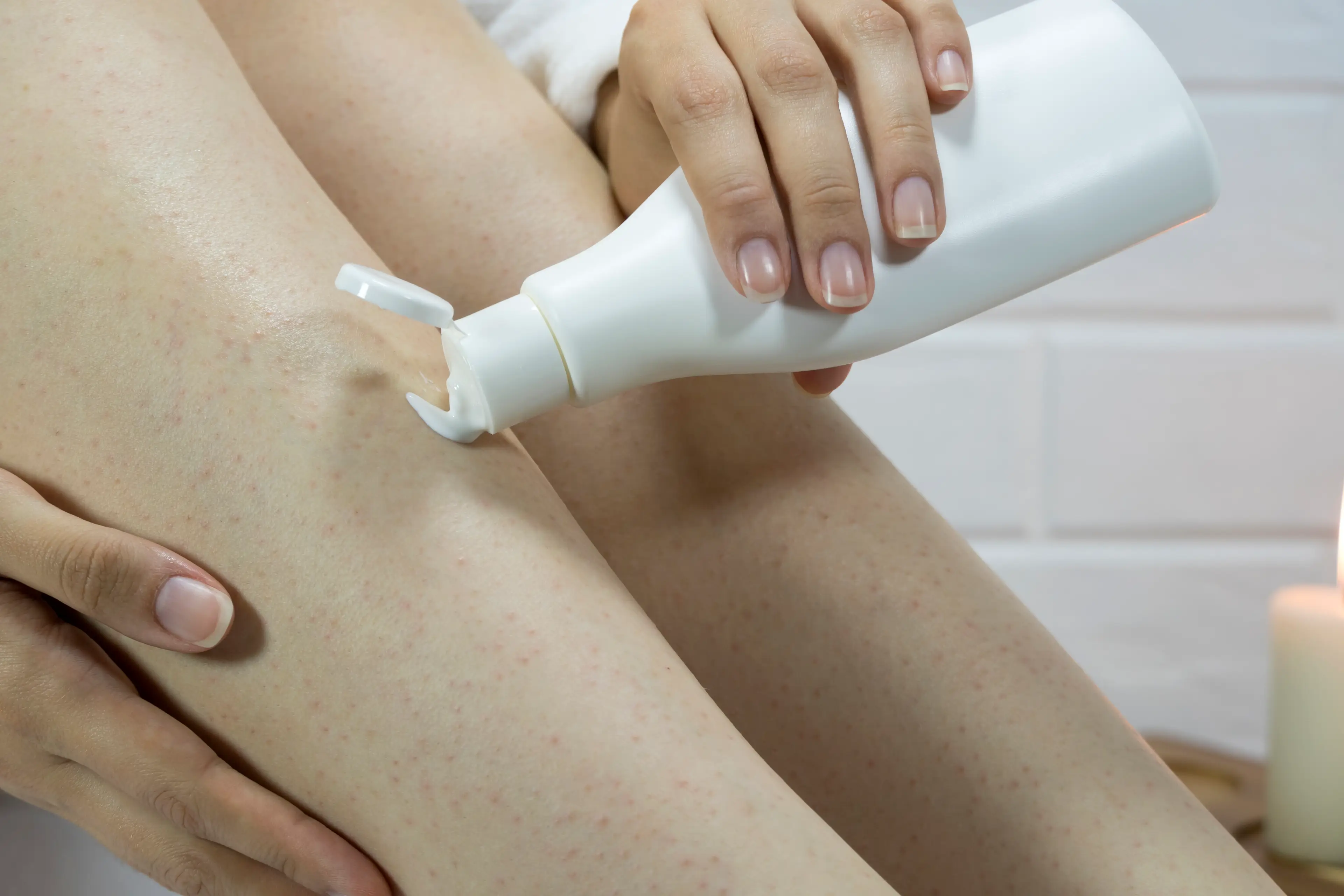
The doctor explained that while you can't prevent it entirely, as it's mainly a genetic condition, you can reduce flare-ups and make it less noticeable by keeping up with maintenance.
Chan recommends frequently using a 'thick moisturizer' to reduce barrier dysfunction, as well as 'gentle chemical exfoliants' to increase skin turnover and reduce bumpiness.
Topical retinoids can also 'help to regulate keratinocyte turnover and reduce the follicular plugging'.
"There are some great retinol body lotions, as well as body products with AHAs. Urea is also a great ingredient that is hydrating, as well as gently exfoliating," the expert advised.
Keratosis pilaris is often characterised as a skin type rather than a condition, and if it's not bothering you, there's no need to do anything.
The reasons for trying to prevent it are, in most cases, purely cosmetic, as it's usually asymptomatic.
And, even if you don't fancy ramping up your skincare routine, Boots Health Hub reports that keratosis pilaris improves naturally over time, so if it’s not causing discomfort, the best approach may be to focus on a normal, gentle routine and simply wait for it to improve on its own!
Topics: Skincare, Health, Beauty, Life, Real Life, Women's Health
 Madison Burgess