Your eyelashes falling out could be a sign of one of these three health conditions

Many of us strive tirelessly to sport ourselves a pair of long, thick and luscious lashes.
Whether it's sticking to a regimented routine of castor oiling, splashing the cash on some well-rated growth serum, glueing on falsies, spending hours in the salon getting lash extensions, or relentlessly coating the little hairs that frame our eyeballs with copious amounts of black mascara - it's clear the beauty community loves a full lash.
So, you can understand that it can be pretty concerning when your eyelashes start to fall out one by one, with medical experts issuing an important warning that this could actually be a sign of one of three health conditions.
Now, according to the American Academy of Ophthalmology, people lose anywhere between one and five eyelashes every day, with Dr Bajic telling the Cleveland Clinic: "It’s totally normal to find a lash or two on your face or pillowcase occasionally.
Advert
"Like all hairs on your body, lashes go through phases of growth, transition and resting, and eventually fall out."
But if you find full clumps of lashes falling out, you may have rapid eyelash loss, which is also known as ciliary madarosis.
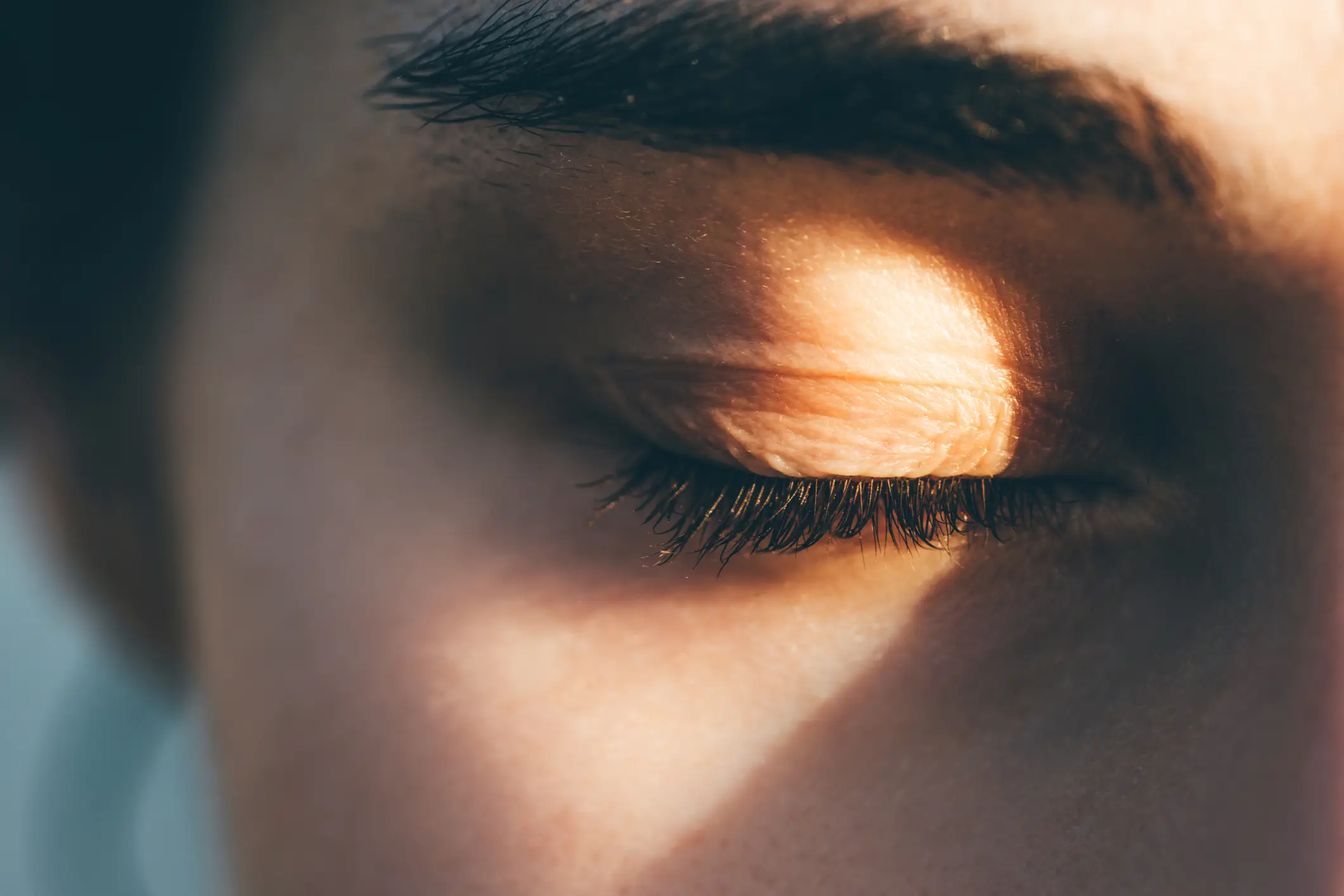
"Ciliary madarosis itself isn’t a disease, but it’s a consequence of something affecting your eyelash growth," the doctor explained.
"The cause could be something simple like irritation from eye makeup, or it could be a sign of a deeper health issue that needs treatment."
According to the Cleveland Clinic, eyelash loss can be due to blepharitis (inflammation), irritation from lash products, vitamin deficiences and medications - but it can also be due to the following health conditions.
"Eyelash growth is a nonessential body function," the expert continues. "So, if your body is busy fighting an illness, it may not have the resources for maintaining healthy lashes.
"Humans are attracted to thick lashes because they’re a sign of overall health."
Autoimmune diseases
The experts explain that one possible reason behind your eyelashes falling out could be an autoimmune disease.
This may include alopecia areata, an autoimmune disease that attacks your body’s hair follicles, which causes patchy hair loss.
Another example is lupus - an autoimmune disease that makes your immune system damage organs and tissue throughout your body. Lupus can also cause inflammation that can affect your skin, joints, blood and organs like your kidneys, lungs and heart.
And the final example, Cleveland Clinic explains, is scleroderma, which is when your body produces too much collagen, a protein that you need for healthy skin and tissue.
Infections
Cleveland Clinic warns that eyelashes falling out could also be because of an infection, including herpes simplex virus (HSV), HIV and AIDS, syphilis and tuberculosis (TB).
"Herpes zoster is a common cause of madarosis of the upper or lower eyelid. Secondary syphilis can cause outer eyebrow loss and eyelash loss," the National Institutes of Health explains.
"HIV/AIDS may cause madarosis or trichomegaly."
Skin cancer
And, lastly, the symptom could also be a warning sign of skin cancer.
"More rarely, localised lash loss can be a symptom of a skin cancer on the eyelid. Cancer can interrupt eyelash growth as harmful cells spread," the American Academy of Ophthalmology outlines.
It's best to consult with your doctor if you are concerned you may have one of these health conditions.
If you’ve been affected by any of these issues and want to speak to someone in confidence, contact Macmillan’s Cancer Support Line on 0808 808 00 00, 8am–8pm seven days a week.
Topics: Life, Explained, Health, Women's Health, Advice, Skincare, Cancer, Sex and Relationships, Beauty
 Rhiannon Ingle