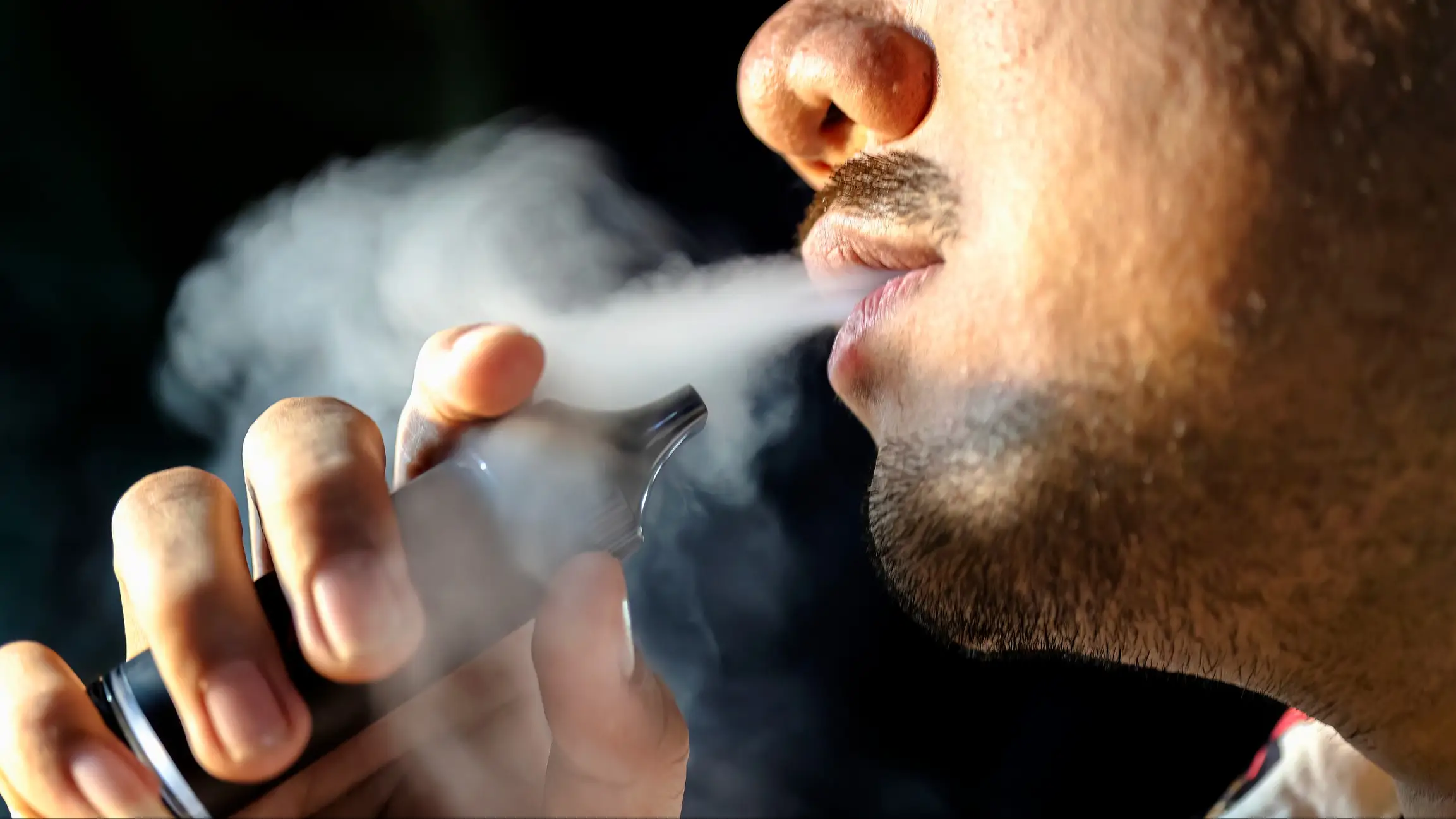
Symptoms of EVALI that every vape addict needs to be aware of

Regular vapers have been warned about the dangers of developing a condition known as EVALI and the red flag signs to look out for.
Now, we know that vaping has soared in popularity in recent years, with many people swapping out their traditional cigarettes for the devices, which allow you to inhale a mist of nicotine and flavouring.
The latest ONS statistics actually reveal that vaping has now taken over smoking in the UK for the first time ever, as a whopping 5.4 million adults use vapes daily or occasionally, compared with 4.9 million that are using cigarettes.
And while they are thought to be better for us than cigarettes, the increase in use has come with an outbreak of EVALI cases.
Advert
Most recently, Below Deck star Fraser Olender revealed he'd been diagnosed with 'vape poisoning' after a shock heart attack aged just 33 years old.
Here's everything you need to know about EVALI, including the signs and symptoms to look out for.
What is EVALI?
EVALI is the term for a serious health condition in which a person’s lungs become damaged from substances contained in e-cigarettes and vaping products.
It stands for E-cigarette or Vaping Product Use-Associated Lung Injury, and it was actually only first identified in 2019.
It's sometimes also referred to as vaping-associated pulmonary injury (VAPI) or vaping-associated lung injury (VALI).
According to the American Lung Association, it's an acute or subacute respiratory illness and can be fatal, with more than 50 percent of patients with EVALI requiring admission to an intensive care unit.
EVALI is an umbrella term to describe any lung disease that can be caused by using e-cigarettes, including:
- Acute respiratory distress syndrome (ARDS)
- Hypersensitivity pneumonitis
- Bronchiolitis obliterans, more commonly known as popcorn lung
It's thought to be cause by modified THC vapes contaminated with vitamin E acetate, and experts think it is unlikely to be linked to nicotine vapes.
 More than 50% of EVALI patients require admission to an intensive care unit (Getty Stock Image)
What are the symptoms of EVALI?
There are a number of symptoms that come along with EVALI that vapers should keep an eye out for.
According to Yale Medicine, these include:
- Shortness of breath
- Cough
- Chest pain
- Fever and chills
- Diarrhea, nausea, vomiting, and abdominal pain
- Rapid heartbeat
- Rapid and shallow breathing
It can be challenging to diagnose because it has the same symptoms as many other lung conditions. Doctors may perform blood oxygen level tests, imaging tests and pulmonary function tests to identify it.
Treatment is based on expert recommendations and depends on the severity of the illness on a case-by-case basis.
However, it may include supportive oxygenation, medication such as antibiotics or antivirals to fight infection and corticosteroids to help reduce inflammation in the lungs.
Don't vape, kids!
 Madison Burgess