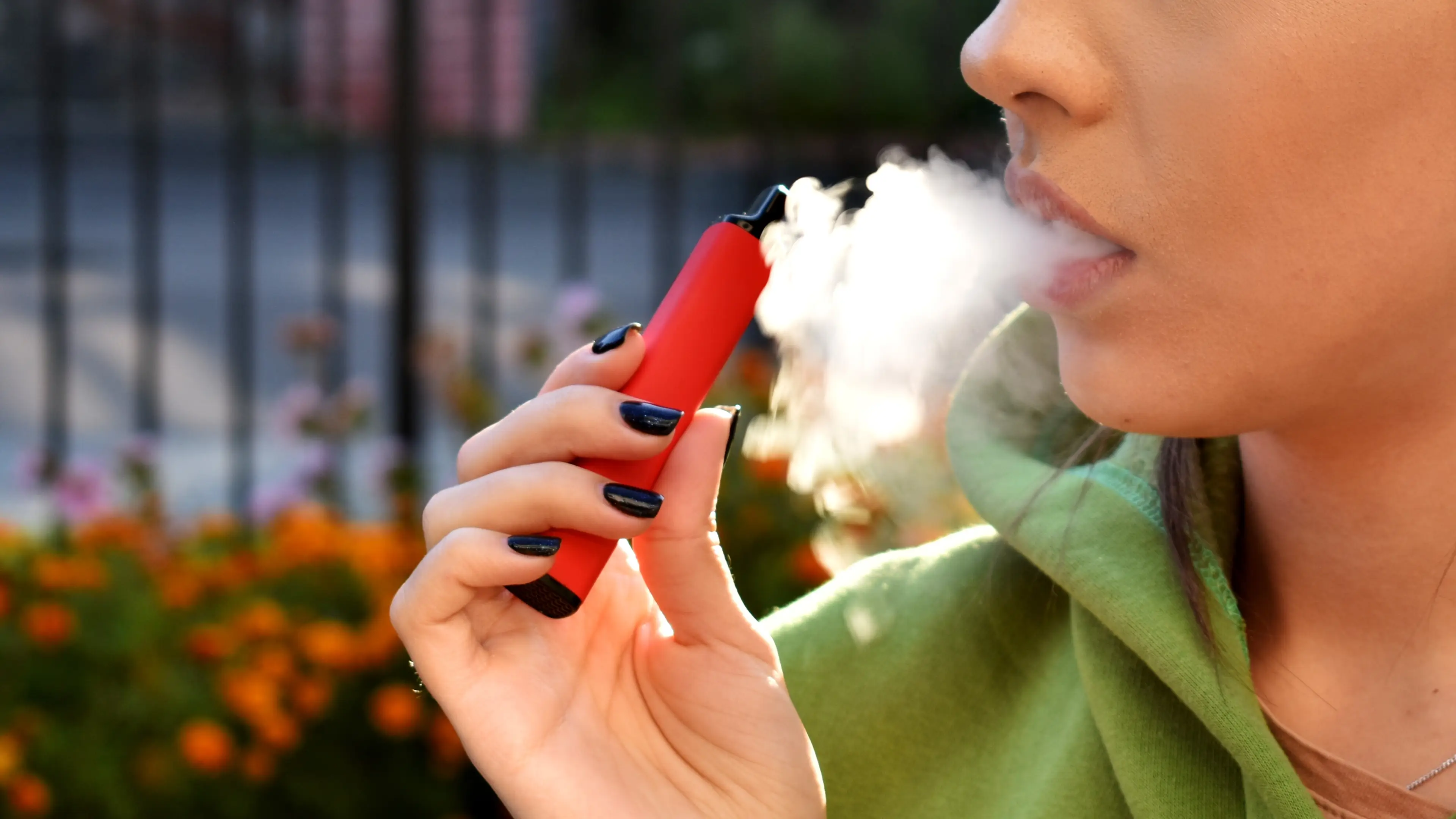
Why 'niccy-rush' side effect of vaping and smoking might be more serious than you realise

For many smokers and vapers (vapists, vapourisers?), the physical rush you feel after taking a deep puff all forms part of the thrill.
Apparently, however, this airy sensation is far from fun and games, and can actually pose some serious risks to health.
Nicknamed a 'niccy-rush', this experience is particularly felt within new smokers or people who only vape socially or sporadically. That's because long-term nicotine-consumers have likely become accustomed to it over the years, so don't feel it so intensely.
For non-smokers and those with squeaky-clean lungs, a 'niccy-rush' describes a sudden increased head rush and the feeling of dizziness, caused seconds after consuming nicotine - hence the 'niccy'.
Advert
This highly addictive chemical compound found in tobacco plants and vapour enters your bloodstream and reaches your brain once a cigarette or a vape has been inhaled.

People using nicotine pouches or snus in an attempt to cut back will also feel the same sensation, given that it provides the same 'rush' without the extra added smoke, tar or liquid.
What does a 'niccy-rush' feel like?
Despite only lasting for a few seconds, along with a pleasurable dizziness, 'niccy-rushes' could cause a positively-altered mood - caused specifically by the dopamine release - and warmth or tingling inside the body.
On top of this, smokers and vape-users claim to experience an increased alertness both mentally and physically, as a result of the adrenaline.
This isn't to say that every smoker will encounter the same sensation.
As we say, how long a person has been smoking for is the most considerable factor, with those with high tolerances to nicotine feeling it to a considerably lesser degree compared to newbies.

Other factors that could determine the intensity of a 'niccy-rush' are the strength of the nicotine, with a higher content generally producing a more noticeable sensation, and a person's genetics, with those with faster metabolism feeling it less.
How much food a person has in their belly at the time of consuming nicotine can also come into play, with fullness responsible for blunting the rush.
The rush eventually fades away when the body - specifically, the brain - has become accustomed to the amount of nicotine whirling around.
What are the risks?
In the majority of adults, a 'niccy-rush' itself isn't considered medically dangerous. By that, we mean that you can't die from it, and that it goes away within a matter of minutes.
That said, however, the sensation can come with side effects that some newbies to smoking or vaping aren't familiar with, and can find unnerving.
This includes the dizziness we've already mentioned, along with a brief feeling of nausea.

As the brain gets used to the existence of nicotine inside the body, in some people, they can be left with a headache.
The riskiest aspects of consuming this chemical are the likelihood that a person will experience some degree of increased heart rate, as well as elevated blood pressure.
As we say, the temporary nature of the rush means that, in most people, these side effects pose no major, long-term risks to health.
They could, however, pose dangers to those with heart conditions or blood pressure issues.
"Nicotine itself does not cause cancer, lung disease, heart disease or stroke and has been used safely for many years in medicines to help people stop smoking," the NHS explains, adding, however, that the chemical's notoriously-addictive nature is something to be considered.
And whilst nicotine vapes a largely considered a good way to quit smoking - in that they give you the nicotine hit without the harmful chemicals that come from burning tobacco - they're not completely harmless.
 Rhianna Benson