
‘Pheromone-maxxing’ explained as doctor issues warning to parents with teenage boys over concern

Parents with teenage boys have been issued a warning over the new 'pheromone-maxxing' sweeping across Gen Z, with one doctor highlighting a major concern.
According to social media, we're all seemingly obsessed with health optimisation and 'maxxing' out every facet of our body as much as possible.
Whether it's 'vagina-maxxing', 'boob-maxxing' and even 'erection-maxxing' - it's clear the 'maxxing' trend isn't going away anytime soon.
And the latest piece of lingo to add to the ever-growing list is 'pheromone-maxxing' with Dr Mihaela Gulyas, Aesthetic Doctor and Founder of SKNCode London Clinic, exclusively explaining to Tyla all we need to know on the matter.
Advert

What exactly is 'pheromone maxxing'?
For anyone not in the loop, Dr Mihaela explains that 'pheromone maxxing' is the latest example of social media taking a small piece of biology and turning it into something that sounds far more scientific than it actually is.
"The idea is that boys and young men deliberately stop showering, avoid deodorant and sometimes wear the same unwashed clothes because they believe this allows their natural 'pheromones' to become stronger, supposedly making them more sexually attractive," she continued.
From a medical perspective, the expert points out a 'major flaw' in that theory.
"We do not currently have convincing scientific evidence that humans can increase their sexual attractiveness by allowing body odour to build up," Dr Mihaela said.
"Human scent may play a subtle role in attraction, but that is very different from saying that being unwashed makes someone biologically irresistible."
She added: "In fact, what becomes stronger when you stop washing isn’t some magical attraction signal — it’s predominantly the interaction between sweat, sebum and microorganisms living on the skin."

What warning signs should parents look out for?
"I wouldn’t panic simply because a teenage boy suddenly becomes reluctant to shower — parents have probably been negotiating that particular issue long before TikTok existed!" Dr Mihaela assured, adding that what she would pay attention to is the reasoning behind the behaviour.
She explained: "If a teenager suddenly stops showering, refuses deodorant, repeatedly wears unwashed clothes or starts talking about 'pheromones', 'maxxing' or changing his body to become more attractive, it is worth having a conversation about what he is watching online.
"More concerning would be a teenager experimenting with extreme practices promoted alongside these trends, particularly consuming urine, hormones, steroids or unregulated supplements."
Dr Mihaela recommended that rather than embarrassing them about their smell, parents should ask where the idea came from and discuss the science behind it.
"Teenagers can be particularly vulnerable to content promising that one unusual 'hack' will suddenly make them more attractive or confident," she added.
What are the dangers of not washing for teenage boys?
According to the expert, puberty is actually one of the worst times to deliberately stop washing.
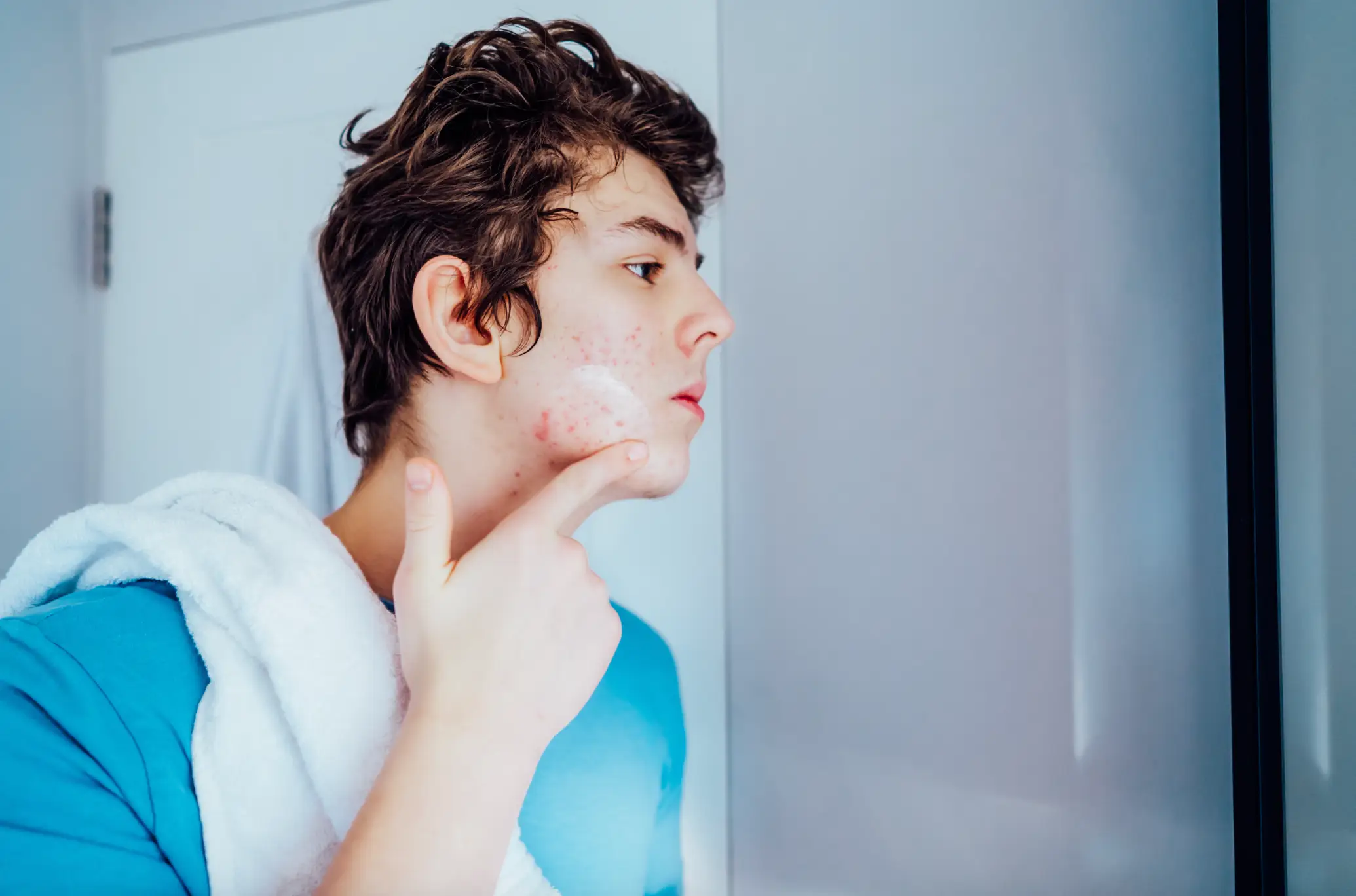
Dr Mihaela added that hormonal changes increase sweat and oil production, which is why teenagers naturally tend to develop stronger body odour, greasier hair and acne.
"Sweat itself isn’t necessarily what smells — much of body odour develops when microorganisms on our skin break down components of sweat," she continued.
"If sweat, oil, dead skin and bacteria are repeatedly allowed to accumulate, teenagers can experience stronger body odour, blocked pores, worsening acne and irritation. Warm, moist areas such as the armpits, feet and groin are also environments in which bacteria and fungi can thrive."
For boys who exercise or play sport regularly, sitting in sweaty clothing for prolonged periods can make these problems even worse.
The expert continued: "Good hygiene doesn’t mean obsessively scrubbing the skin or trying to eliminate every bacterium — our skin microbiome is important. It simply means maintaining a sensible routine: showering regularly and after heavy exercise, wearing clean clothes and underwear, keeping the feet and intimate areas clean and using deodorant or antiperspirant where appropriate.
"And perhaps the biggest irony of 'pheromone maxxing' is that the behaviour intended to make someone more attractive may have precisely the opposite effect."
Dr Mihaela concluded: "There is no scientifically proven shortcut to attraction hiding underneath three days of sweat. Good hygiene, confidence and learning how to communicate with another person remain considerably better dating strategies."
Topics: Health, Tyla Exclusive, Parenting, Life, Sex and Relationships
 Rhiannon Ingle