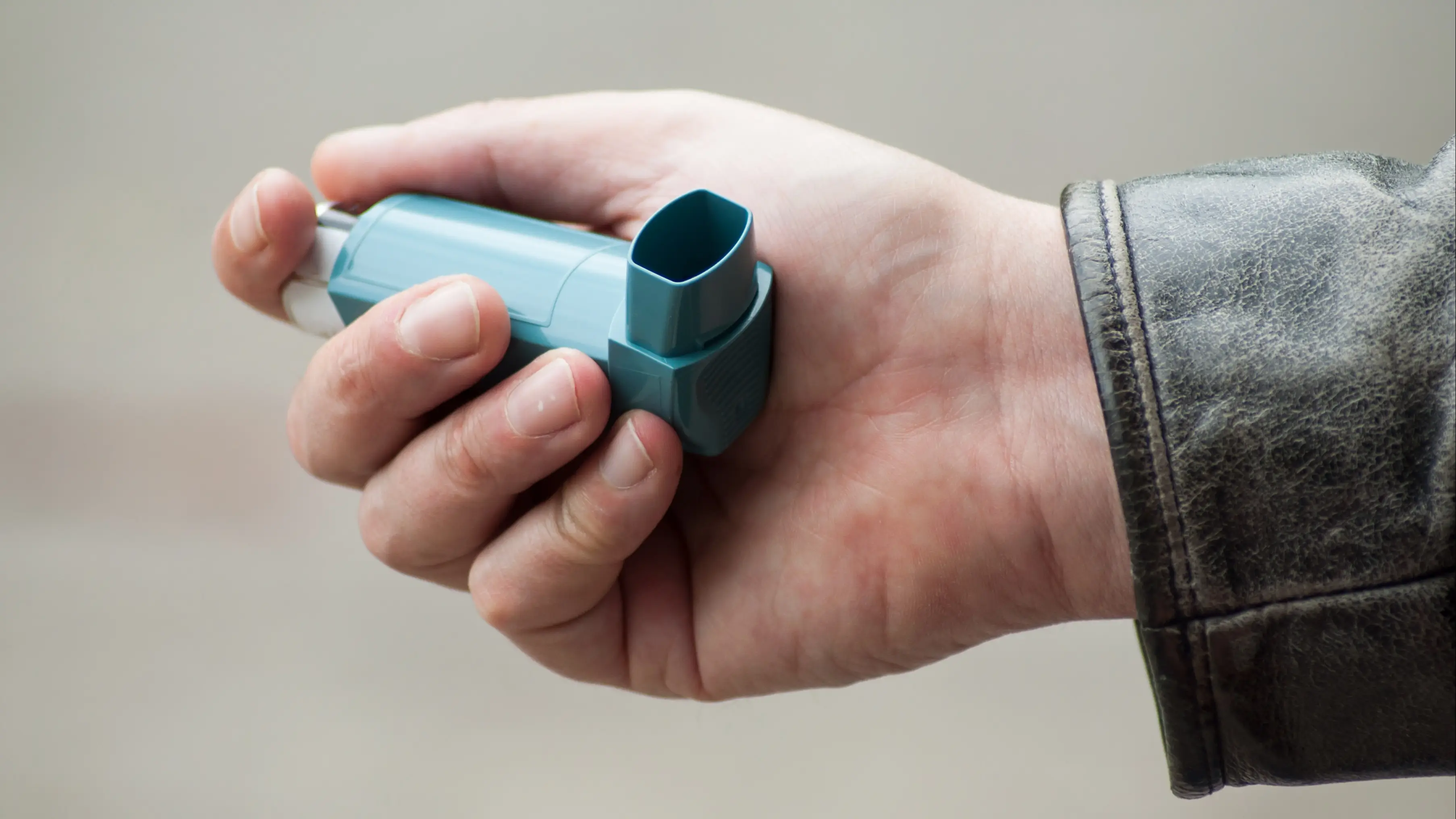
NHS doctor has serious warning for anyone with asthma using blue inhalers

If you have asthma and use blue inhalers, consultant Dr Ranj Singh has issued a warning.
Many people go through life without updating their prescriptions, and the NHS paediatrician, who also specialises in emergency medicine, shared some advice on BBC's Morning Live to any asthma patients watching.
People use all different types of medicine to manage or relieve asthma, including blue and brown inhalers.
Blue are typically 'reliever' medications, used to help patients to breathe or to try to stop an attack.
Advert
Brown medications are usually steroid based and are 'preventer' medications, to strengthen the lungs and to help to manage the condition.
He warned hosts Helen Skelton and Gethin Jones that the blue inhaler is 'great for calming symptoms' but said that 'overuse could mask deeper issues' for many patients.

Many asthma patients in the UK are being encouraged to move to newer combination inhalers instead.
The National Institute for Health and Care Excellence (NICE) and the Medicines and Healthcare products Regulatory Agency (MHRA) agreed with Dr Ranj, and said they can hide more serious issues.
"Over a million people have been switched from using the standard blue inhaler to one of these newer combination ones," Dr Ranj said.
"It's all based on some guidelines that actually came out in 2024 as an update to the asthma guidelines we use in the UK.
"Essentially, one of the key recommendations is moving from a blue reliever inhaler - it's a salbutamol, which is the key ingredient inside that that's a short-acting agent - and switching people over to a combination inhaler, which is a longer-acting one and actually has extra medicine in there to help as well."
He explained that 'brown inhalers' are 'designed to actually work in the background to reduce inflammation to make it less likely for you to have an asthma attack.'
'The blue inhaler just deals with the tightness," he continued "It doesn't deal with any of the inflammation in the background, really. So, what we want to now do is sort of use newer combination inhalers that can relieve that tightness straight away and they act a bit longer.
"They've got a newer agent called formoterol in them, not salbutamol that acts quickly, and it acts for a longer period of time and also has got a bit of steroid in there as well to work on the background inflammation, which hopefully makes it less likely overall for you to have asthma."
He warned: "We now know that actually in the long term if you're using your blue inhaler excessively it could increase your chances of having more attack, maybe even ended up in hospital or even worse."
"The worry is that it could potentially be masking severe asthma and you're just kind of keeping it at bay by using your blue inhaler too much. If you've got mild or occasional symptoms, don't panic. You're either going to be contacted if you need a switch, or if you've just been diagnosed with asthma, you might go straight onto the new inhalers. Or if you're having a review or coming up for a review, that would be the time to discuss it."
Three is the magic number, according to the expert: "If you are using a blue inhaler and you're using it more than four times in a 24-hour period or you're using it and it's not lasting for longer than four hours at a time, you're probably going to need immediate help.
"You're having an asthma attack, and therefore you're probably going to need a bit more treatment than you're actually doing. That's what we would call sort of urgent sort of advice for anyone with asthma."
He added: "The other thing I would say is that anybody who is concerned about the overuse of their blue inhaler, if you're having repeated prescriptions of it quite frequently, maybe two or three times a year, you definitely should be talking to a healthcare professional about it," he said.
He urged people not to worry, adding: "If you're concerned about any of this, do speak to your GP or your asthma nurse. You don't necessarily need to panic or anything like that. Make sure also everyone with asthma should be getting a review every single year anyway."
Topics: Health, Women's Health, NHS
 Jen Thomas