
Dementia’s devastating ‘triple impact’ on women explained as expert reveals key differences in Alzheimer’s symptoms

Dementia is the UK's biggest killer - but women are facing a disproportionate ‘triple impact’.
Today (Monday 21 September) marks World Alzheimer’s Day, which sees a global effort to raise awareness and challenge the stigma around Alzheimer's disease and other dementias.
Tyla spoke with Jaina Engineer, Knowledge Services Manager at Alzheimer’s Society, who highlighted that women are more likely to develop the condition during their lifetime, that it is a leading cause of death among women, and that women are more likely to provide unpaid care for those who are living with it.
“There is a triple impact on women when it comes to dementia,” the expert explained, adding that around twice as many women have Alzheimer’s disease, compared to men.
Advert
In 2025, the number of women who died from dementia in England and Wales was the second highest ever recorded.
To explain, Alzheimer’s disease is a physical illness that damages a person’s brain. This eventually causes dementia, typically causing problems with memory and thinking, while Alzheimer’s disease is by far the most common cause of dementia.
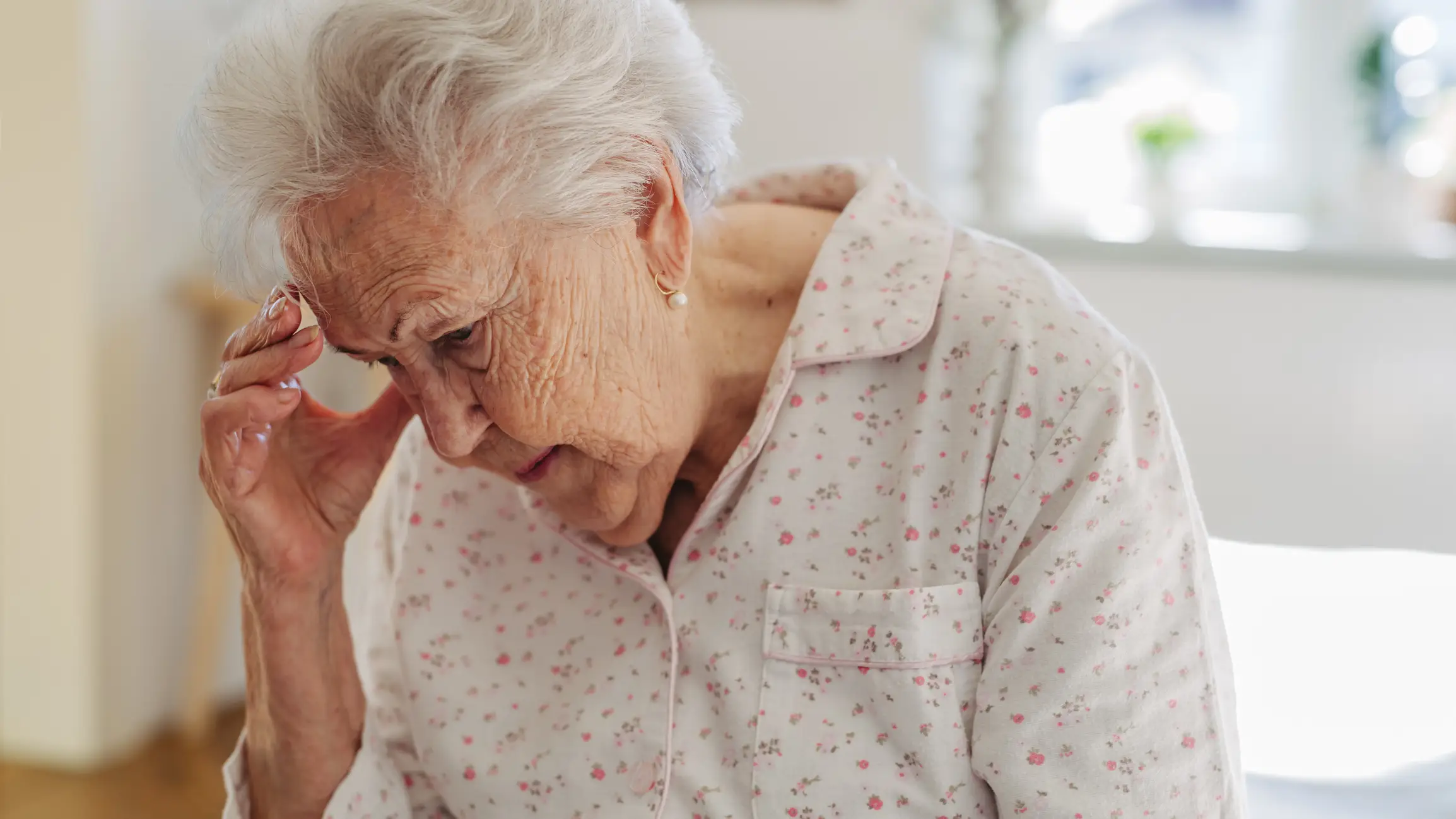
Why do more women get Alzheimer’s disease than men?
Jaina told Tyla that the main reason behind the stark gender difference is mostly because women tend to live longer; however, they may also have ‘a greater risk of Alzheimer’s disease in very old age.
She explained: “Other forms of dementia, like vascular dementia and Lewy body dementia, tend to be more common in men.
“Men are more likely to have stroke, which is a common cause of vascular dementia. They are also more likely to develop Lewy body dementia and Parkinson’s disease.”
Alzheimer’s.org highlights that, surprisingly, the risk difference may also be related to traditional differences in gender roles, such as education, work, and lifestyle.
For example, it’s been proven that having ‘full education and opportunities for lifelong mental stimulation helps to delay dementia in old age’ - this is known as ‘cognitive reserve’.
The charity’s website outlines that because historically, opportunities to go to university or work for many years in highly-skilled occupations have been less available to women, some scientists have questioned whether this might be an important risk factor for women.

What are the differences in Alzheimer’s symptoms for women and men?
Although the typical warning signs are often the same, there are some contrasts between the way dementia and Alzheimer’s can present in men and women.
Jaina explained: “While the main symptoms of Alzheimer’s disease are broadly similar in men and women, including problems with memory, thinking and language, the early signs can sometimes be recognised differently.
“Some women have found that their early symptoms were wrongly mistaken for depression, stress or the effects of menopause. This can make it harder to recognise that something else may be going on.”
The expert continued: “Men with Alzheimer’s disease may be more likely than women to experience apathy, which can mean becoming more withdrawn, less motivated or losing interest in activities and hobbies. Of course, becoming less outgoing or interested in activities can happen for many reasons, including ageing, ill health or depression, so on its own it is not a sign of dementia.
“But if someone is showing a persistent change from their usual personality or behaviour, particularly alongside problems with memory or thinking, it is worth speaking to a GP.”
Hannah Gardner, consultant admiral nurse for children and young people at Dementia UK, told the Independent that ‘social isolation, depression and loneliness can also impact the chances of developing dementia in women’.
She told the publication: “Women are more likely to be carers as well – that can cause extra stress.
“I think it’s all down to the individual person. I think dementia affects people individually.”
Symptoms of Alzheimer’s disease
As per the NHS, in the early stages, the main symptom of Alzheimer's disease is memory lapses.
For example, someone with early Alzheimer's disease may forget about recent conversations or events, misplace items, and have trouble thinking of the right word, among other warning signs.
This often comes with signs of mood changes, such as increasing anxiety or agitation, or periods of confusion.
Middle stage symptoms include finding it increasingly difficult to remember the names of people they know and struggling to recognise their family and friends.
In the later stages of Alzheimer's disease, the symptoms become increasingly severe and can be distressing for the person with the condition, as well as their carers, friends and family.
Hallucinations and delusions may come and go over the course of the illness, but can get worse as the condition progresses.
Alzheimer’s Society is here to offer support to everyone affected by dementia, through their website Alzheimer's Society and dementia support line on 0333 150 3456.
Topics: Women's Health, News, Health, World News, Life, Science
 Madison Burgess