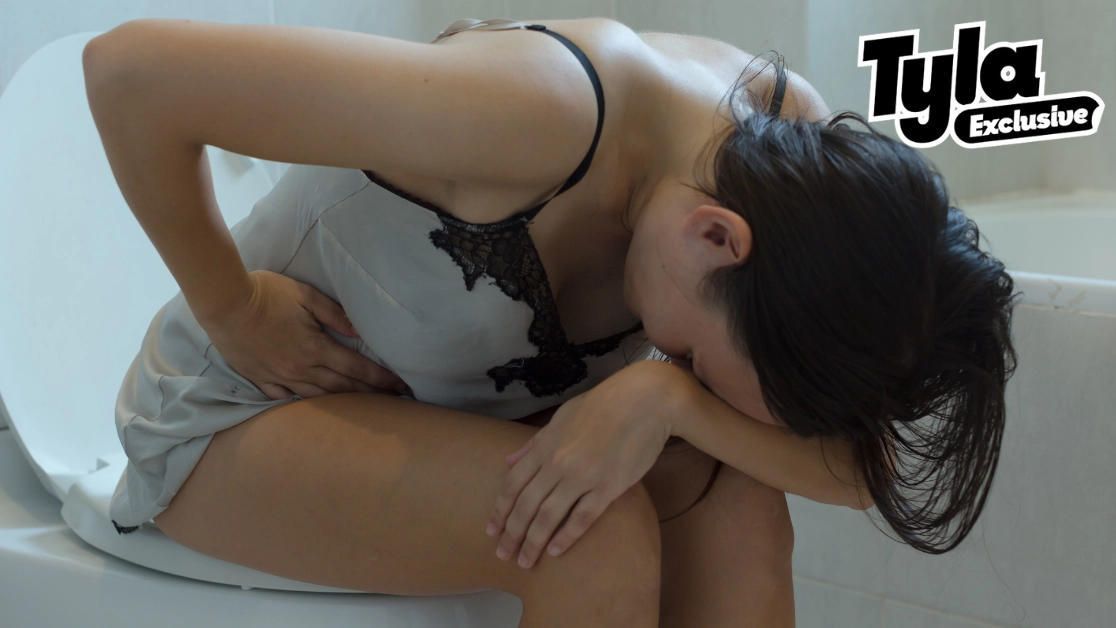
'Period bowels' explained as women share 'unusual' ways they know they're about to start

As if painful cramps, endless fatigue and skin break-outs weren't enough, many women also experience something we've dubbed 'period bowels' as part of their menstrual cycle.
Taking to the 'AskWomen' thread on Reddit, women were asked what 'unusual' ways they know they're about to start their period, with a considerable number sharing their slightly unpleasant issues with flatulence, diarrhoea and constipation.
"I get constipated, then get diarrhoea right after," shared one woman, while a second candidly shared: "I get the diarrhoea, but I get really eggy farts before it - as soon as I fart once, I know I’ve got hell coming to visit."
And a third chimed in: "Period poos are the most DISGUSTING but best clear out ever."
Advert
While that's all very graphic, intimate health, menopause, hormone health and women's wellness issues expert Dr Shirin Lakhani has explained exclusively to Tyla all we need to know on the puzzling subject.
Why do some women experience heavy flatulence, constipation or diarrhoea right before their period?
Dr Lakhani explains: "Many women experience a change in their bowel habits right before and during their period, which is largely down to our hormones.
"In the days leading up to and during a period, hormonal changes can affect how quickly the gut moves, which is why some women experience constipation, bloating and increased wind.
"Once menstruation begins, the body also produces prostaglandins, which help the uterus contract and shed its lining."
However, the expert outlines, prostaglandins can also affect the bowel, increasing contractions and leading to looser stools or diarrhoea.
And this is the reason why some women can go from feeling constipated and bloated before their period to suddenly needing the toilet more frequently once bleeding starts.
What does this mean about your health and menstrual cycle?
For most women, Dr Lakhani says, bowel changes around your period are completely normal and don’t necessarily mean anything is wrong.
"If you consistently notice constipation, bloating, flatulence or looser stools at the same point in your cycle, and these symptoms settle afterwards, hormones are likely to be playing a role," she highlights.
And if you experience consistent changes that impact your life, then it might be worth keeping a diary of your symptoms for two or three months and speaking with healthcare professionals.
When should people be worried about 'period bowels'?
The expert assures that bowel changes at different points in your cycle are completely normal and are usually not dangerous.
However, she urges: "I would encourage someone to speak to their GP if symptoms are severe, getting progressively worse, affecting their daily life, occurring throughout the month or accompanied by significant pelvic pain.
"Also, if you experience blood in the stool, unexplained weight loss, persistent changes in bowel habits, severe abdominal pain or feeling generally unwell should also be medically assessed rather than put down to your period."
Dr Lakhani concludes: "In particular, bowel symptoms that consistently worsen around menstruation can sometimes be associated with conditions such as endometriosis.
"Endometriosis can affect areas including the bowel and may cause symptoms such as pain during bowel movements, while bowel symptoms including bloating, diarrhoea and constipation can occur alongside cyclical pelvic pain."
Topics: Women's Health, Periods, Life, Tyla Exclusive
 Rhiannon Ingle