
Psychologist warns of the normalised relationship habits that could actually be digital abuse

A psychologist has issued a stark warning about a rapidly rising method of abuse that’s affecting young people, with many of them not even realising they’re in a dangerous situation.
YSL Beauty has today (25 September) announced a critical expansion of its global Abuse Is Not Love program to address the rise of Technology-Facilitated Intimate Partner Violence.
Working with the brand, psychologist Dr. Nina Jane Patel has authored alarming new research that warns of how rapid digital acceleration, surveillance habits, and emerging AI tools have blurred the lines between care and coercive control for Gen Zs worldwide.
The expert has cautioned that these ‘invisible’ but ‘very dangerous’ forms of abuse, which can include forced location sharing, unwanted digital check-ins, and demands for passwords, have sadly become so normalised that we’re no longer questioning them.
Digital abuse referrals are rising by over 62 per cent globally, and young people aged 16 to 24 are the most vulnerable to it - yet they’re the least equipped to name it.
Tyla spoke with Dr. Patel about the harmful phenomenon in an effort to make sure every young person is aware of the signs.

What is Technology-Facilitated Intimate Partner Violence and why is it so dangerous?
Technology-Facilitated Intimate Partner Violence (TFIPV) is relationship abuse that uses digital tools - such as smartphones, social media, messaging apps, location tracking, and AI tools - to monitor, coerce, or control a partner or ex-partner.
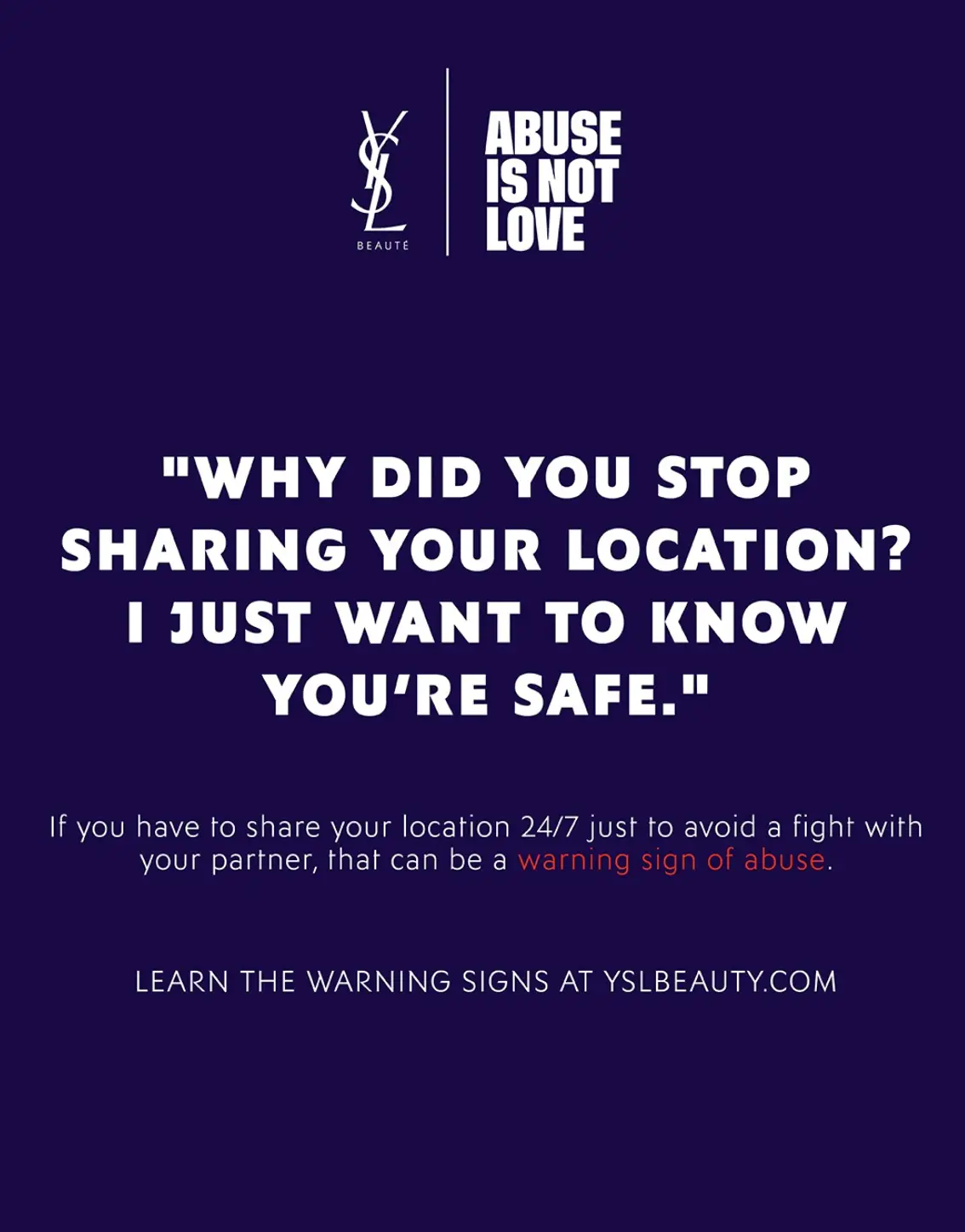
Examples of this can include your partner demanding to have your location at all times, filming a video to send to them to ‘prove where you are,’ or giving them your password when you don’t really want to.
With the glamorisation of a ‘protective’ partner, this can easily be shrugged off as normal and, worryingly, can even be taken as a positive that someone ‘really cares’.
Dr Patel explained that the rise is ‘heavily driven by a hyper-connected digital culture where constant sharing, tracking, and digital check-ins are normalized daily practices’.
She told Tyla: “Because young people are socialized in this environment, boundary-crossing behaviors like sharing passwords or constant monitoring feel familiar and are often mistaken for passion or protectiveness rather than control.”
The psychologist explained that TFIPV is ‘extremely dangerous because it is largely invisible and it leaves no physical bruises, making it difficult for victims to recognize and harder for friends, family, or law enforcement to validate’.
She warned: “However, the constant state of hypervigilance, anxiety, and digital isolation it causes can establish severe psychological control dynamics long before any physical violence occurs.”
What are the key red flags that someone is experiencing digital abuse?
YSL Beauty’s Abuse Is Not Love programme has outlined the nine warning signs of abuse, specifically for the digital space.
The aim of the list is to provide a practical, behavior-focused vocabulary to help young people identify when everyday digital habits start to cross the line into abuse:
- Intrusion: Demanding phone passwords, checking direct messages, and tracking a partner’s real-time location without healthy boundaries.
- Control: Dictating who a partner can follow, what they can post, which apps they can use, or demanding photo approval.
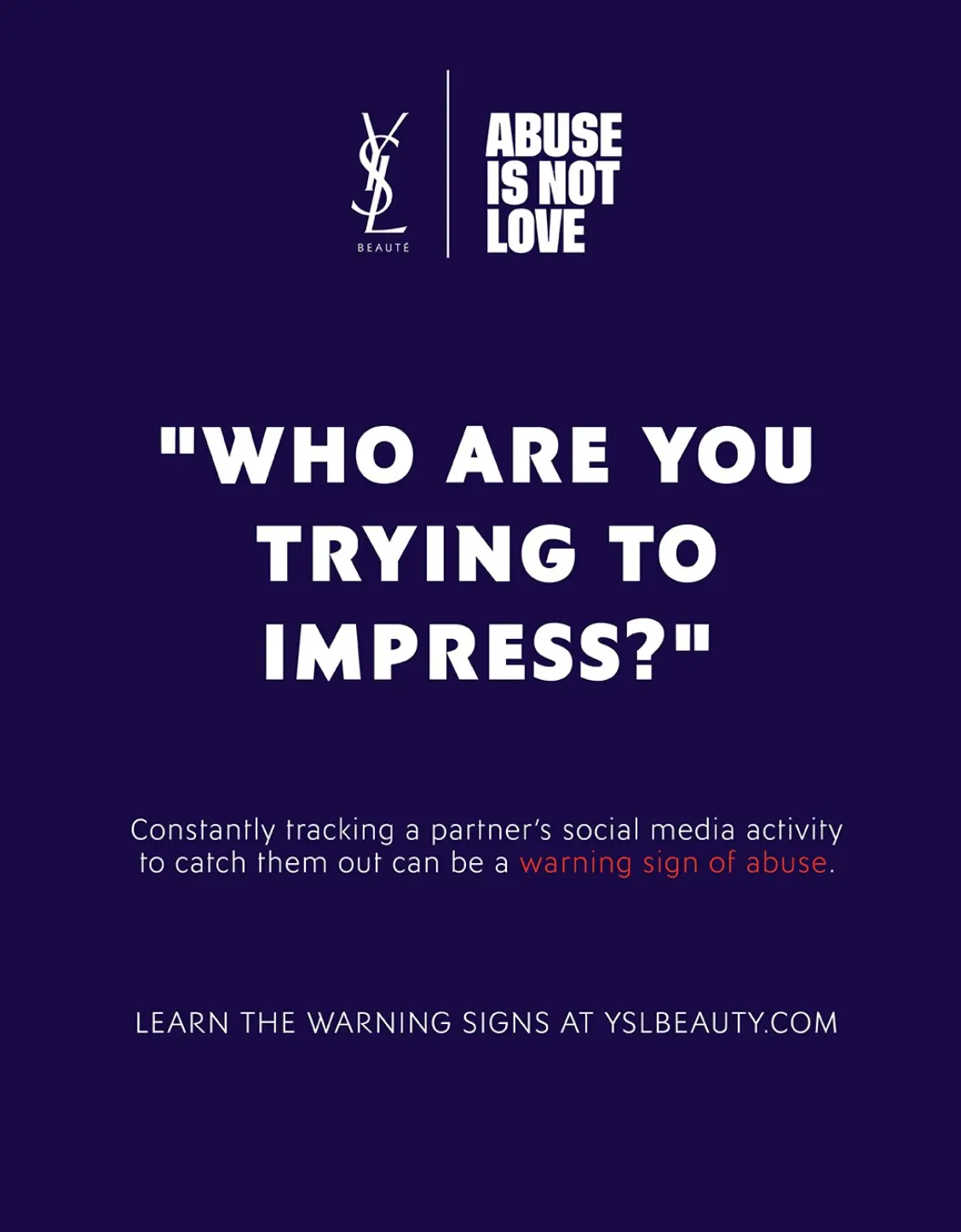
- Jealousy: Interrogating ordinary online interactions, such as why someone liked a post or viewed a story, and accusing them of disloyalty.
- Manipulation: Using phrases like "if you loved me, you would give me your password" or feigning concern to justify surveillance.
- Ignoring: Deliberately leaving messages unanswered or turning off notifications as a form of punishment or emotional control.
- Isolation: Forcing a partner to delete social media accounts, block friends or family, and leave group chats.
- Intimidation: Sending constant, demanding messages, weaponizing read receipts to punish delayed replies, or threatening a partner online.
- Blackmailing: Threatening to share private photos, screenshots, or AI-generated deepfakes to coerce compliance.
- Humiliation: Posting embarrassing content or sharing intimate images without consent.

The 'critical difference' that makes it abuse
If you’re reading this and wondering whether everyday things like sharing passwords and locations are always abuse, the answer is no.
Dr Patel outlined that habits like this ‘aren't inherently wrong or abusive’ and ‘ in many cases, they can be healthy expressions of care and trust when done completely freely and with mutual consent’.
However, the 'critical difference lies in consent and autonomy’.
The psychologist explained: “Digital habits cross the line into abuse when you can no longer freely retract consent, when saying ‘no’ leads to anger or interrogation, or when a healthy boundary turns into a rigid wall of surveillance.
“Couples often normalize behaviors that can quietly slide into digital abuse, such as expecting immediate replies to texts or video calls to ‘prove’ where you are, demanding password sharing or location tracking as a mandatory ‘proof of love’ or loyalty rather than an optional choice, and interrogating ordinary social media activity, like who you follow or like.
“When these routines are driven by demands, fear, or monitoring rather than mutual trust, they cease to be harmless and become tools of control.”
What to do if you’re experiencing Technology-Facilitated Intimate Partner Violence
Dr Patel explained that the typical advice we’re given in situations like this is always simply to block or unfollow the person; however, despite popular belief, it’s not actually the best thing to do.
She revealed: “Telling a victim to ‘just disconnect’ blames the victim, ignores that the phone is their lifeline to school and friends, and isolates them further.
“Instead of individual-level dismissal, responses should focus on recognizing the behavior as abuse, validating the victim's experience, and connecting them with professional support networks and organizations specializing in domestic abuse prevention.”
Abuse Is Not Love is YSL Beauty’s global program to fight against and prevent intimate partner violence (IPV), the most common form of violence against women. 1 in 3 women will experience violence by a partner in their lifetime, whether it is sexual, physical, psychological, or financial. The program is focused on prevention, identification, and support. It targets education about the warning signs of abuse to prevent it from happening, with a particular focus on young people (16-24), who have the highest vulnerability to experiencing violence from a partner.
If you are experiencing domestic violence, please know that you are not alone. You can talk in confidence to the national domestic violence helpline Refuge on 0808 2000 247, available 24/7, or via live chat, available 10am-10pm, Monday to Friday.
Topics: Domestic Abuse, Gen Z, Life, Mental Health, Real Life, Sex and Relationships
 Madison Burgess