Psychologists explain 'era of self-surveillance' led by Gen Zs and Millennials

Moments after closing a good book, before I've even fully digested the ending, I'll often hop onto my Goodreads app and ponder over whether it deserves four stars or five.
Similarly, when I've finished my last lap around the park (after being recently convinced by my friends to do this), I'll grab my phone and make sure my run is uploaded to Strava, sometimes with a fun caption and even a photo of the scenery if it was a particularly pretty route.
These days, it feels like there's an app for literally every hobby and aspect of life you can think of - Goodreads for books, Letterboxd for films, Strava for exercise, the Health app for steps, Beli for restaurants, Substack for essays... the list goes on and on.
There was a time when I didn't know the last book my friend read, or exactly how many kilometres she ran over the weekend.
Advert
Even Spotify Wrapped has become a huge cultural event, having influenced a series of similar yearly roundups like YouTube's Year in Review, while even supermarkets are joining in and letting you know how many meal deals you bought that year (spoiler alert - an embarrassing amount).
Bizarrely, sometimes, it can feel like something didn't actually happen if it hasn't been documented, tracked, or entered into some sort of giant data vacuum.
And it's not always just for fun. People will set step goals, or targets of how many books they need to read or films they need to watch per year, which on the outside can seem like it's actually sucking the fun out of hobbies more than anything else.
So why are so many of us religiously obsessed with these apps?
The era of self-surveillance
There's no doubt that Gen Z is leading the era of self-surveillance, with data showing that, along with Millennials, they are some of the biggest consumers of hobby-tracking apps.
Letterboxd's own surveys and Google Analytics show that their core members are aged between 18-24 and 25-35.
In general, the app is soaring and impressively has more than 27 million members, which is up from 17 million this time last year.
Strava's 2025 Year in Sport Trend Report outlined that Gen Z sees the product as an app for good, with 53% of those surveyed saying they expect to use it more in 2026.
The data also revealed that the younger generations are using Strava not just to record their activity, but to socialise, with 65% more Gen Zers than Gen Xers saying they use fitness to meet people who share their interests.
This is no big surprise to me, as almost everyone I spoke to for this article said they use Strava, both for the fitness aspects and the social media-esque elements.
Harry, 24, who lives in London, has been using the fitness app for five years to track his progress when running, walking, and going to the gym, at least five times a week.
He also uses Letterboxd for movie reviews, but less often, roughly once a month.
"I’m really into fitness and particularly running at the moment, and it is the best platform to use for tracking your running because it gives you a really detailed data set," he told Tyla.
"The other side that I like is that you can track your progress really well. You can track while you’re running, and you can track about five years' worth of data to see what works best and what doesn’t.
"It’s super easy to use, and it’s really helped track quite a lot of progress that I’m not sure would be possible without it.”
As for whether he would still use the app if no one could see what he was doing on there, he admitted: "I think I’d like to say that it doesn’t matter that people can see, but I think part of you always kind of wants to do it so people can see it.
"There’s a function on Strava where you can show your individual exercise as a little graphic, so you can put it on Instagram or whatever you want to use, and I do do that.
"I think there’s always an element of, 'I’m doing this so I can show off a bit,' but that’s not the sole reason why people use it. It’s more of a side effect than the sole reason.
"I feel like for Letterboxd, it’s a lot more important that people do see that review because that’s almost the whole point: you’re doing it so people can see your view of things."
Ruth, 22, from London, also likes that on Strava 'you can see what activities your friends are up to, and that you can give kudos or comment', as this 'makes it feel like there’s more of a running community'.
She also uses Goodreads to 'motivate' herself to read, explaining: "I also like seeing what my friends are reading, as I often find this is the best place to start when searching for my next read."

"I would definitely still use the apps if no one could see what I was doing on them," she affirmed, adding: "For the longest time, only my dad followed me on Strava! I’m quite a disorganised person, but these apps help me keep track of myself.
"I like to look back on the data and see the progress over the years or how my opinions have changed over the years."
Courtney, 25, from Birmingham, who uses the reading and journaling app Basmo and Strava for dog walks, similarly explained that using hobby apps is about her own personal journey rather than anyone else's opinions.
She said: "It’s for my own personal gain. As I’ve gotten older, I’ve become a much more reflective person, choosing to look back on things I’ve done. For me, I find the apps to be much more about my own personal journey of how much I’ve read or walked or whatever else. Like a diary, and my bullet journal, and everything else, it’s all personal to me, and it’s up to me what I choose to show."
While 28-year-old Linc, from Nottingham, who uses the website Rateyourmusic, 'likes being able to see what other people think of certain music outside of mainstream or journalistic reviews,' explaining that 'the community aspect is what makes it more special'.
A 'double-edged sword'
But there can be a downside, as Erin, 25, from Shropshire, said that while she 'loves' using Goodreads to find her next recommendation and see what her pals are up to, sometimes she 'can feel behind in comparison' to her 'reading machine friends'.
"There is a hidden pressure to feel as though you should be reading more than you are," she admitted.
And this opinion isn't uncommon, as sometimes seeing too much of what all of your friends can lead to comparison, which we all know is the thief of joy.
I'll be the first to admit I've found myself feeling frustrated after comparing my 5k time to those of my friends, as well as feeling like I need to match the amount of runs others are doing. If I had nothing to compare myself to, would it be easier?
Bobbie, 25, who lives in Manchester, described the dilemma as a 'double-edged sword,' and explained that she doesn't track everything quite as much as she used to.
She told Tyla: "I’ve recently lost my Apple Watch, and I would track everything, but while I still put my runs on Strava, I don’t put gym workouts on there anymore or my dances, and I only do the runs to check the distance for my training.
"However, the kudos and the support on runs does make me feel better. If I didn’t have it, though, or if it was personal, I do think I would still use it. But I think I do appreciate people knowing I run.
"It’s a double-edged sword, though, as I’m slow, so I hate that people can see that. It is a very weird world we live in!"
What psychologists and experts have to say
Dr. Daniel Glazer, clinical psychologist and founder of US Therapy Rooms, told Tyla that hobby tracking apps are a way of 'subtly influencing how identity and memory are constructed'.
After all, bits and pieces of our personalities do come from the books we read, films we watch, and things we love.
He explained that documenting things in an uncertain world can also 'create a sense of order and psychological containment' as it's something you can actually control.
The expert said: "Using apps that log books you read, runs you complete, films you watch, or reflections you write turn everyday experiences into visible, recorded moments.
"The act of documenting experiences they can’t actually control, nevertheless, can create a sense of order and psychological containment.
"Growing up in a digital environment where experiences are so often validated, commemorated, and shared through records rather than recollection alone, Gen Zers are evolving their sense of self in a world where documenting is essentially an assertion that this happened, this is me, and this is my life - an assertion that also subtly influences how identity and memory are constructed."
Natasha Cooper, who is Retail Trends Lead at MediaVision, agrees that 'documenting experiences has become more important than ever,' partly due to good old-fashioned nostalgia.
The expert explained: "We want ways to look back on our lives, and there’s an aesthetic element too. But beyond that, it’s about valuing moments in a world where moments feel like they pass by so quickly.
"With platforms like Snapchat now charging for storage, Gen Z has started 'outsourcing' memory-keeping in other ways, i.e, digital journals, apps, and social spaces, almost like modern-day photobooks.
"The social aspect plays a big role as well. Sharing insights, books, workouts, or even movie lists helps us feel part of a community."
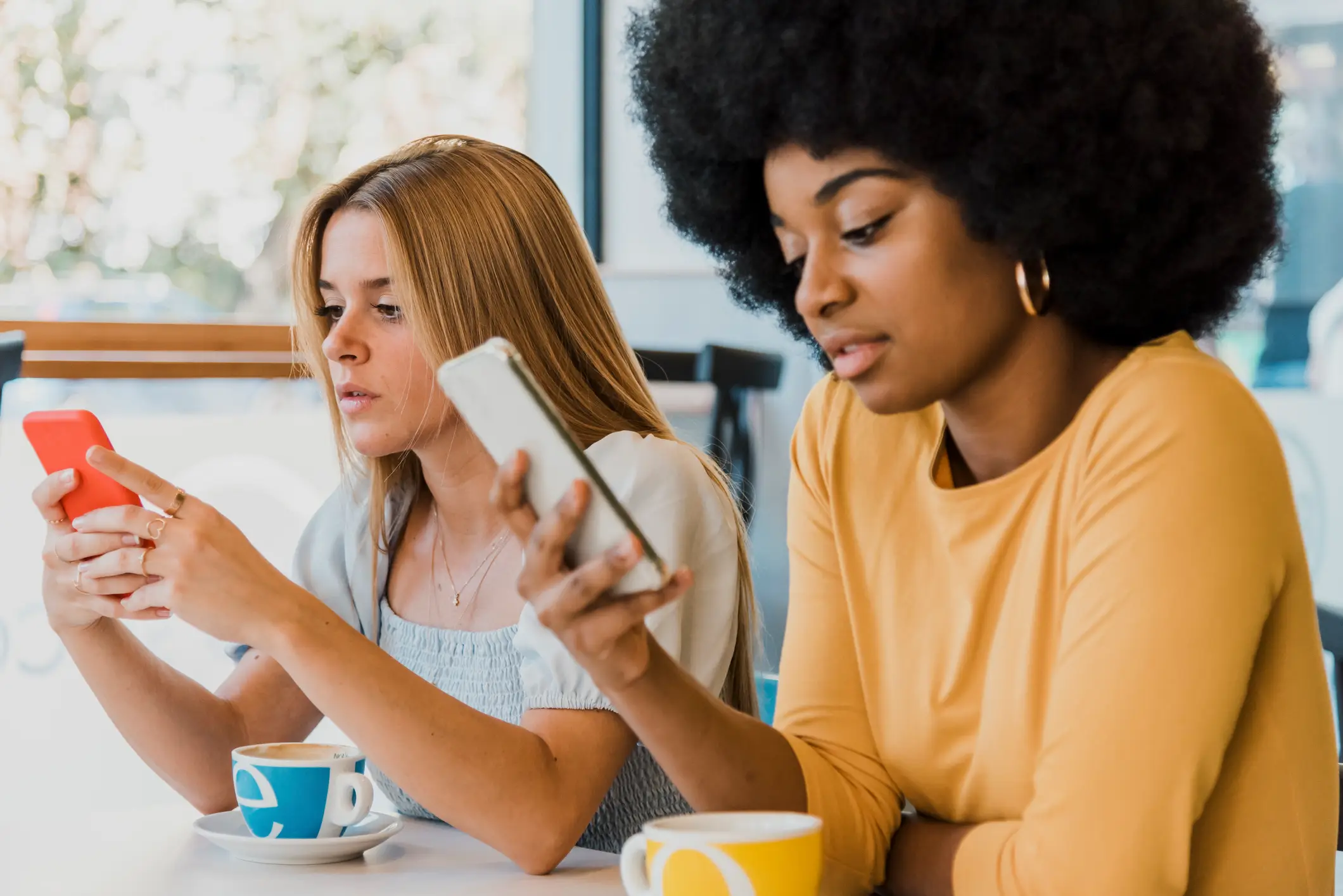
It's how we understand our own identities
Psychotherapist Claire Law echoes the idea that documenting everything is a way that we understand our own identities.
"For Gen Z, the recording of experiences may not be about showing off, but about making sense of their experiences," the expert, who's also a legal contributor at Custody X Change, said.
"For those who live life at a rapid pace socially, culturally, and technologically, recording what you read, view, listen to, or accomplish can provide a sense of continuity.
"In working with younger adults, I often witness how recording experiences can provide meaning to one’s experiences.
"Recording a run, finishing reading a book, or saving a movie review can provide a moment of pause between the rapid pace of one’s daily activities. Rather than experiencing events as jumbled, recording can provide milestones for experiences."
Law reaffirmed that there is a 'strong identity component' as early adulthood is a life stage where we're 'trying to make sense of our tastes, values, and interests'.
Essentially, by using these apps, we're conveying the message of, 'This is who I am as a person, these are my interests, and this is what I stand for'.
"So, documenting life is not always about an audience. For many people, documenting their lives is a digital version of a traditional paper-based journal. It is a way for people to begin to understand their own identity," she concluded.
Topics: Tyla Exclusive, Life, Real Life, Gen Z, True Life, Sport, Books, TV And Film
 Madison Burgess