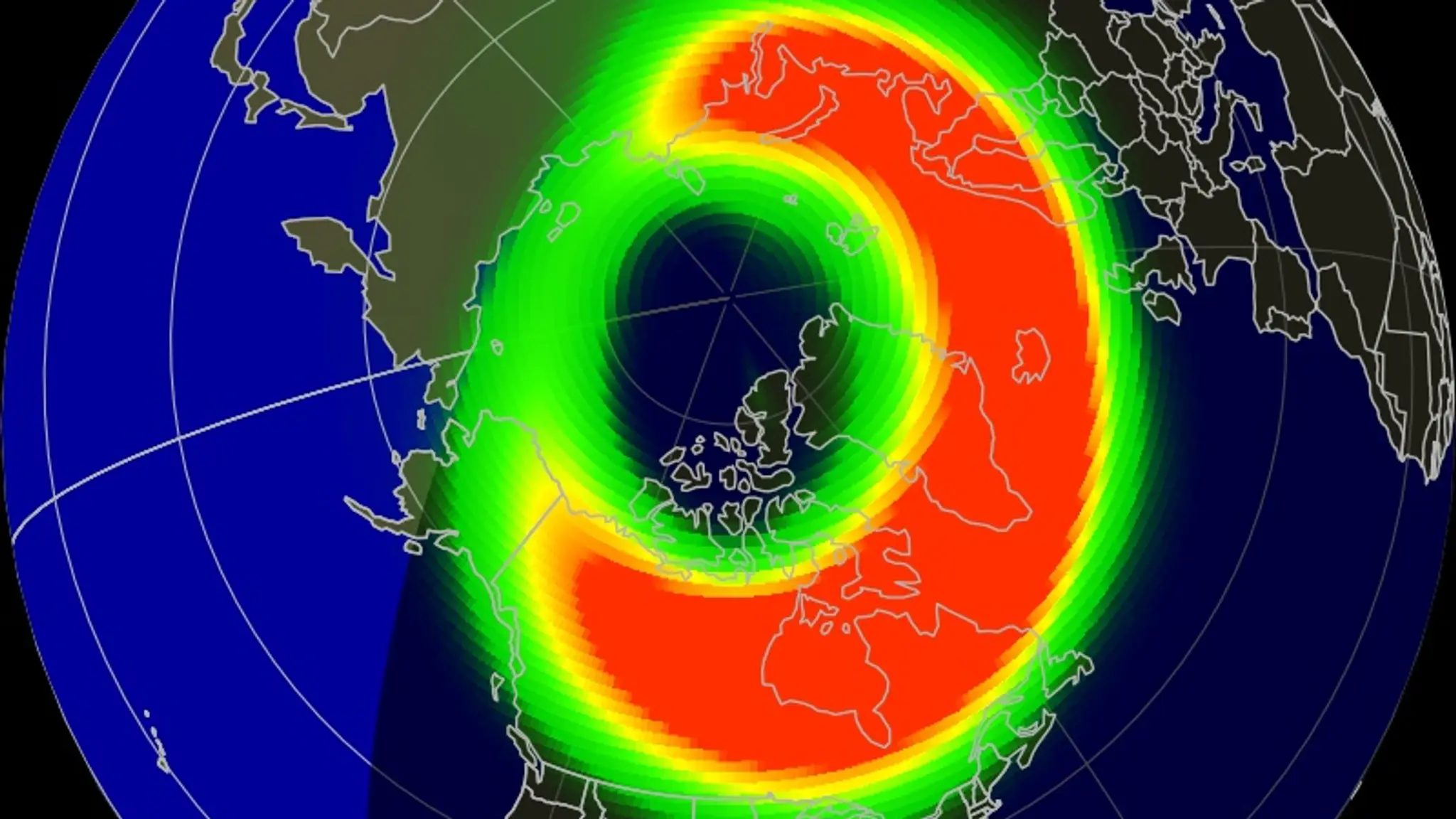
Strongest ‘cannibal storm’ in 20 years could be about to cause chaos

The strongest 'cannibal storm' in 20 years could be about to cause chaos on Earth.
The solar storm in question already forced NASA to postpone the launch of its ESCAPADE Mars spacecraft aboard Blue Origin’s New Glenn rocket, as it could affect the spacecraft’s systems.
The freak weather event has that name because it is reportedly capable of feeding on another storm to become one of the biggest seen in the last two decades.
And, as we know, storms can have a serious impact on global communications, with mass outages occurring all over the world in the past.
Advert
So, it's almost no surprise that Blue Origin confirmed it would be delaying the launch of New Glenn earlier this week (November 12) and added that the government agency will wait for safer space-weather conditions before selecting a new launch window.
Announcing the postponement on X, Blue Origin said: "New Glenn is ready to launch.
"However, due to highly elevated solar activity and its potential effects on the ESCAPADE spacecraft, NASA is postponing launch until space weather conditions improve.
"We are currently assessing opportunities to establish our next launch window based on forecasted space weather and range availability."
Blue Origin has yet to confirm a new date, but when it does eventually launch, it will take two Mars-bound NASA spacecraft into the cosmos.
Bursts of charged particles, energy, and magnetic fields from the sun cause solar storms. When they reach Earth, they disturb the planet’s magnetic field, producing auroras and interfering with technology.
The British Geological Survey (BGS), which has upgraded the solar storm alert to its maximum level, has reported the strongest ground-level geoelectric field they have recorded since monitoring began.
Potential consequences include GPS disruption, radio blackouts, and strain on power grids. In terms of risk level, the solar storm could reach the G5 (extreme) level - AKA the highest on the geomagnetic scale.
Similarly, a G5 event may cause power outages, spacecraft orientation problems, and GPS issues that can last for days. Interestingly, however, the storm is bringing widespread Northern Lights visibility across the UK.
Strong auroras were already seen overnight in areas including Whitley Bay and other parts of northern Britain, with the best viewing chances believed to be in Scotland, Northern England, and Northern Ireland; however, cloud breaks may allow glimpses farther south.
NASA has assured that the Earth’s magnetic field and atmosphere shield humans from harmful radiation, so solar storms do not directly injure people.
Topics: Nasa, News, Science, Space, Weather, World News, Technology
 Rhiannon Ingle