
Anyone on £50,000 a year issued warning as it becomes 'worst salary to earn'

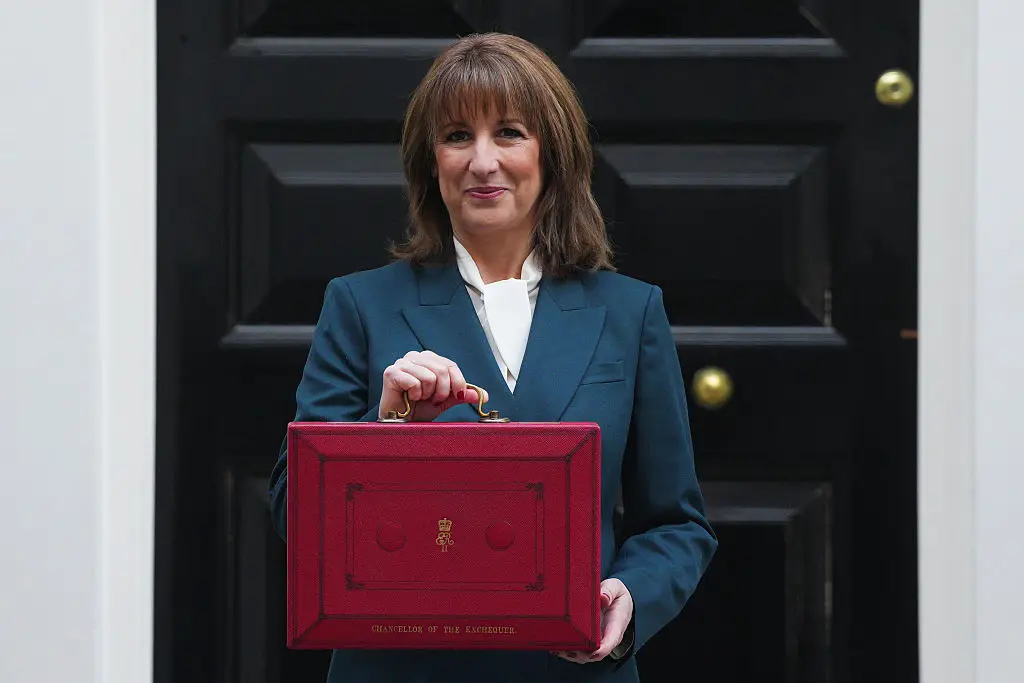
Earlier this week, on Wednesday 26 November, Chancellor of the Exchequer Rachel Reeves announced the 2025 Budget to Parliament.
In the Budget address, Labour's Reeves announced a number of changes, including frozen tax thresholds and what The Telegraph, which is widely considered a conservative newspaper that traditionally supports the Conservative Party, describes as a multi-decade squeeze on middle earners.
The news outlet has claimed that anyone on £50,000 a year now has the 'worst salary to earn', pointing to something known as 'fiscal drag' - which basically means that while wages may rise with inflation, more income gets pushed into higher tax brackets meaning workers aren't actually getting richer in real terms.
OK, without getting too jargony, the threshold where you start paying 40 percent tax is frozen at £50,270 until 2030. This means that as your salary increases with inflation, which is meant to maintain your standard of living, more of it gets taxed at 40 percent instead of 20 percent
Advert
By 2030, higher-rate taxpayers will pay an extra £600 per year compared to if thresholds had risen with inflation.
And nearly one million more workers will be dragged into the 40 percent tax bracket.
This matters for £50k earners as they sit right on the edge of the 40 percent rate, so even small pay rises push more of your income into this higher bracket.
This effectively means that if someone earned £50,000 in 2005 and received only inflation-matching pay rises, they'd now earn around £89,000 - but would pay more than £23,000 in income tax compared to roughly £12,200 twenty years ago.
To simplify things even further, they're earning the same purchasing power but paying nearly double the tax.
According to The Telegraph, a £50,000 salary sees earners pay the 40 percent higher tax rate, lose child benefit entirely (or face clawback), have minimal savings allowances, face National Insurance on top of income tax and earn too much for government support but not enough to absorb such hits comfortably.
As the article notes, a marketing manager earning £53,703 may have felt affluent in 2005, but 20 years on has become part of Britain's 'squeezed and underappreciated middle'.
Reeves has also confirmed that April next year will see the end of the two-child benefit cap, which limits universal credit and tax credit claims to two children in most households, in a move that will increase the benefits for 560,000 families by an average of £5,310, the Office for Budget Responsibility (OBR) has calculated.
She described the two-child cap as a 'policy that pushes kids into poverty more than any other', adding that 'it has failed' on the terms it was brought in on.
Speaking to MPs at Parliament on Wednesday, she explained: "I understand that many families are finding times hard, and that many have had to make difficult choices when it comes to having kids.
"And there are many reasons why people choose to have children and then find themselves in difficult times – the death of a partner, separation, ill health, a lost job. I don’t believe children should bear the brunt of that."
Tyla has reached out to Rachel Reeves' office for comment.
 Rhiannon Ingle