
Doctor issues worrying warning to anyone who dries their clothes indoors

With this weather, many of us have unfortunately lost the privilege of air-drying our laundry outdoors with the risk of it chucking it down being all too real.
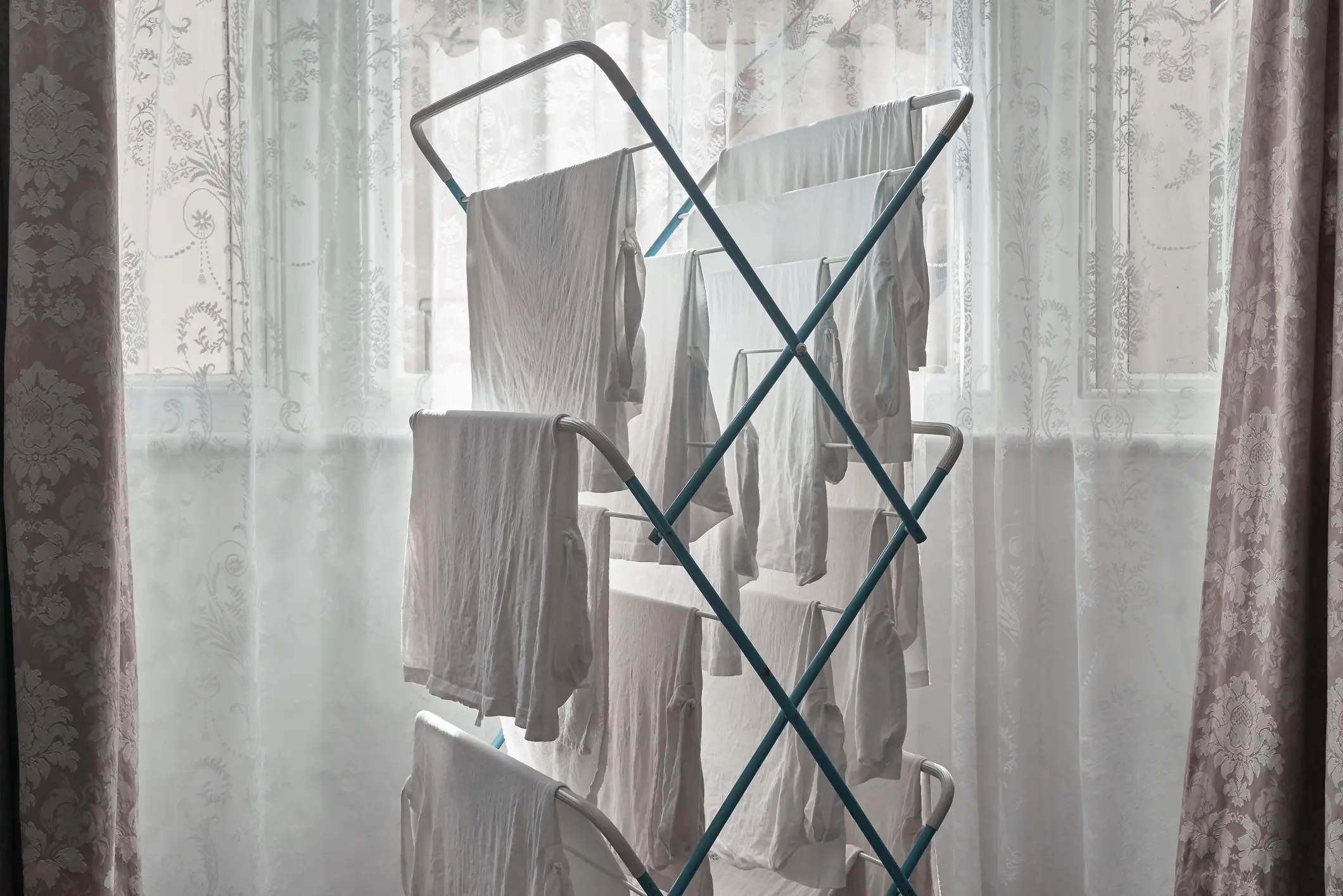
So, for those of us who don't have a fancy tumble dryer, our next best option is to whack out the airing rack and chaotically try to cram a whole week's worth of clothes, undies and bedsheets onto it.
However, you may want to think twice before drying your laundry indoors, as a doctor has issued a very worrying warning over how the seemingly innocuous domestic task can seriously impact your health.
Dr Tony Banerjee, founder of HarleyDoc, explained to Tyla that the idea that drying laundry indoors can affect respiratory health - something which may sound surprising, but he notes there is a 'solid scientific basis' behind these concerns.
Advert
According to the expert, when damp clothes are hung inside a bedroom or living space, the moisture they release can push indoor humidity levels up by 25 to 30 percent within an hour.
"This seemingly harmless rise in humidity creates the perfect environment for mould spores and dust mites to thrive," he warned, adding that many of these spores, particularly species like Aspergillus, are microscopic and remain suspended in the air for prolonged periods, where they can be inhaled deeply into the lungs without any visible signs of mould growth.
Dr Banerjee continued: "For people with asthma, allergies, chronic bronchitis, or weakened immune systems, this increase in airborne spores can trigger coughing, wheezing, breathlessness, or persistent throat irritation.
"However, even individuals with no underlying lung condition may experience low-grade inflammation from continuous exposure."
The doc notes that this is why some patients describe seasonal allergies or unexplained winter coughs when the true trigger is poor indoor air quality rather than cold weather.
"The issue intensifies during winter," he continued. "With windows closed and central heating running, moisture from drying clothes accumulates quickly. That moisture also carries residues from detergents and fabric softeners, which are chemicals that can evaporate into the air and act as irritants.
"People may then spend six to eight hours overnight breathing in this mixture, leading to symptoms that feel like recurrent viral infections or chronic chest irritation."
Dr Banerjee says that there are documented cases of patients experiencing significant respiratory symptoms linked specifically to indoor laundry drying, which resolved when ventilation improved.

"The research from Manchester supports this, showing airborne fungal spores in living rooms rising up to fivefold when laundry is dried inside," he stated, adding that homes with carpets, candles, or incense trap additional particles, amplifying the effect.
The expert also warned that children, older adults, and immunocompromised individuals are especially vulnerable, as their lungs are more reactive to humidity and spore changes.
Dr Banerjee concluded: "The medical advice is straightforward: dry clothes outdoors when possible. If this isn’t practical, especially in winter, good ventilation is essential.
"Opening windows, using an extractor fan, or running a dehumidifier can significantly reduce moisture buildup.
"Protecting respiratory health starts with small, practical changes that improve indoor air quality every day."
Topics: Advice, Cleaning, Explained, Hacks, Health, Home, Life, Life Hacks, Tyla Exclusive, Weather
 Rhiannon Ingle