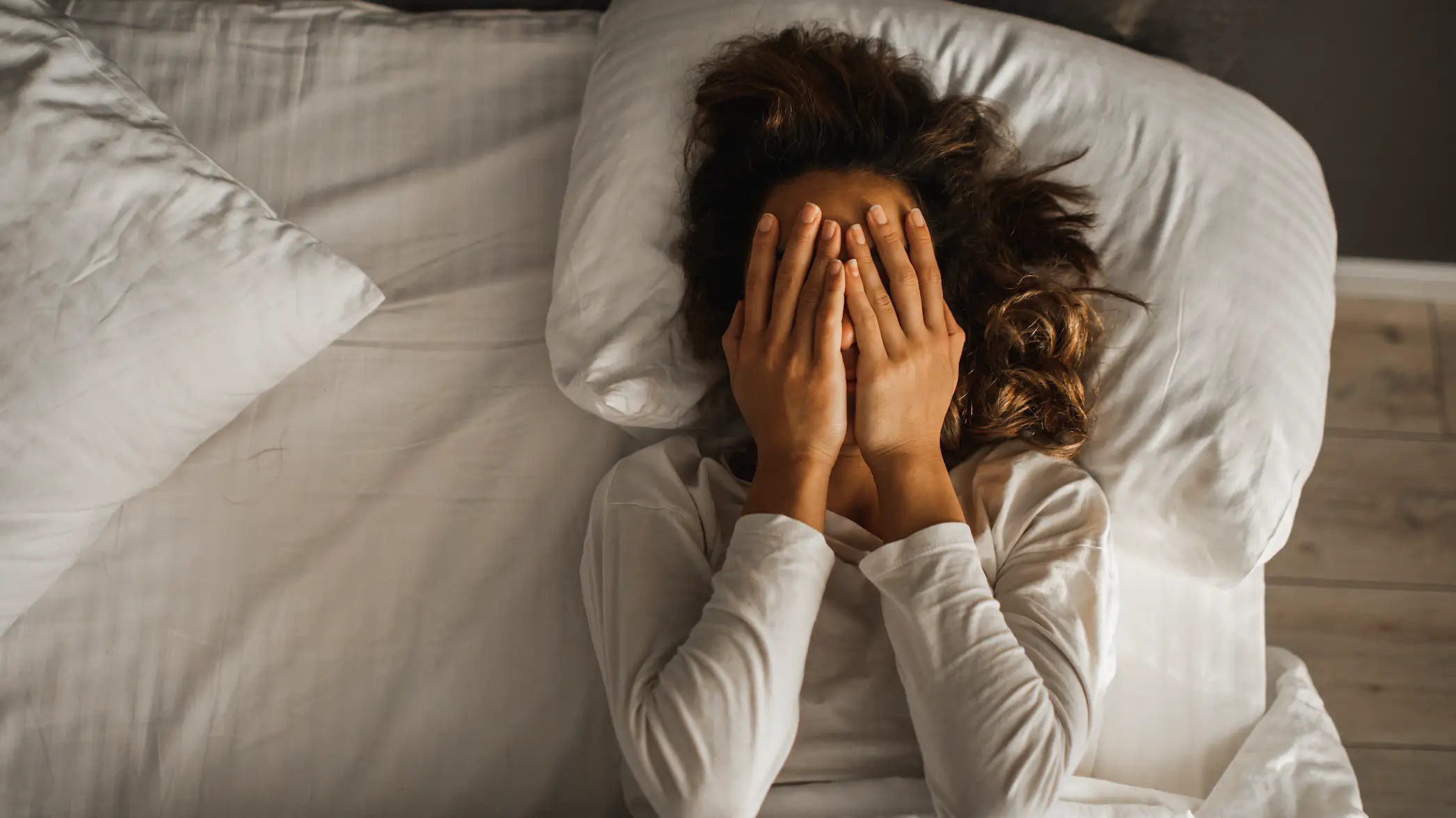
What happens to your body if you sleep for less than six hours a night

There's nothing quite like a good night's sleep.
After getting our sufficient eight hours, many of us rise from our slumber feeling bright-eyed, bushy-tailed and ready for the day ahead.
However, due to a number of reasons, whether it's blue-light induced doom-scrolling, noisy neighbours or a busy life schedule, not all of us are so fortunate to snooze this long with many of us sadly getting more around the six-hour or less mark per night.
And it's clear that not getting enough sleep does a whole lot more than leave you feeling a tad groggy in the morning, as a doctor has explained exactly what happens to your body if you sleep for less than six hours a night - and it's not good.
Advert

Weakened immune system
Up first on the list is a weakened immune system.
Dr Deborah Lee, health and sleep expert from Doctor Fox, working alongside Comfybedss, explained to Tyla: "It can weaken our immune system, because when we rest and sleep, our body builds up proteins that help fight infections. Over time, chronic sleep loss can increase the chances of inflammation in the body, which eventually can lead to longer-term illnesses.
"If you struggle to sleep, try getting to bed earlier in increments - just 10-15 minutes earlier each night to ease your body into better sleep routines."
Increased anxiety
According to the expert, a Lack of sleep can also 'massively increase' how our brain regulates normal emotions.
"What might be normal on one day, on another day (with a lack of sleep) could feel tenfold harder," she adds. "Think of the brain like a muscle that needs time to rest and reset. When you lack sleep regularly, it can increase the chances of chronic anxiety, low moods, and even depression."
Menstrual irregularities
Interestingly, a lack of sleep can also directly impact your period.
"Many people will have now heard of the circadian rhythm, and for women, it’s linked very closely with our reproductive hormones. Therefore, irregular patterns with sleep could lead to irregular patterns with hormones or painful periods," Dr Deborah notes.
She advised trying to get even more sleep around your period 'in order to offset any pain or tiredness you’re experiencing'.

Weight gain
"Lack of sleep can eventually lead to increased ghrelin, which is the hormone that makes you feel hungry," the expert continues, outlining that [oor sleep can also affect how the body processes sugar, which, in worst-case scenarios, can lead to type 2 diabetes.
"Getting to sleep earlier can stop those late-night cravings and allow your body time to relax before dropping off to sleep," she recommends.
Loss of productivity
The doctor highlights that although many people might not initially notice it, a lack of sleep can affect productivity.
This is because, as Dr Deborah says, short sleep interferes with attention span, decision-making and the speed at which we react. So, although people may get up and feel fresh after a run or some exercise, if they’re lacking sleep, this will eventually catch up with them.
"No amount of caffeine can offset a bad night’s sleep," she emphasises.
Long-term health issues
If a lack of sleep is occurring regularly, there can be long-term health effects, the expert warns.
"From the likes of type 2 diabetes, to obesity, and in the worst-case scenario, potentially high blood pressure and strokes," Dr Deborah concludes. "These illnesses and health issues are irreversible, so sleep needs to be a top priority."
Topics: Explained, Health, Life, Mental Health, Periods, Science, Sleep, Women's Health, Advice
 Rhiannon Ingle