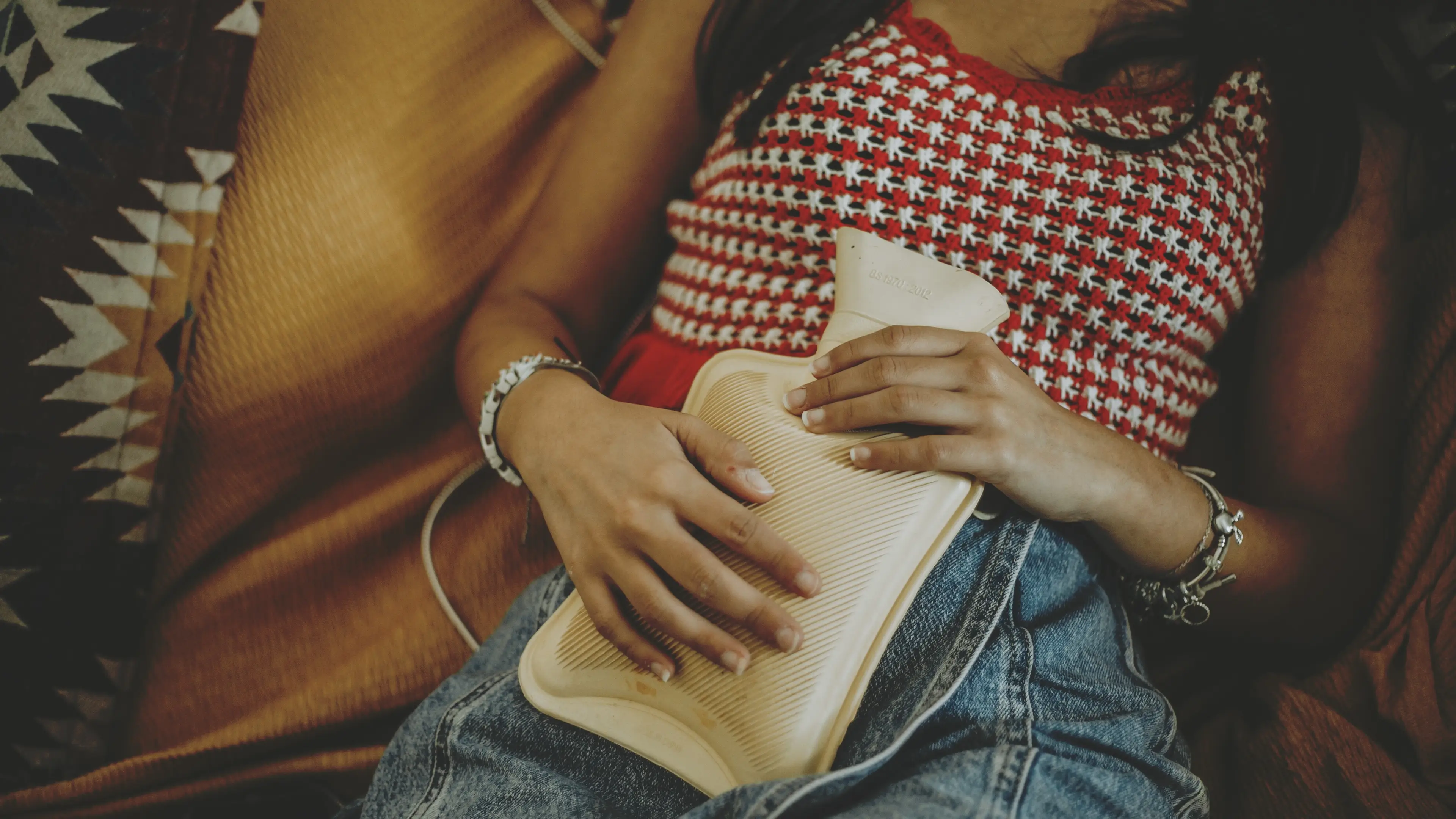
Women’s health doctor reveals truth behind period cramp ‘phenomenon’ women admit to feeling

A women's health doctor has explained the strange phenomenon of only feeling cramps once you realise your period has started.
Now, if you're someone who menstruates, you might be familiar with this baffling concept.
I personally have experienced being completely fine, then popping to the loo and realising that time of the month has come, and only then feeling the dreaded cramps that come with it.
And I'm not the only one, as numerous social media users have also raised questions on the confusing topic, with one TikToker recently making a video on the topic, which has racked up over 30,000 views.
Advert
The influencer questioned: "Why do the period pains only start once you acknowledge that the period has actually started. Like, you can literally go about your day, be feeling moody, as soon as you go to the toilet, and then you're like 'Oh yeah, my period has started,' all of a sudden the pain starts feeling horrendous. But before that, the pain wasn't there. How does that work? It always happens to me."
Others agreed in the comments: "Once I see blood!" and "Likeee what’s the science behind this?!?!?"
While, of course, the same can't be said for everyone, it seems that a lot of women have also experienced this bizarre period phenomenon.
Why do women sometimes only feel period cramps once they've 'acknowledged' they're bleeding?
Dr Susanna Unsworth, Women’s Health Expert for the intimate wellness brand Intimina, explained to Tyla that 'pain is a complex process with a significant psychological component'.
She added, "This does not mean the pain isn’t real, but the brain and how we perceive symptoms can influence how intensely that pain is experienced.
"This is seen across many pain conditions, not just those related to menstruation. Factors such as anticipation, anxiety, or previous negative experiences can all amplify how pain is felt."
Only feeling the cramps once you've seen blood essentially relates to how the brain processes pain.
"The physical cause of the pain does not change, but how we interpret and respond to it can influence how intense it feels," the doctor explained. "For some people, recognising that their period has started may heighten awareness of the pain or make it feel more intense.
"A simple way to think about it is how a child might fall over and initially not react, but once they see blood, they suddenly cry; the injury has not changed, but their awareness of it has."
The expert outlined how there is always a combination of both 'physical and psychological factors involved in pain perception'.
Unsworth added, "That does not make the pain any less real. It still has genuine physical and emotional effects and should be taken seriously. It is important that we do not downplay period pain, as this is often how women’s symptoms end up being overlooked or under-treated."
What's the science behind the phenomenon?
As for what the cramps actually are, the women's health expert explained that the idea that period pain only begins once bleeding starts is 'a misconception' and reflects a 'misunderstanding of why menstrual cramps occur.'
"In the lead-up to a period, levels of progesterone fall, which triggers the release of prostaglandins. These are chemicals that cause the uterus to contract in order to shed its lining," she outlined.
Adding: "This process often begins before any visible bleeding, which is why many women experience cramps in the hours or days leading up to their period.
"For some, pain may improve slightly once bleeding starts as the lining is shed. It’s also worth noting that in certain conditions, such as endometriosis, pain can begin earlier in the luteal phase and be more prolonged. Some people may also experience pain at other points in the cycle, such as around ovulation when the ovary releases an egg.
Whilst bleeding itself, particularly if heavy or associated with passing clots, can contribute to pain, it is not the only cause, and menstrual pain can occur at different points in the cycle for a variety of reasons."
What to do if it's affecting you
If you're really struggling, there are things you can do to help minimise this effect by shifting your focus towards managing symptoms before the bleeding actually begins.
The doctor advises: "I would explain that the pain is already being driven by hormonal and physical changes in the body before bleeding starts, but that noticing their period may make them more aware of it or change how it feels.
"It can be helpful to shift the focus towards early symptom management, for example, starting pain relief at the first signs of cramping rather than waiting for bleeding to begin, as well as using supportive measures like heat."
She added: "I would also emphasise that period pain is valid and should be taken seriously. If symptoms are significant or affecting day-to-day life, it is important to seek medical advice rather than trying to push through it, as there may be underlying causes that need addressing, and effective treatments are available."
Topics: Periods, Women's Health, TikTok, Health, Social Media, Life, Real Life, Explained
 Madison Burgess