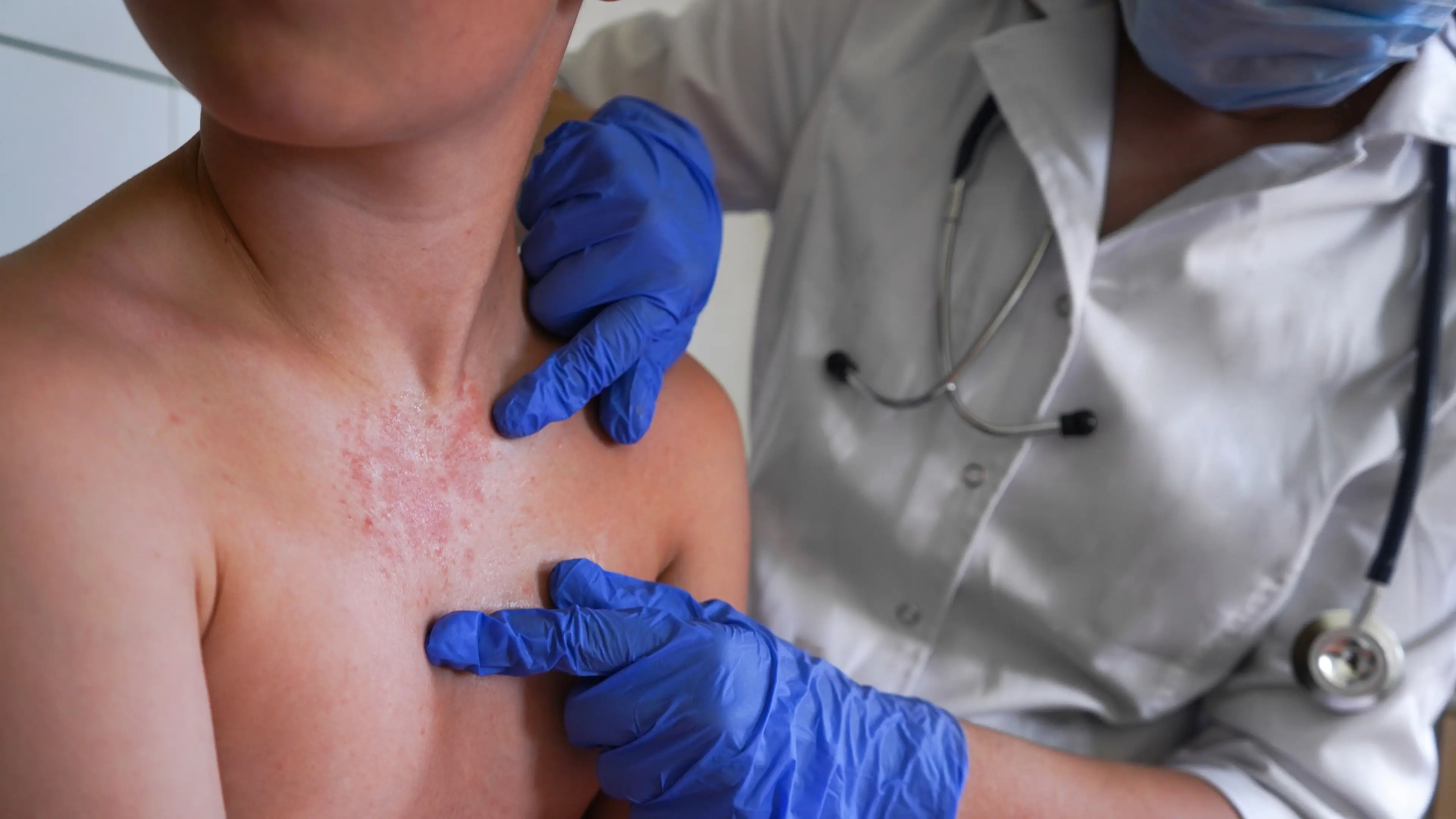
Wealthiest regions in the world seeing surge in grim disease

Doctors in some of the world's richest countries have been blindsided by a sudden boom in one, rather frustrating health condition.
As a result, questions have been raised regarding the possibility that the disease has been largely overlooked by medics in recent years, given that it has never posed a real risk to life.
A new study carried out by researchers in China analysed the health records of 236 different countries, finding that incidence rates for this particular condition had colossally increased between 1990 and 2021.
More specifically, a 10 per cent rise had been recorded in males by experts at JAVA Dermatology, whilst cases of women receiving similar diagnoses had risen by seven per cent.
Advert
On top of this, global cases of this condition - which can affect vast areas of the body's skin - are understood to have sky-rocketed in a number of largely affluent countries, from 23.1 million in 1990, to 43 million three years ago.

We are, of course, talking about psoriasis - a skin condition defined by flaky, scaly patches that can appear pink or red, or white, that affects over 7.5 million adults living in the United States, and 2 in 100 in the UK.
Doctors believe the ailment is caused by an overactive immune system, which causes skin cells to build up much faster than they should. As such, these itchy, scaly patches can form - most commonly in areas like elbows, knees and the scalp.
Despite being a chronic disease - in that patches usually last long periods of time - the symptoms can come and go depending on flare-ups.
These instances are usually caused by the likes of stress, weather or other types of health conditions, and as such, a sudden rise of cases in wealthier regions of the world has stumped a number of medics.

It turns out, however, that the correlation between financial wellbeing and psoriasis isn't considered by many expert to be conventional 'cause and effect'.
In fact, some believe it's simply a case of individuals living in higher-income areas - like the US, UK and other areas of Europe - being more likely to report their symptoms to their doctor.
And as a result, they're receiving diagnoses - creating the impression that there's a surge when, really, there isn't.
Another leading theory in this area - as reported by the New York Post - is, however, that there must be something in these cleaner, richer environments that is actually serving as a trigger for symptoms to flare up.
These societies serve to reduce exposure to certain microbes, which is a good thing - except when it comes to challenging a person's immune system.
Topics: Health, US News, UK News, Skincare, World News
 Rhianna Benson