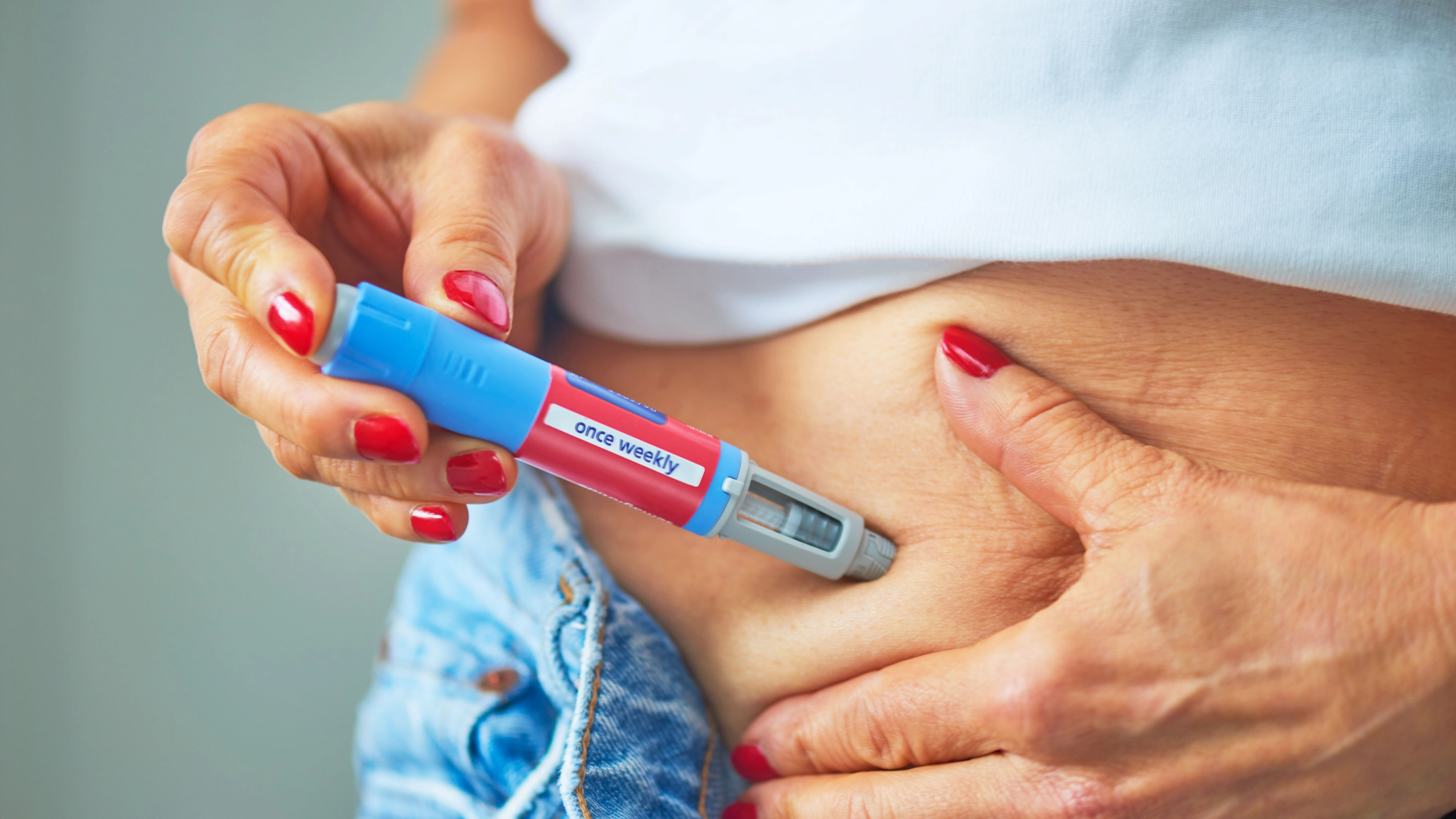
Quitting Mounjaro and Wegovy jabs might actually leave you worse off than before

New research has found that people taking medications such as Mounjaro or Wegovy for weight loss purposes may regain the majority of the weight they lost when they stop taking it.
The jabs, also known as GLP-1s, were originally developed to treat type 2 diabetes, however many people now use them to aid weight loss.
It comes as more people are starting to express concerns about potential side effects.
Scientists at the University Of Cambridge have carried out a series of trials, featuring more than 3,200 people.
Advert
They have warned that people may be 'worse off than before' when they stop using the jabs, even if they manage to keep off some of the weight.
The research found that many patients stand to regain almost two thirds of the weight they lost, within a year of stopping the injections.

They found that some people were able to keep off a quarter of the weight lost, however they said it depends what the weight gain consists of.
If most of their regained weight is fat rather than muscle, people could be left 'worse off than before' they started.
Two of the most popular types of jabs include semaglutide (Wegovy) and Mounjaro (tirzepatide).
The research found that in the first 52 weeks after stopping the jabs, the average gain was 60 percent of the weight they lost.
Their findings were published in eClinicalMedicine, but they did find that between 52 and 60 weeks, the weight gain tapered off at 75 percent of the original weight lost.
It suggests that most people can keep off a quarter of their original weight.
Medical student Brajan Budini from the study said: "Drugs such as Ozempic and Wegovy act like brakes on our appetite, making us feel full sooner, which means we eat less and therefore lose weight.
"When people stop taking them, they are essentially taking their foot off the brake and this can lead to rapid weight regain.
"Our projections show that even though people regain most of the weight they have lost, they still maintain some of the weight loss, but what we currently don't know is if the same proportion of lean mass is recovered."
This is where the danger lies, as it is not known if the regained weight includes new muscle. Budini said: "If the regained weight is disproportionately fat, individuals may ultimately be worse off than before in their fat-to-lean mass ratio, which may have adverse consequences for their health."
There are calls for further studies to be carried out on the long-term impact jabs can have.
Many people are taking weight loss medications for a long time, while the National Institute for Health and Care Excellence recommends semaglutide should only be taken for weight loss for no more than two years.
There is no restriction for tirzepatide (Mounjaro).
Steven Luo, a fellow student, advised: "When stopping weight loss drugs, doctors and patients should be aware of the potential for weight regain and consider ways to mitigate this risk.
"It's important that people are given advice on improving their diet and exercise, rather than relying solely on the drugs, as this may help them maintain good habits when they stop taking them."

A spokesperson for Eli Lilly (Mounjaro) said: "Obesity is a chronic progressive disease, and people living with obesity deserve care that reflects that reality. Many long-term conditions, such as high blood pressure or diabetes, need ongoing treatment.
"Authorised weight-management medicines, when prescribed appropriately, can be part of longer-term care alongside healthy eating, physical activity, and medical follow-up.
"When treatment is stopped, weight can return, which reflects the biology of the condition rather than a lack of effort. Lilly continues to study the long-term effects of these medicines and works closely with healthcare professionals and people living with obesity to support their safe and appropriate use."
Novo Nordisk, the makers of Wegovy, said: "Wegovy® (semaglutide injection) is indicated for weight management, and it’s expected that some level of weight regain can occur upon discontinuation of the medicine.
"Our own study published in 2022 from the STEP1 trial demonstrated that treatment withdrawal of Semaglutide resulted in the regain of two-thirds of the weight loss within 52 weeks.
"These findings highlight the chronic nature of obesity and suggest that ongoing treatment is necessary to maintain improvements in weight and overall health for patients, similar to the management of other chronic conditions such as diabetes or hypertension."
 Jen Thomas