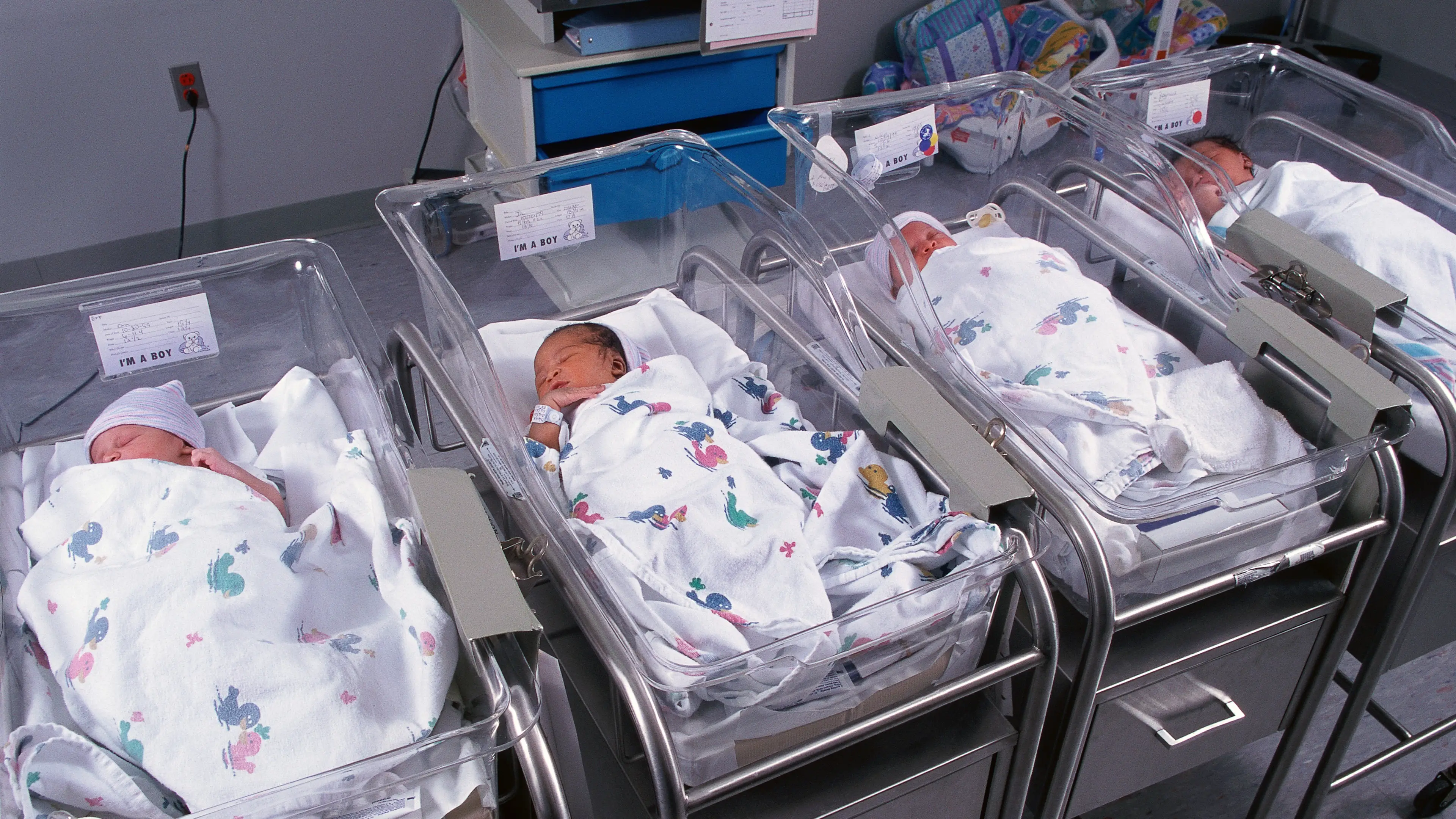
'Second night syndrome' explained as new mothers worry they’ve taken 'wrong baby home'

Parents have been rallying together recently to raise awareness of a peculiar phenomenon nicknamed 'second night syndrome'.
Apparently, this condition is defined by the overwhelming fear that, somehow, the baby you birthed in the hospital yesterday must have been swapped with another tot overnight without you having noticed.
Taking to Instagram recently, one mum-fluencer, Caitlin Wilder explained her take on the enigma, adding of 'SNS': "Aka, the moment you think, '......WTF?' aka, the beginning of your baby trolling you."
She continued in her viral post: "Second night syndrome (or first night at home syndrome) is pretty simple - essentially you have your baby, they are very quiet and sweet in the hospital/for that first night, and then the 2nd night (or the first night you're home, whichever) they are NOT THE SAME BABY."
Advert

While it's hardly a surprise to hear that babies become fussier and irritable after living in the real world for over 24 hours - compared to their post-birth sleepiness - experts have emphasised that SNS isn't something to be underestimated.
Why are babies more irritable when you take them home from hospital?
Well, firstly, their hunger levels have suddenly increased now that they're no longer relying on the placenta for nutrition. On top of this, they're finally able to poop freely - so, as such, their stomachs are emptying much faster.
Next up, they're in a brand new world - it's brighter, noisier and colder. Is it really any wonder that they're feeling a tad on edge?
And lastly, cluster feeding could also have an impact on a baby's nature. They might want to nurse constantly - not only because they're hungry but because they seek the comforting experience of breastfeeding with their mother. As such, they get needy.
Providing further detail on her own experience, Wilder continued: "When I had my first baby it SHOOK me. I did not know it was a thing and I thought it meant my baby hated us/our house/etc.

"I think if I had *known* it was coming it would have been a little easier for me to process!"
And apparently, she's not the only one to have endured this hellish experience.
"My first night at home my son cried almost the whole night. I could do nothing but nurse him and cry myself! My husband stayed up with me all night trying to reassure me that I was his only safe place because he was used to the hospital and not our home yet," another user explained.
Another continued: "With my first I was in complete shock with that second night. I was crying uncontrollably and felt defeated already."
How to survive SNS
Attempting to advise new mums and dads of the best means of combating SNS, experts from Michigan Family Doulas have comprised a little list of top tips, kicking off with understanding that babies might seek the more frequent feeding we previously mentioned.
"Expect your baby to want to feed more often," the firm emphasised. "This is normal and helps establish your milk supply if you’re breastfeeding."
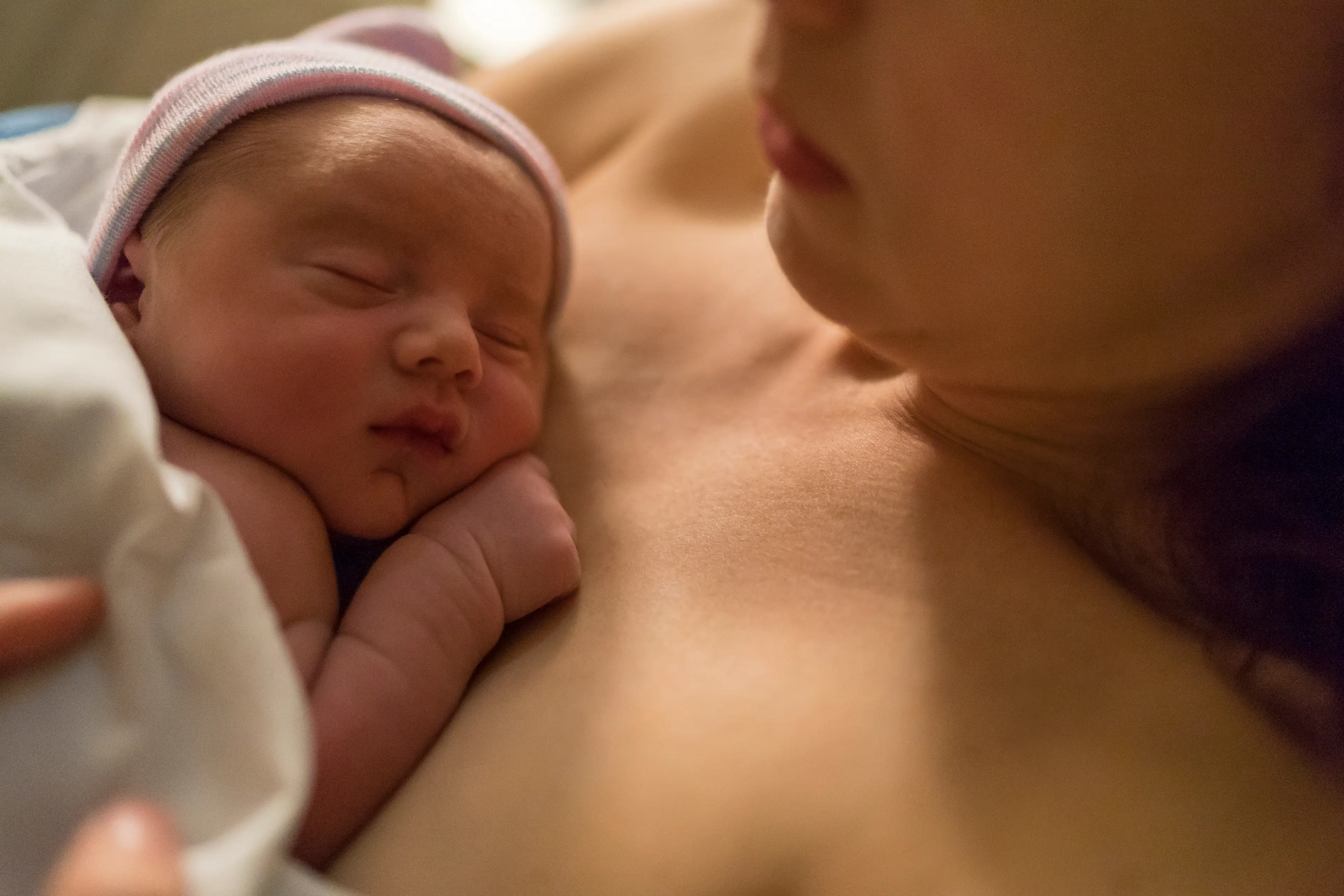
Skin-to-skin contact is also understood to be vital to both keeping the baby calm and regulating their body temperature, the breathing pattern and their heart rate. "It also provides comfort and helps with bonding," the company continued.
For parents themselves, the team of doulas can't stress enough how important it is to remain calm, given that newborns can often sense your stress.
"Remember, the second night will pass," they advised.
That said, however, they advised never suffering in silence, adding that friends, family members and even antenatal group leaders can be there to offer support during difficult early days.
"Even a brief break to rest or have someone else hold the baby can be rejuvenating," they continued.
Most child-rearing gurus advise to get some shut-eye as and when you can. If your little one dozes off, do the same - and definitely don't feel obliged to host visitors.
Lastly, the team advised implementing swaddling techniques, given that tight blankets can mimic the comfort of the womb.
"You can also use gentle rocking or a pacifier [or, dummy, if you're in the UK] if needed," they continued.
Topics: Parenting, Life, Real Life, True Life, NHS, Health, Pregnancy
 Rhianna Benson