
Men are seeking new underwear amid hormone concerns

Getting your boyfriend to invest in a fresh sets of undies can sometimes prove hard work.
They could have been bought back in 2010, be riddled with holes, or have just three fibres of material left in them - and some blokes will still insist there's 'nothing wrong with them'.
According to some scientists, however, a failure to swap out their underwear on a regular basis could be proving detrimental to men's health - especially when it comes to fertility.
A report by the Wall Street Journal alleges some medics have reportedly been using their expertise to urge their male patients to invest in higher-quality undergarments, amid concerns of microplastics potentially being woven into cheaper ones.
Advert

Whilst materials like polyester might be friendly to your pocket, there have been ongoing discussions between fertility experts and fashion leaders as to the potential risk that this could pose on a man's ability to have children later down the line.
Instead, cotton and wool - amongst other organic materials - are being recommended for anyone who hopes for their partner to one day to conceive.
In recent years, increasing research has been ploughed into studies on the effects of microplastics on the human body - specifically the pollution they can inflict onto certain organs.
For reference, this term describes plastic particles that are smaller than 5 millimetres, and can be created during the degradation of larger debris and synthetic textiles, tire wear and similar industrial processes.
Microplastics have been linked to cancer cases, inflammation, cell damage and cardiovascular ailments.

Alarmingly, they're usually found in the air we breathe, the water we drink and the food we eat.
As reported recently, however, scientists are currently hoping to establish whether or not they might also be found inside the clothes we wear, and what the impact of this could be.
Speaking to the WSJ, reproductive urologist and microsurgeon Paul Turek explained: "Microplastic conversations are constant now."
He added, however, that this suggestion in relation to fashion isn't something that concrete evidence has supported yet.
Jaime Knopman - director of fertility preservation at CCRM Fertility New York - also agreed that it's 'theoretically' possible for cheap underwear to pose a fertility risk. She went on to emphasise, however, that the same risk of fertility struggles could also be caused by the fit of undergarments.
"The tight fit can raise the temperature of a man’s testes," the expert explained, which could reduce sperm quality and quantity, causing a decline in fertility.
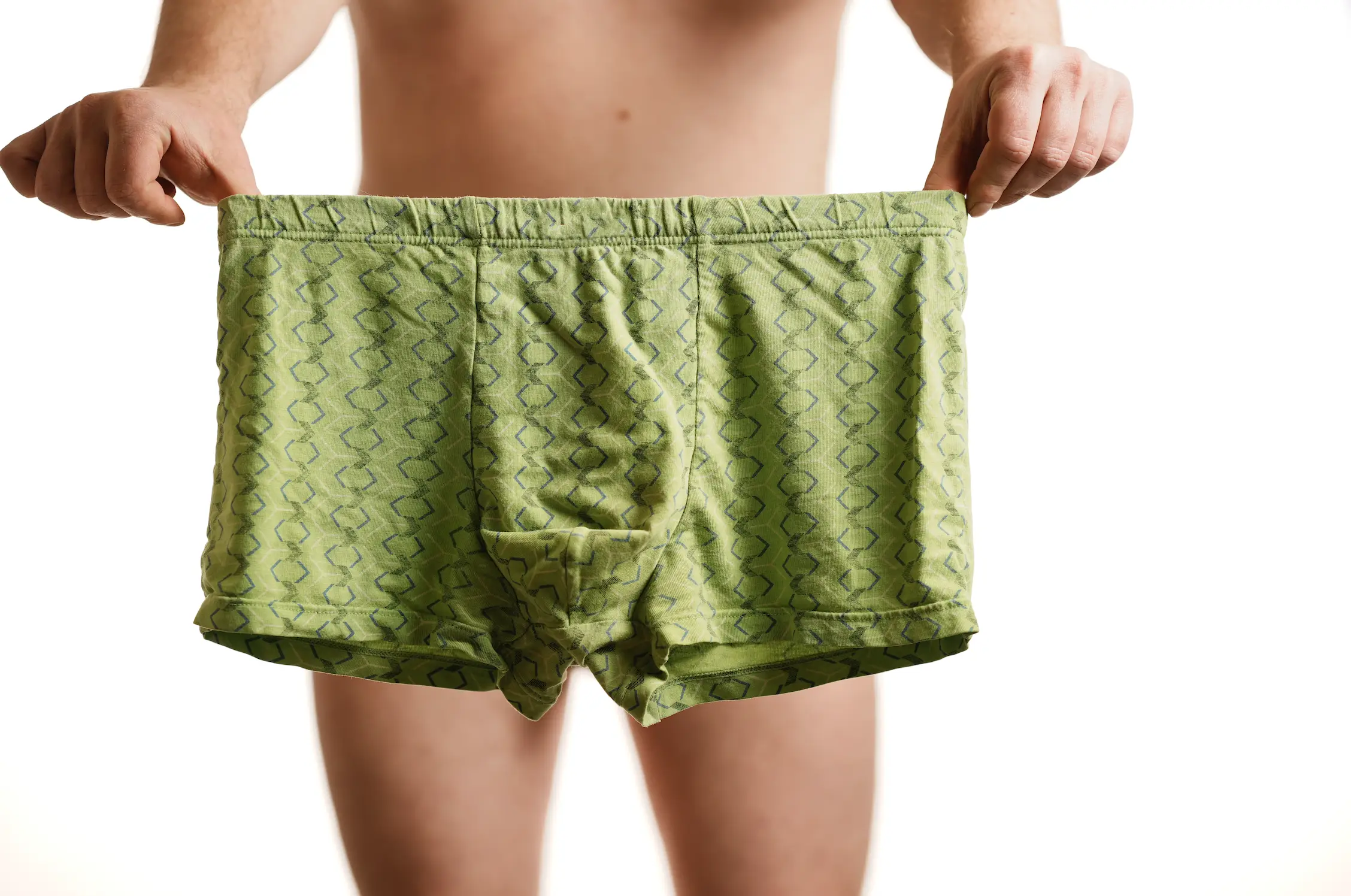
"However, in my experience, I have not found a direct correlation between wearing briefs and a patient’s fertility."
Also, not yet having come across 'strong evidence that specific fabrics alone have a meaningful impact' on the fertility of men, is Columbia University Fertility Center worker, Alex Robles.
"With that said [...] higher scrotal temperatures from any source (heat exposure, tight clothing, prolonged sitting or cycling) have been linked to reduced semen quality in some studies.
"Switching underwear alone rarely causes meaningful changes in fertility. However, some men may see small improvements in sperm quality if they move away from very tight styles that increase heat production and retention."
 Rhianna Benson