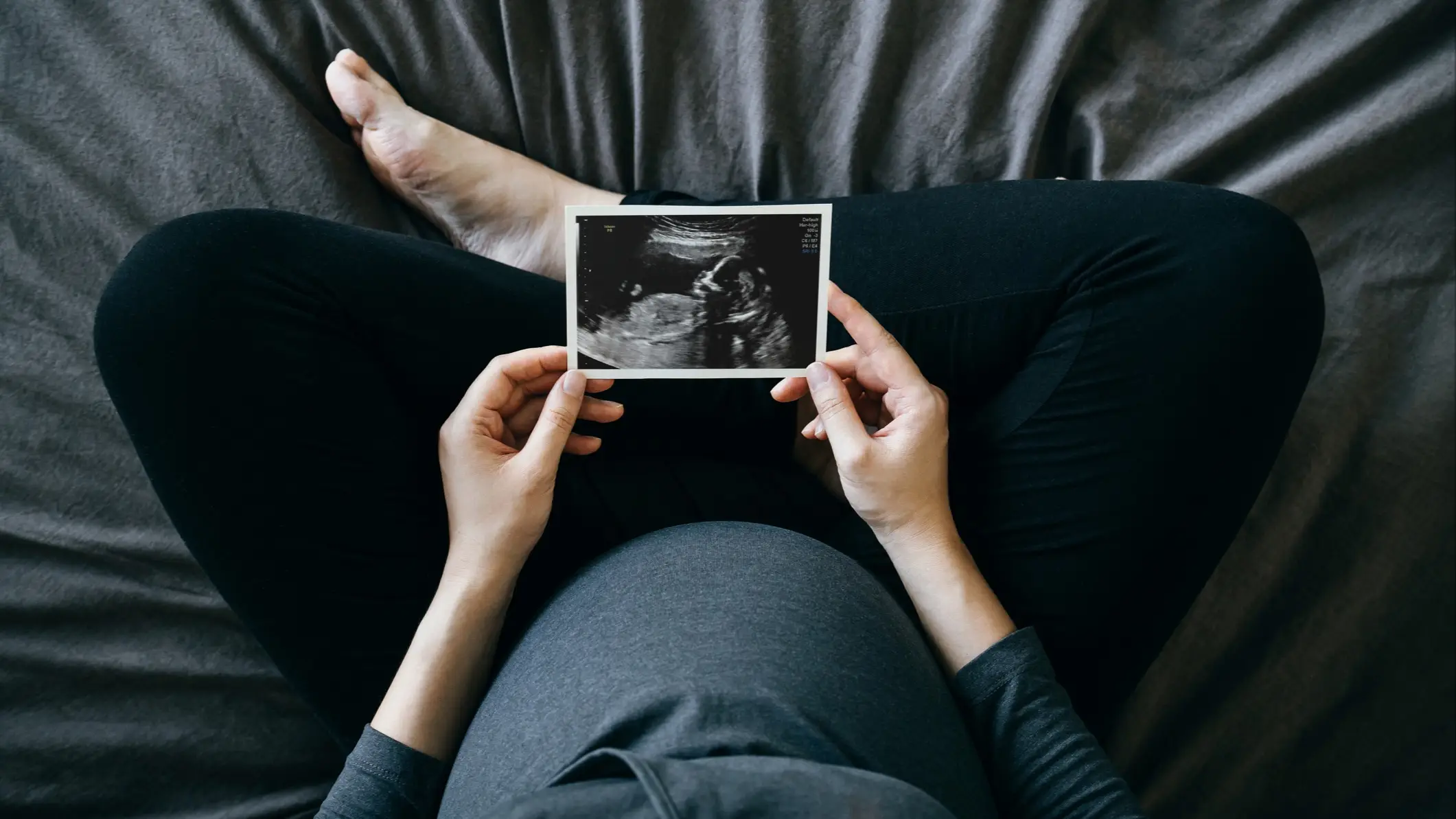
Reason why so many babies will be born in May next year

A women's health GP has predicted that a huge baby boom could take place in nine months' time, triggered by the UK bank holiday.
Now, many of us Brits are currently mourning the end of summer, with Monday (31 August) marking the last bank holiday of the year until Christmas Day.
But apparently, as well as being sad about dark evenings making a return and less time off work to sit in beer gardens with a crisp Aperol Spritz, everyone’s also making time to get ahem, busy under the sheets.
As reported by The Telegraph, the latest data from the Office for National Statistics has shown that most babies born in a single day in 2024 were conceived nine months after the second May bank holiday.
Advert
And that’s not all - further data backs up the trend, which is ‘well-known to demographers’ - official holidays lead to a rise in births, as couples use their time off work to have sex.
For example, the outlet also reports that seven of the top 10 most common birthdays in 2024 were in September, which I’m sure you’ll have worked out is nine months after Christmas.
Women’s health GP and founder of The Female Health Doctor clinic, Dr Nikki Ramskill told Tyla: “Bank holiday baby booms are absolutely a thing. Think about it...couples often have more time together, they may be away from the usual pressures of work, getting more sleep, socialising, having a few drinks or simply enjoying a change in routine. All of those things can create more opportunity for sex.”
She recalled: “I remember when I worked in obstetrics, September always felt particularly busy on the labour ward, and we would joke about all the Christmas and New Year babies arriving! If you count back around nine months, the timing certainly makes sense, but it doesn’t necessarily prove that Christmas, or a bank holiday, caused those pregnancies.”
Dr Ramskill explained that it’s actually more complicated than that, as biologically, there’s ‘nothing special about a bank holiday that suddenly makes somebody more fertile’.
Pregnancy is instead much more dependent on whether sex happens during the fertile window, with the highest chance of getting pregnant coming from having sex in the days leading up to and around ovulation.

The expert reasoned: “A long weekend may simply increase the likelihood that couples have sex at the right time by chance. For couples actively trying to conceive, having sex regularly, every two to three days throughout the cycle, means they don't necessarily need to pinpoint ovulation perfectly.”
However, Dr Ramskill also warned that we ‘need to be careful when interpreting figures showing a rise in births around nine months after a bank holiday’.
She added: “Pregnancy length varies, babies arrive early or late, and conception dates can't usually be determined with absolute precision. There may also be seasonal patterns in conception that have nothing specifically to do with the bank holiday itself. For example, many couples try to plan for a child that means they will be the ‘oldest’ child in a year group (born in September), rather than the ‘youngest’ (born in August).
“So I wouldn’t describe a bank holiday as a fertility boost. It’s probably much simpler than that: people have more time together, fewer competing demands and potentially more sex.
“If that happens to coincide with the fertile window, a long weekend could quite literally have a lasting consequence!”
Topics: Pregnancy, Sex and Relationships, Life, Real Life
 Madison Burgess