'Vagina anxiety' is taking over Gen Z - here's why more women are convinced their vulvas aren't 'normal'

2010s meme culture has given us a lot - reaction GIFs, The Twilight Saga, Tumblr quotes plastered all over our bedroom walls - and, according to hordes of Gen Z women, a violent fear that their female anatomy is somehow botched.
Because if you grew up online in the noughties and 2010s, there was one thing the internet was remarkably consistent about - that women's genitals were apparently hilarious, as long as they were being described as disgusting.
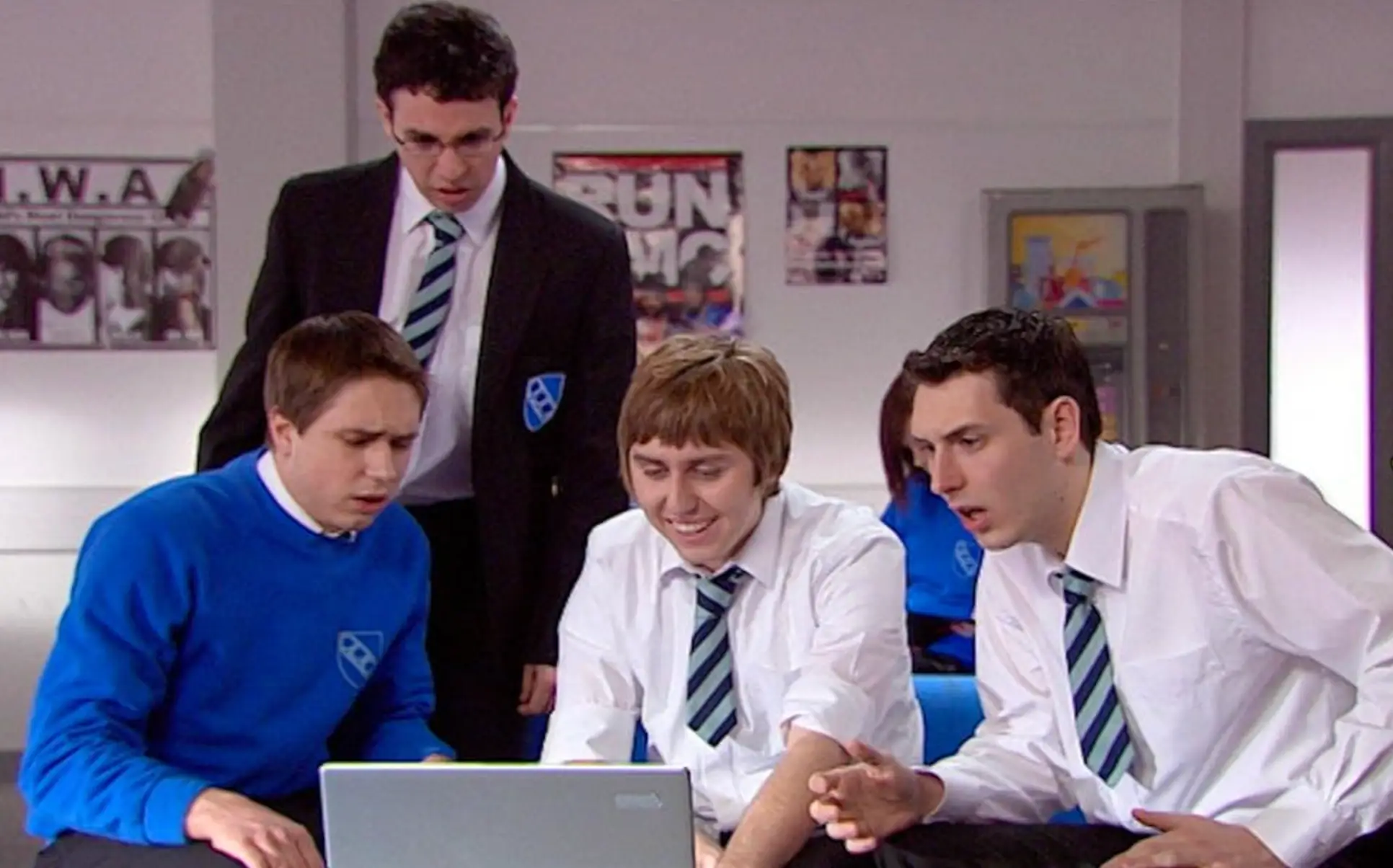
Phrases like 'beef curtains', 'minge', 'camel toe', 'roast beef', and 'saggy' were used incessantly throughout all three seasons of hit British teen sitcom The Inbetweeners, while in the US, the cast of Jersey Shore would regularly use disparaging remarks about the women they 'hooked up' with, implying their anatomy was 'loose' if they'd had prior sexual partners.
Advert
The vocabulary was endless, the punchlines were vile, and for a generation of girls quietly figuring out what their own bodies looked like at a pivotal time in their development, there was a pretty clear message regarding a right and wrong way for the vulva to look.
Fast-forward a decade, and that joke has outlived the original memes.
Now, more and more young women are Googling their labia, comparing themselves with strangers online and worrying that something perfectly ordinary about their vulvas is somehow 'wrong'.
Welcome to 'vagina anxiety'
It's a phenomenon that might sound like a slightly unhinged TikTok trend, but it's actually rooted in a very real problem.

The sad fact is, a heartbreaking number of women simply haven't been taught what normal female anatomy actually looks like, and having grown up in a world where deviating from the ideal was to be ridiculed by boys, they now see themselves as deformed in some capacity.
And perhaps the most depressing part is that the joke doesn't necessarily have to be aimed directly at you to get under your skin. Sometimes, all it takes is seeing an image of a body part that looks vaguely like yours being presented as something disgusting.
Taking to Reddit recently, one young female user claimed one meme she came across as a teenager 'ruined' her perception of her body, having a knock-on impact on the way she viewed her self-worth.
'Genitalia meme culture ruined by life'
"When I was little, I remember seeing memes about women's 'roasted beef' down there, or the Taylor Swift ham sandwich meme," she shared. "And I would remember looking down there and seeing that my parts looked similar to the 'run over' one, even if I was a virgin. I was so insecure.
"After turning 18, I had never been with anyone, but I thought no one would like me because I had a 'roasted beef'-looking one. I would search online and see men's opinions about women's parts and more memes."
She went on to disclose: "So I decided to fly to another country and get surgery to cut the 'roasted beef'."
Another user wrote: "I had small labia until I was in puberty, about 12 y/o. I remember one day suddenly realising that one of them was longer than it always had been. I was really freaked out. After a few months, the same thing happened to the other one.
"It wasn't until a few years later that I learned from the internet that this is considered gross. Pictures of sandwiches with the ham sticking out, cut-up beef, always with a joke about how undesirable a woman is for this."

She went on to confess: "I really still hate myself for it. I've had boyfriends use it against me. So many times. Any time I had confidence it was squished, and I can't go through that again."
A third recalled a similar heartache, telling her followers: "A stupid meme going around social media of a picture of roast beef, I believe, and the words of like it’s embarrassing to smash [sic] someone who looks like that.
"Since then, my insecurities have risen to the max. Lmfao, since my down there looks like that, any tips to combat insecurities like this??"
'It's not a new trend'
According to some Millennials, however, the culture that condemns 'abnormal' female body parts that don't look exactly like the type depicted in porn wasn't just prevalent in the 2010s.
"People have been crassly referring to labia as 'beef curtains' for as long as I’ve been alive. I’m 35 years old," one wrote. "These things will never stop, and all you can do is control how YOU respond. You can’t let something like this dictate how you see yourself.
"Stop looking for these things and hurting your own feelings. A meme can’t ruin your life, but your own outlook can."
It also seems to be creeping into the 2020s.
'In fact, the issue is still prevalent today'
During an appearance on Saturday Night Live last year, Stranger Things actor Finn Wolfhard claimed he 'learned what a woman looks like down there' while filming the show as a youngster, before producers cut to an image of a spiky-mouthed Demogorgon.
The joke was, of course, that a vagina apparently looked like the demonic beast.

And while Wolfhard's anecdote was delivered as a throwaway gag, it speaks to a much bigger cultural problem. But what actually happens when the generation raised on those jokes grows up?
They Google, or compare, or inspect themselves in mirrors, or ask anonymous strangers on the internet whether their nether-regions are 'normal'.
Women's health expert Dr Susanna Unsworth claimed she's observed the issue causing a lot of unnecessary anxiety.
"I certainly see young women who are worried that their vulva does not look 'normal', particularly because of the size or shape of their labia," she told us on behalf of the intimate health brand Intimina.
"There is actually an enormous natural variation in how vulvas look, but I do not think we do a particularly good job of teaching young women what normal female anatomy really looks like."
'We skipped education and went straight for the punchline'
It is this, she says, that's the crux of the problem.
If you're never taught what the full spectrum of normal looks like, you're left to work it out from the things you do see.
And for an entire generation, those things included sitcom punchlines, lad mags, locker-room chat, pornography, celebrity gossip and memes comparing women's labia to slices of meat.
"I think it probably does have an impact," Dr Unsworth says when asked whether growing up surrounded by jokes about women's bodies could contribute to the problem.
"If you grow up repeatedly hearing jokes about how women’s bodies look or smell, while at the same time seeing very idealised images of female genitalia in the media and online, it is perhaps not surprising that some women start to wonder whether their own body is somehow 'wrong'."
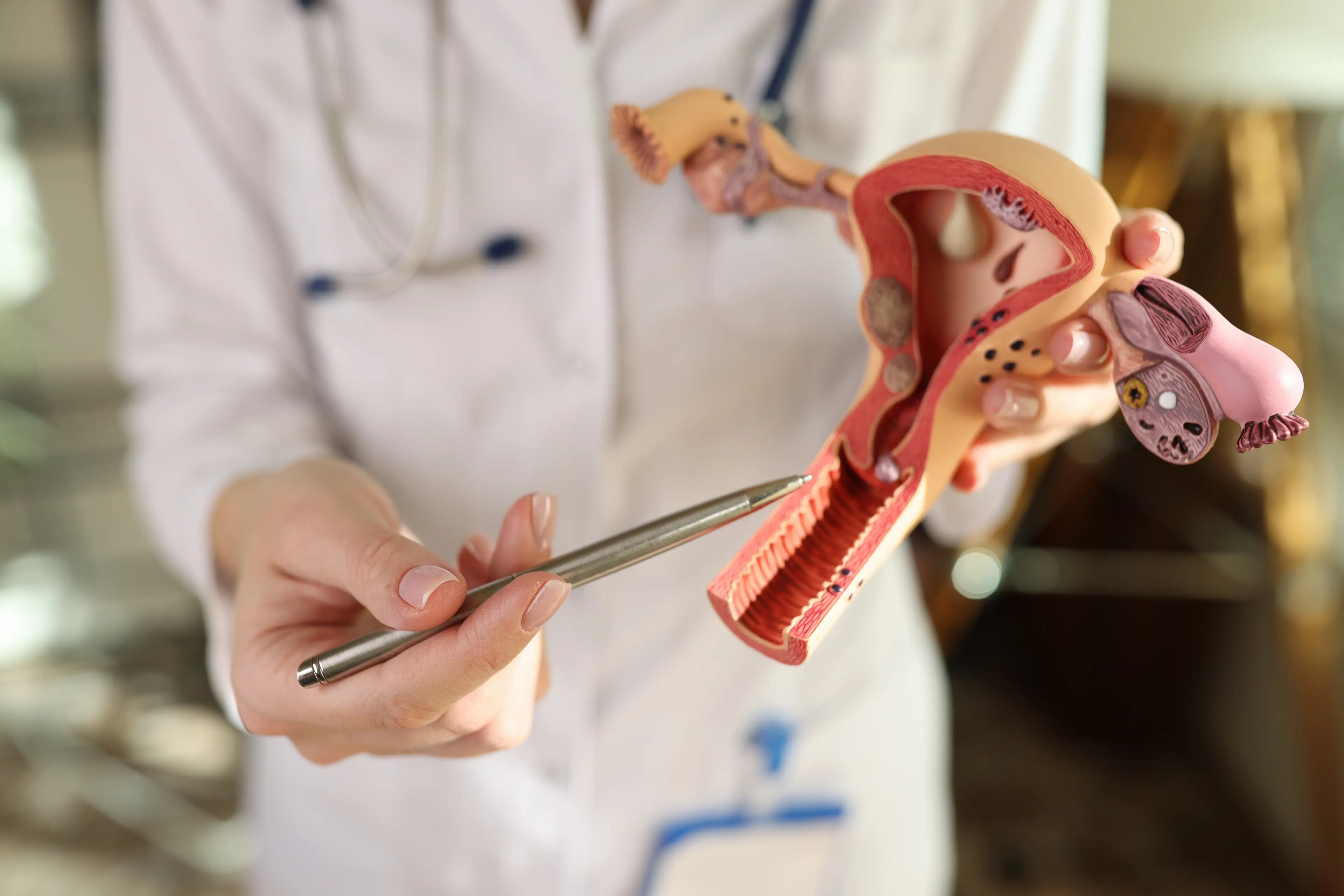
It's a pretty grim cultural cocktail - being told that one type of vulva is disgusting, then shown a tiny selection of highly curated vulvas and told that's what 'normal' looks like.
No wonder some women are looking down and wondering where they went wrong.
So, what does a 'normal' vulva actually look like?
Here's the answer nobody seemed particularly interested in giving us when we were 13 - pretty much anything.
"There is no single 'normal' vulva," Dr Unsworth says. "Labia come in all different shapes, sizes and colours, and it is completely normal for them to be asymmetrical or for the inner labia to extend beyond the outer labia."
The latter element of the medic's point is key here, because the visibility and size of the labia are among the things women most commonly worry about.
If your inner labia extend beyond your outer labia, that isn't evidence that you've had too much sex, or that you've 'stretched', or that you're inherently unattractive, unhygienic or abnormal. It's just one of the many ways vulvas can look.
The same goes for asymmetry - and smell.
Somehow, women have also been sold the idea that their genitals should smell of absolutely nothing - ideally a combination of freshly washed laundry and whatever vague concept of 'freshness' is being advertised by feminine hygiene companies this week.
But vulvas are body parts, and body parts have smells.
"It is also normal to have some vaginal discharge and a mild natural smell, particularly as both can change throughout the menstrual cycle," Dr Unsworth emphasised, adding that there are symptoms that shouldn't be dismissed.
Side note: Some symptoms to be aware of

It's worth noting that strongly unpleasant-smelling or green discharge, particularly if it's accompanied by itching or soreness, should be checked.
The same goes for a new lump or swelling, a persistent sore or ulcer, unexplained bleeding, significant skin changes, persistent itching or pain, or a marked change in discharge or smell.
The point isn't that women should ignore their bodies. Quite the opposite - they should be given enough info to understand them without immediately assuming they're broken.
Because, sadly, this can follow you into the bedroom
And it's not always a case of women looking in the mirror and thinking, 'Oh, I don't like that.' For many, it impacts intimate moment with their partners.
"Body confidence can have a huge impact on sexual wellbeing," Dr Unsworth says.

"If a woman is worrying throughout sex about how her vulva looks, whether she smells or what her partner might be thinking, it can make it very difficult to relax and enjoy intimacy, and for some women that anxiety can contribute to avoiding sex altogether."
It's this that makes the old female anatomy jokes look considerably less funny.
Because the girl who heard it at 14 might be the woman at 24 who has to keep the lights off during sex. The teenager who saw a meme comparing labia to roast beef might grow into an adult who's convinced her partner is secretly disgusted by her.
The off-the-cuff remark lasts five seconds, but the shame doesn't necessarily have the same short expiry date. Maybe that's why this particular anxiety feels so difficult to shake.
Women have been given an extraordinary amount of information about what their vulvas shouldn't look like, while being given remarkably little about what they actually can look like.
'Let's start with terminology'
"Better education about the correct terminology, and about the huge range of normal female anatomy, could go a long way towards reducing some of this anxiety," Dr Unsworth says, warning that even the phrase 'vagina anxiety' illustrates the problem.
The vagina is the internal part of the female genital tract, while the vulva is the external anatomy. It's a small distinction, but one that matters when you're trying to give people the vocabulary to understand their own bodies.
And maybe that's where we start - owning each of our specific body parts, title and all, before the internet gives them a list of insults instead.
Because your vulva isn't a meme, and a joke doesn't have to be the sole cause of someone's insecurity to become part of the environment that creates it.
And when that arena is already saturated with pornography, edited images, cosmetic surgery marketing and algorithms that can serve you an endless stream of other people's bodies, it's hardly surprising that some women begin to see their perfectly ordinary anatomy as defective.
Topics: Gen Z, Sex and Relationships, Real Life, Women's Health, Health
 Rhianna Benson