People ‘petrified’ after learning how horses sweat

They say every day is a school day, and many people are regretting learning something new about horses.
Apologies in advance if this is your first time learning this too - but if we had to find this out, then so do you - you're welcome.
Nature is full of weird quirks, such as hippos having pink sweat, pigs only sweat through their snouts, and dogs via their paws.
Many people are scared of horses due to their sheer size, fondness of kicking, and occasional unpredictability.
Advert
However, it's the method by which horses cool down which has left people feeling freaked out.
The internet has taught us all many things, and one X user shared their horror upon finding out a fun fact about horses, saying it has left them 'petrified'.
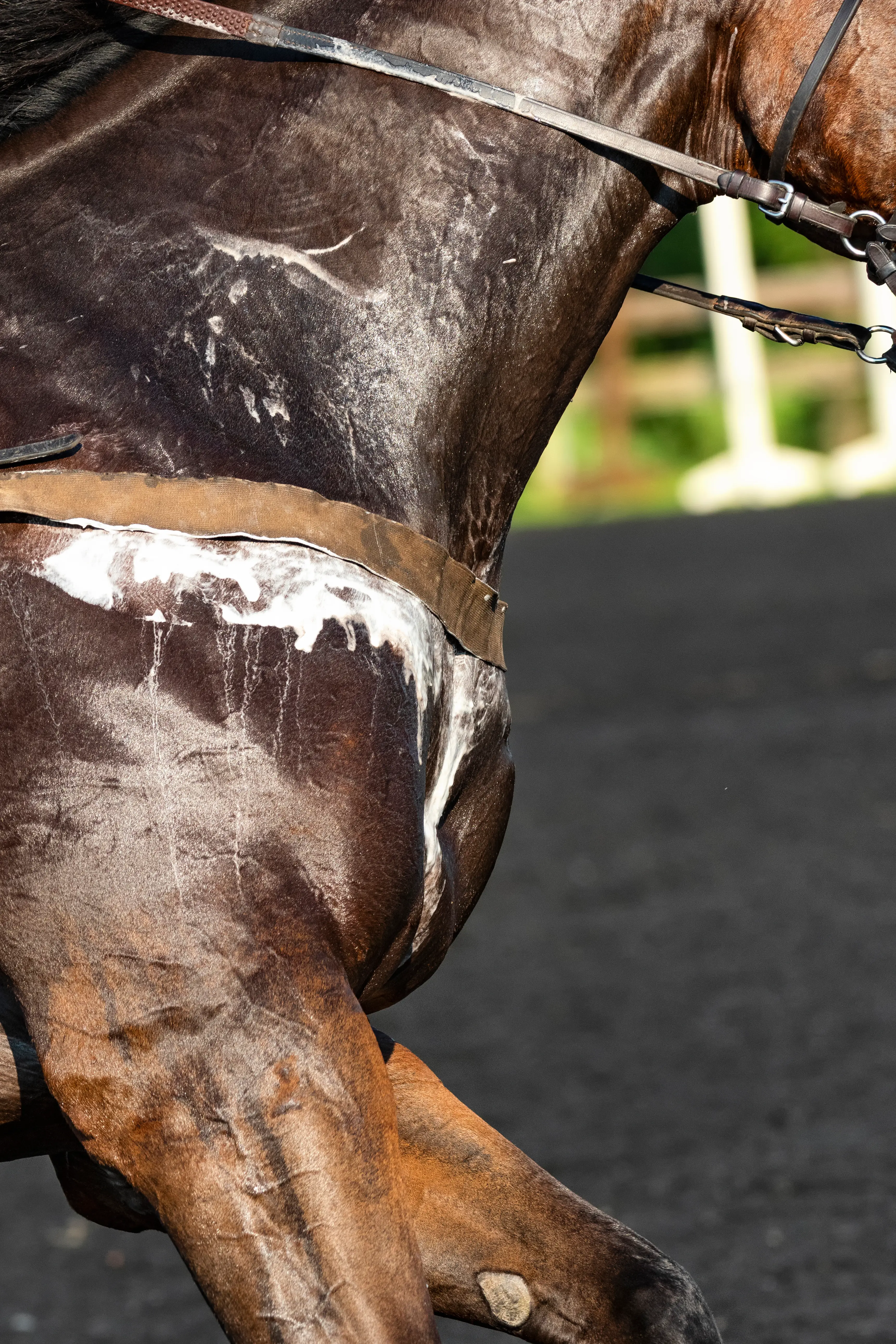
It turns out, horses have foamy sweat. Yes, foamy.
When they sweat, it turns into a lather, but why?
Author and academic Vybarr Cregan-Reid told The Conversation: "While most quadrupeds sweat, they do so to maintain skin health and create scent (we do this, too), and even to create ear wax,
"For thermoregulation, most animals use interior air movement (panting) to cool down – where their bodies have to actively work to lose heat. So that means, on a hot day, we could chase down a quadruped, and when it stopped to shed some heat, we humans could keep going and close the gap a little.
"Eventually, the distance between predator and prey would close as their technology failed, and ours kept functioning. Sweat meant that we were much better hunters than we appeared."
If you've never been up close to a horse, they're actually pretty hairy, which could make evaporation of sweat difficult.
Researchers wrote in a paper: "To solve this, horses appear to have evolved a surface-active, detergent-like protein that they release at unusually high concentrations in their sweat (human sweat is instead high in salt but low in protein)."
"This protein, latherin, presumably acts by wetting the hairs to facilitate water flow for evaporation, the side effect of which is the lathering that is often observed on the pelts of sweating horses, especially where rubbing occurs."
Lovely.
Kentucky Equine Research explains: "A horse’s sweat can appear lathery or foamy because it contains latherin, a substance not found in human perspiration."
"Latherin reduces the surface tension of water and aids moisture in moving away from the skin to the surface of the horse’s coat. This improves evaporation and cooling, a necessity considering the horse’s need to shed a large amount of heat during and after strenuous exercise."
Now you know.
 Jen Thomas