
Critical care doctor reveals eerie words people hear after they’ve already died

What happens us to after we die is one of humanity's most asked age-old questions - and of course, no one knows the answer.
While the religious among us envision a bright white light and a staircase to heaven, others believe our memories flash before our eyes one final time, and of course, some people have a starker view that death simply means, well, death, aka absolutely nothing.
A critical care doctor has revealed what it's really like when you're about to die, including some of the bizarre things that happen.
Eerily, some people who had a near-death experience, such as a cardiac arrest before being brought back to life, have reported hearing medical staff announce their own time of death - yes, really.
Advert
This is because, not to be morbid, but as we die, our brains start shutting down certain regions slowly, prioritising just the critical functions which are needed to sustain our vital organs.

Scientific studies show that sometimes, the brain can keep functioning after someone has died, for just long enough to hear their time of death being called out.
Yep, that's not terrifying at all.
As reported by The Mirror, Dr Sam Parnia, the director of critical care and resuscitation research at NYU Langone School of Medicine in New York City looked into this concept by examining a group of people who temporarily died after cardiac arrest before being brought back to life.
In November 2022, one study revealed that one in five people who survived cardiopulmonary resuscitation (CPR) after cardiac arrest described lucid experiences of death that occurred while they were seemingly unconscious.
The study involved 567 men and women whose hearts stopped beating while hospitalised and so they received CPR between May 2017 and March 2020 in the US and UK.
Fewer than 10 percent recovered sufficiently to be discharged from the hospital - but those who did survive reported having lucid experiences, such as a perception of separation from the body, observing events without pain or distress.
Dr Parnia explained that scientifically, death is defined as the moment when the heart stops beating and the blood flow to the brain is cut off.
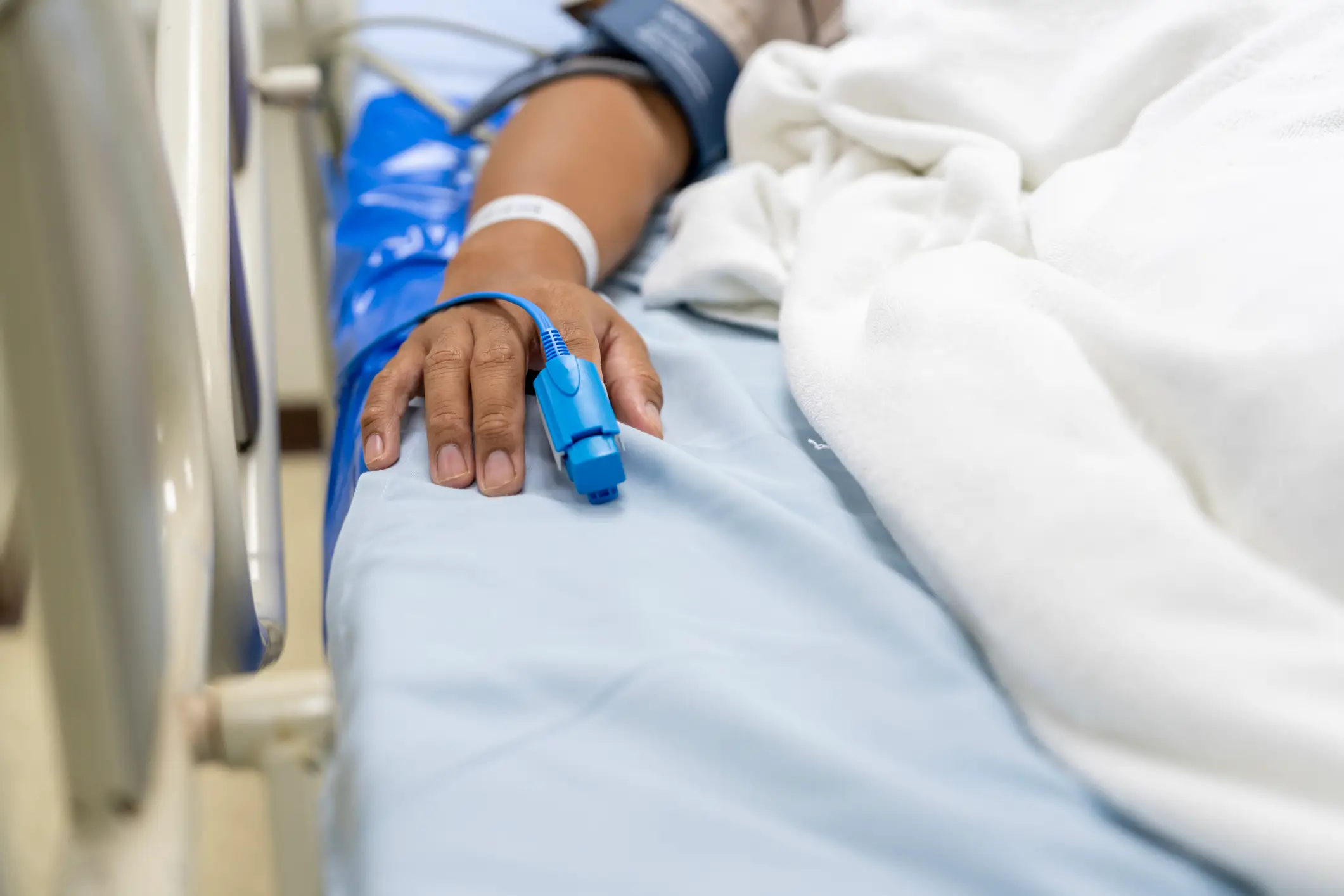
He explained: "Technically, that's how you get the time of death – it's all based on the moment when the heart stops."
However, as we say, studies have suggested that our brains may actually have a quick energy burst right before we die.
Another study, which was conducted in 2013 at the University of Michigan looked at the brains of anaesthetised rats undergoing induced heart attacks and found that they showed activity patterns associated with a 'hyper-alerted state' within the quick period following their clinical death.
The doctor and researcher added: "In the same way that a group of researchers might be studying the qualitative nature of the human experience of 'love', for instance, we're trying to understand the exact features that people experience when they go through death, because we understand that this is going to reflect the universal experience we're all going to have when we die."
 Madison Burgess