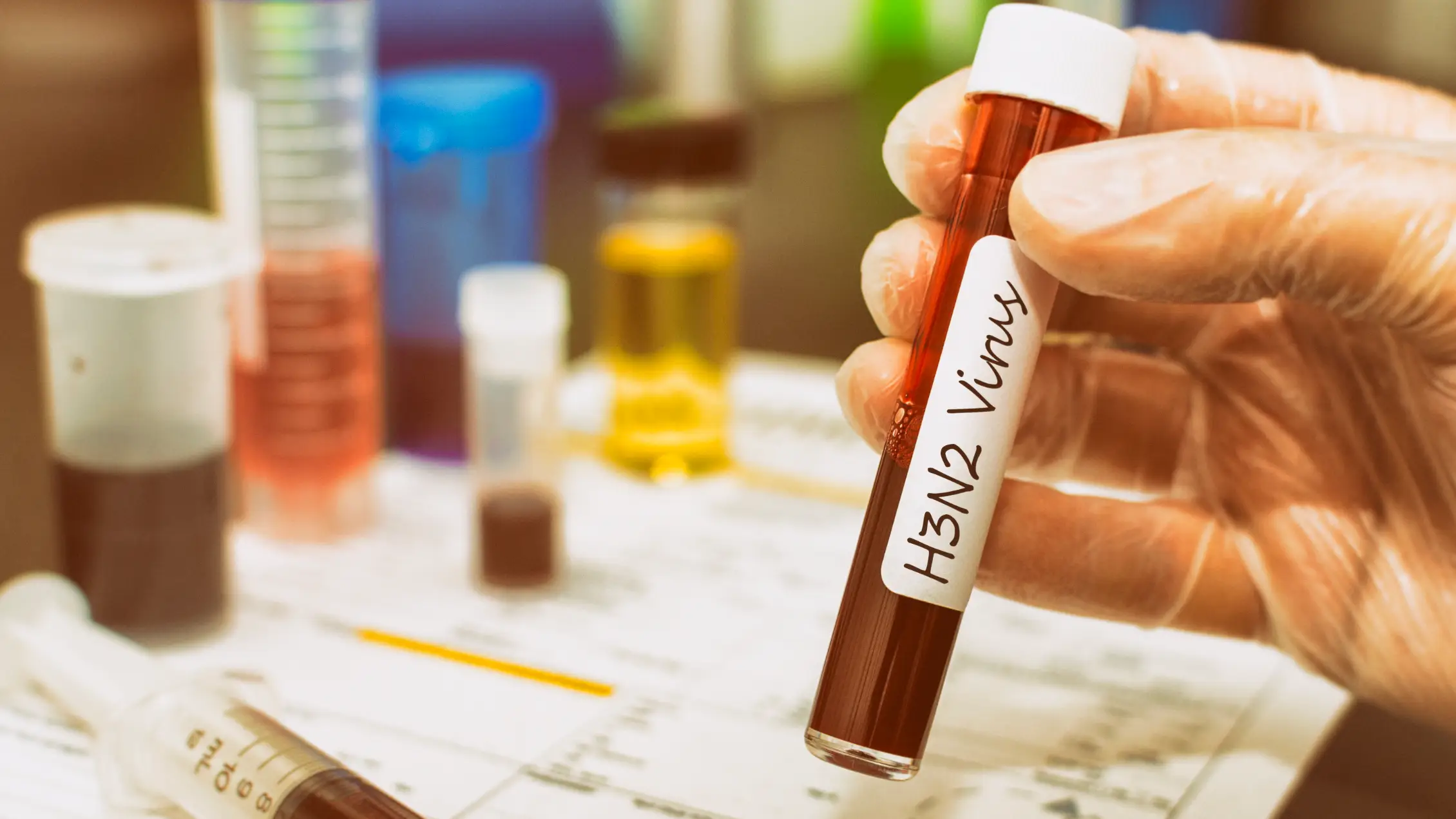
Doctor issues warning on unusual sign of 'dangerous' H3N2 flu

As if the usual winter flu wasn't bad enough, Brits are now dealing with a new mutated version of the virus which is circulating around the country.
Dubbed the 'super flu,' the new H3N2 strain 'subklade K' is a type of seasonal influenza A virus that's pushing more people to seek hospital treatment rather than the standard rest and over-the-counter medication.
According to NHS England and the BBC, in the first week of December there were enough flu patients to fill more than three whole hospital trusts.
There were an average of 2,660 patients a day in hospital with flu which was a rise of 55 percent on the previous week, and NHS chiefs have said the total has kept increasing since December 7, with no peak in sight.
Advert
Meanwhile, Professor Meghana Pandit, NHS national medical director, said this 'unprecedented wave of super flu is leaving the NHS facing a worst-case scenario'.

In the wake of this, the health service is urging anyone eligible to get their flu vaccination to help prevent them getting seriously ill - with today’s data showing that more than 17.4 million have been vaccinated so far this year, which is over 170,000 more than this time last year.
The record-breaking demand also comes with thousands of resident doctors set to go on strike from 17-22 December, sparking fears of major disruption for patients ahead of Christmas.
How do you know if you've got the 'superflu'?
Typical symptoms of super flu - or H3N2 influenza - are similar to seasonal flu, such as a sudden high temperature, a dry, persistent cough, and body aches and joint pain.
However, the 'superflu' tends to produce more severe fevers, with patients typically experiencing higher body temperatures overall.
You're also more likely to develop a high fever - exceeding 38°C - than with other flu strains like H1N1.
It's also important to know the difference between a bad cold or typical flu and a medical emergency, so, as per The Express, doctors have pointed out the signs that mean an infection has turned dangerous and requires immediate help.

Breathlessness and confusion
Speaking to the publication, Professor Azeem Majeed, a GP and Head of Public Health at Imperial College London, stressed that you must call 111 or your GP if you find yourself 'feeling very short of breath' or with a 'high temperature which doesn't come down easily' and sudden confusion.
If you're eligible for a flu jab on the NHS, it's so important that you get it, as it still offers some protection against H3N2, and against the two other strains which are circulating.
Health and Social Care Secretary, Wes Streeting, said: "There is a tidal wave of flu tearing through our hospitals. We are working with the NHS to make sure it is able to cope with this as best as possible, including already getting over 17 million patients vaccinated, 170,000 more than this time last year, with over 60,000 more NHS staff also getting their jab."
You can find out more about the flu vaccine on the official NHS website here.
 Madison Burgess