Anyone with a smelly belly button warned of signs that could point to a serious issue

Let's be honest, nobody wants their belly button to smell and it's the kind of bodily mystery you might feel the need to keep to yourself since no one ever seems to talk about it.
But it’s actually quite common and there are ways to resolve it.
While a smelly navel can feel slightly mortifying, doctors say there's often a very simple explanation.
So, when is it just a case of giving your belly button a little more attention and when could that smell be telling you something else?
Advert
We asked four doctors and pharmacists what could be behind a smelly belly button, how to clean it properly and, importantly, when it's time to get it checked.
Why do belly buttons smell?
According to Dr Abbas Kanani, pharmacist at Chemist Click, the most likely culprit is something quite simple.
“An unpleasant smell coming from your belly button is usually caused by something relatively minor, such as a build-up of sweat, dead skin cells, body oils, lint or bacteria in the area,” he tells Tyla.
And if you're thinking, 'but I shower', don't panic. The belly button is remarkably easy to overlook when you're washing, especially if it's an innie.
As Dr Nikki Ramskill, GP and founder of The Female Health Doctor clinic, explains, it's essentially a little skin fold where all sorts of debris can end up.
“Your belly button is essentially a little skin fold where sweat, dead skin cells, natural skin oils, bacteria and even fibres from clothing can collect,” she says.
Things such as hot weather, exercise, heavy sweating, tight clothing or simply having a deeper belly button can make this more noticeable.
Dr Ramskill adds: “It creates the perfect environment for bacteria and yeast to multiply, and that can produce an unpleasant smell.”
Dr Kanani agrees that the environment inside the belly button can play a big part, explaining: “Because the belly button is often deep and can be difficult to clean properly, it can create a warm, moist environment where bacteria and yeast can thrive.”

When is a smelly belly button a cause for concern?
A particularly strong or foul odour, especially when there's discharge, can point towards something beyond a simple build-up of debris. Bacterial or fungal infections are possibilities, with Candida yeast particularly fond of warm, moist areas.
“You may notice other symptoms such as redness, itching, soreness, swelling, crusting or discharge,” Dr Ramskill says.
Dr Ashrafi, GP at Superdrug Online Doctor, similarly explains that the smell can vary depending on what's causing it.
“An unpleasant smell from the belly button can vary depending on the cause, but people may describe it as musty, sour or slightly cheesy,” he says.
One possibility is an omphalolith, or ‘navel stone’. Dr Naheed Ali, MD, PhD, describes these as 'compacted keratin and sebum' that can sit unnoticed deep inside the belly button.
They're generally harmless, but can become irritated or infected.
In rarer cases, an infected cyst or an abnormal tract left over from development before birth, known as a urachal abnormality, can cause persistent drainage and odour.
How are you supposed to clean a belly button?
Fortunately, the experts aren't recommending a complicated routine skincare routine.
Dr Kanani recommends keeping things simple: “To clean your belly button, gently wash the area with warm water and a mild, fragrance-free soap.”
He adds: “Use your fingertips or a soft washcloth rather than scrubbing aggressively, as this can irritate the delicate skin.”
If you have a deeper belly button, make sure you gently clean inside it rather than simply washing around it.
Then comes the part that might be even more important than the washing itself... drying.
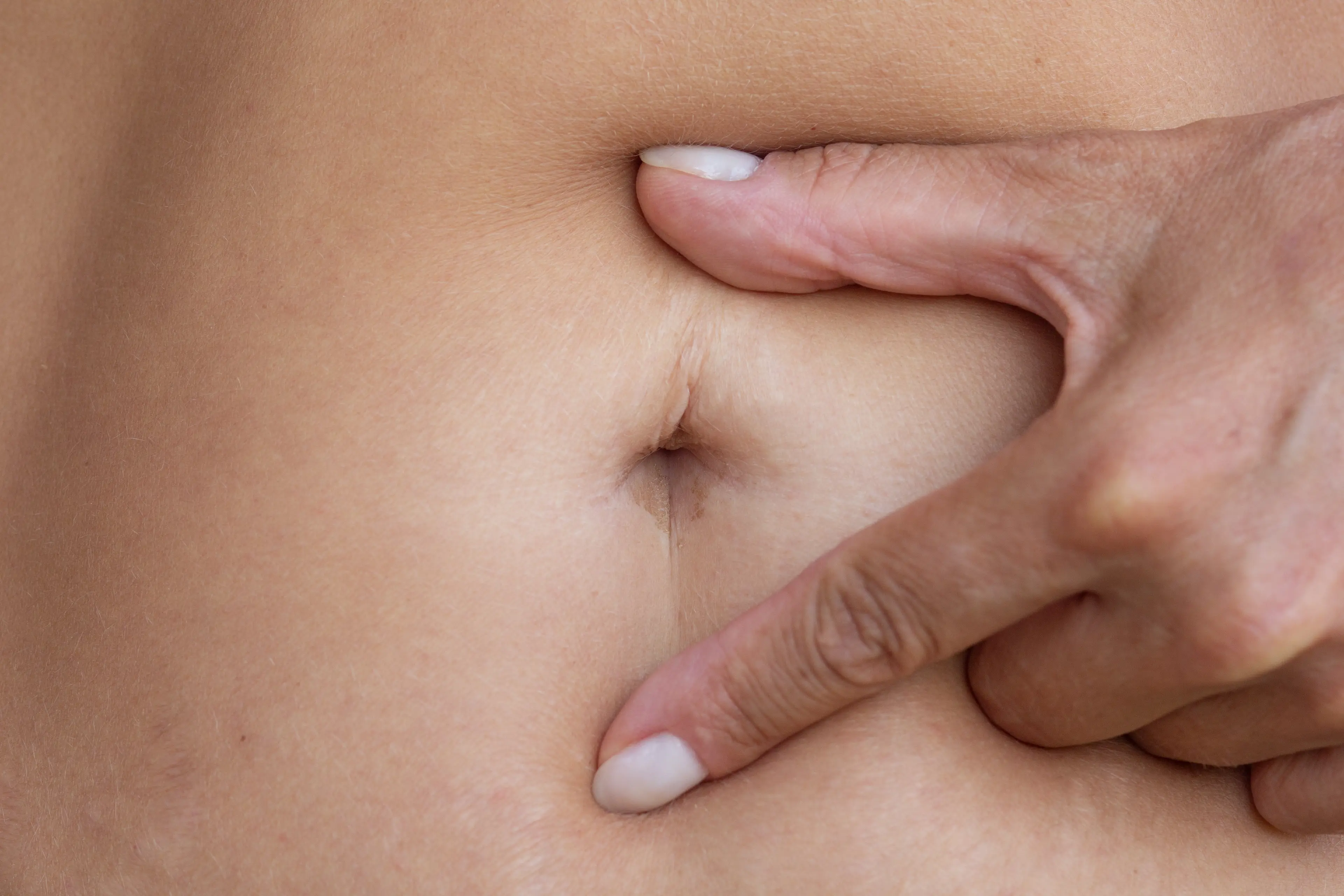
Dr Ashrafi says: “It’s equally important to dry the belly button thoroughly afterwards, as leaving the area damp can encourage bacteria and fungi to grow.”
Dr Ali agrees that this is a step people often forget. "Repeatedly leaving a deep belly button damp can recreate the environment you're trying to eliminate.”
You should also resist digging in there with your fingernails, cotton buds or anything sharp, as this can irritate the skin and potentially make infection more likely.
“Micro-abrasions can make irritation and infection more likely,” Dr Ali says.
There's also no need to routinely reach for strong antiseptics, alcohol or heavily fragranced products.
As Dr Kanani explains: “The aim is simply to keep the area clean and dry without damaging the skin.”
When should you see a doctor?
The good news is that if the smell disappears after washing and drying, there's usually little reason to panic.
“The important thing is to look at what is happening alongside the smell,” Dr Ramskill says. “An occasional odour that disappears after washing is unlikely to be concerning.”
Dr Kanani says: “If the area becomes red, swollen, painful or hot, starts bleeding, or produces pus or persistent fluid, it should be assessed by a healthcare professional.”
He adds: “A fever, feeling generally unwell, or redness that is spreading around the belly button could indicate a more significant infection and warrants prompt medical attention.”
Dr Ashrafi similarly says: “Skin that feels unusually warm, redness that appears to be spreading, worsening pain or feeling generally unwell can also indicate an infection that needs medical attention.”
Topics: Health
 Greg Harris