
‘Phubbing’ explained after Toy Story 5 highlights huge issue with Gen Alpha

Toy Story 5 has finally landed in cinemas around the world - and it’s got people debating how much kids use technology.
Without dropping any spoilers, let’s just say the movie has a heavy focus on how digital devices have changed childhoods.
It makes sense considering the first movie came out over three decades ago, so toys and what children are interested in has definitely evolved.
Advert
It’s resurrected the idea of ‘phubbing,’ which is a combination of the words ‘phone’ and ‘snubbing’ - you get the idea.
It’s essentially the behavior of ignoring the people you are with in order to focus on your smartphone or mobile device.
We all know someone who’s guilty of ‘phubbing,’ with some kids even now falling into that category, as it makes its way into TV and movies.
One X user wrote: “Toy Story 5 was basically a 90-minute movie telling parents to put the damn tablet away.”
While a second added, “Just watched Toy Story 5. GET YOUR KIDS OFF THE IPADS NOW!!!! THEIR TOYS NEED THEM OMG PLEASE.”
And a third joked: “We walked out of the movie and asked my kids who their favorite characters were, and my son said Lilypad, like bro did you even watch the movie?”

“Pixar really spent $200 million making a feature-length 'iPad kid' intervention,” remarked a fourth.
And a fifth chimed in with: “This is the movie all the iPad parents need to see while their kids are glued to YouTube.”
What is ‘phubbing’?
As mentioned, it’s basically when someone’s attention diverts to their smartphone during a face-to-face conversation, not paying enough attention to what’s happening around them.
Speaking to the BBC, Tom Hanks, who voices Woody, told the publication they had all ‘met that disinterest’ of young people who ‘look down at their phone, look up, look down, look up’, which is ‘phubbing’.
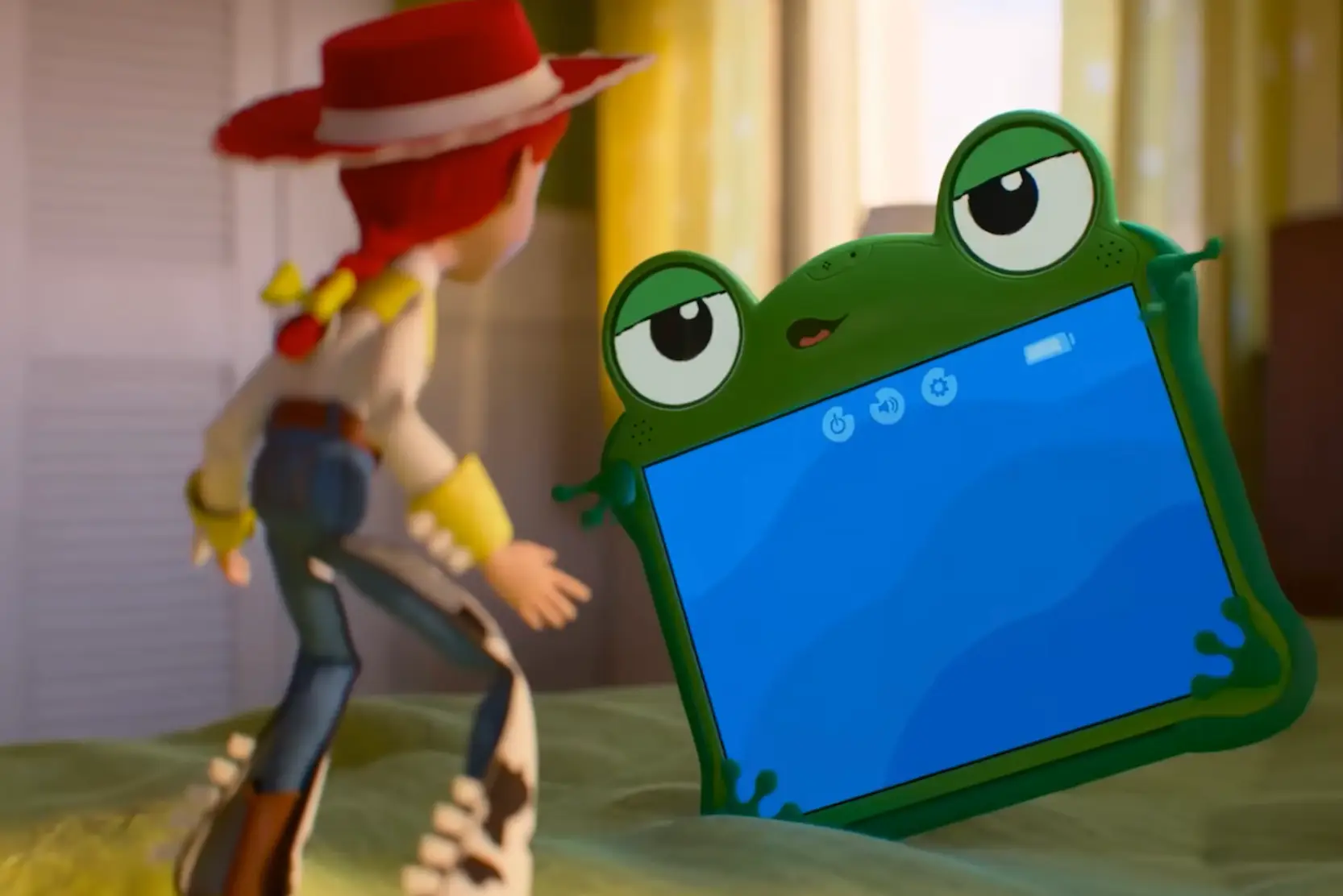
He specifically referred to a ‘a moment in the movie where we look out on the cityscape, and we see that blue glow of a phone in bedrooms and whatnot, and it does strike terror into the heart’.
According to Huffington Post, one survey found that a whopping 62 percent of people reported looking at their phone while having a face-to-face conversation with someone else.
Impact of ‘phubbing’ on children

Experts have also warned about the impact ‘phubbing’ can have on children when parents do it around them.
Mary Alvord, PhD, co-author of ‘Conquer Negative Thinking for Teens’, told VeryWell Mind: “I think the big question here is… are parents giving undivided attention when their kids need it?
“Or are they shooing them away more than usual? It happens to everybody sometimes. The key is how much.”
While Psychotherapist Anna Mathur told HuffPost: “Children learn about their own worth through the attention of their caregivers. When a phone consistently wins the competition for our gaze, children can begin to absorb the message that they are less important, less interesting, less worthy of attention than whatever is on that screen.
“Over time, this can impact self-esteem, emotional regulation, and the way they relate to others.”
The expert added that children who grow up in homes where screens take priority are more likely to repeat those patterns themselves, so it’s important to kick the habit early.
 Madison Burgess