Ted Lasso shines light on real life issues women's football faces that go much deeper away from TV

Ted Lasso is finally giving women’s football the recognition it deserves - and it’s highlighting some seriously important issues.
Even though interest in women's football is growing rapidly, unfortunately, women in the sport still face a number of barriers, such as a lack of funding and sexist attitudes.
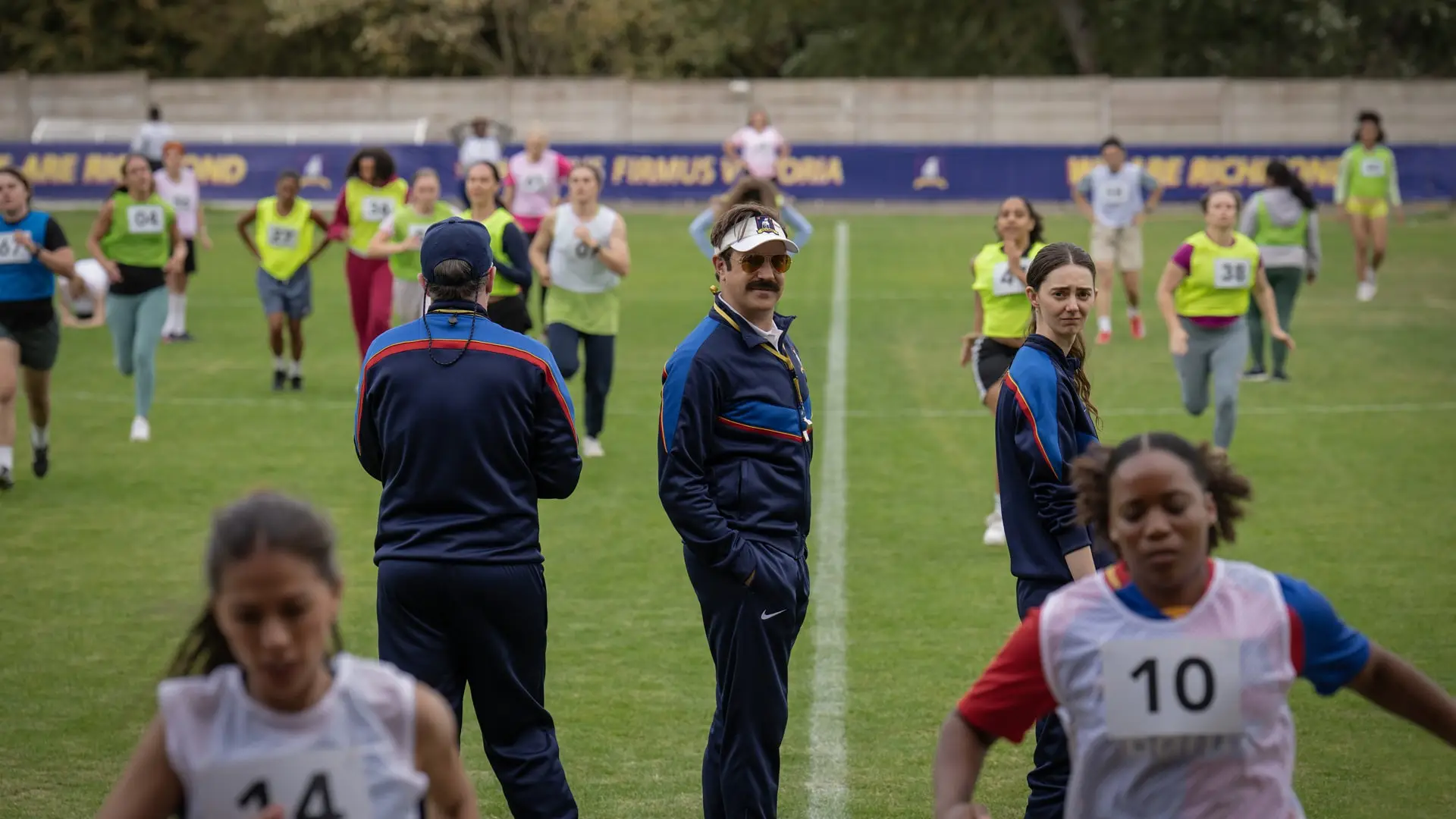
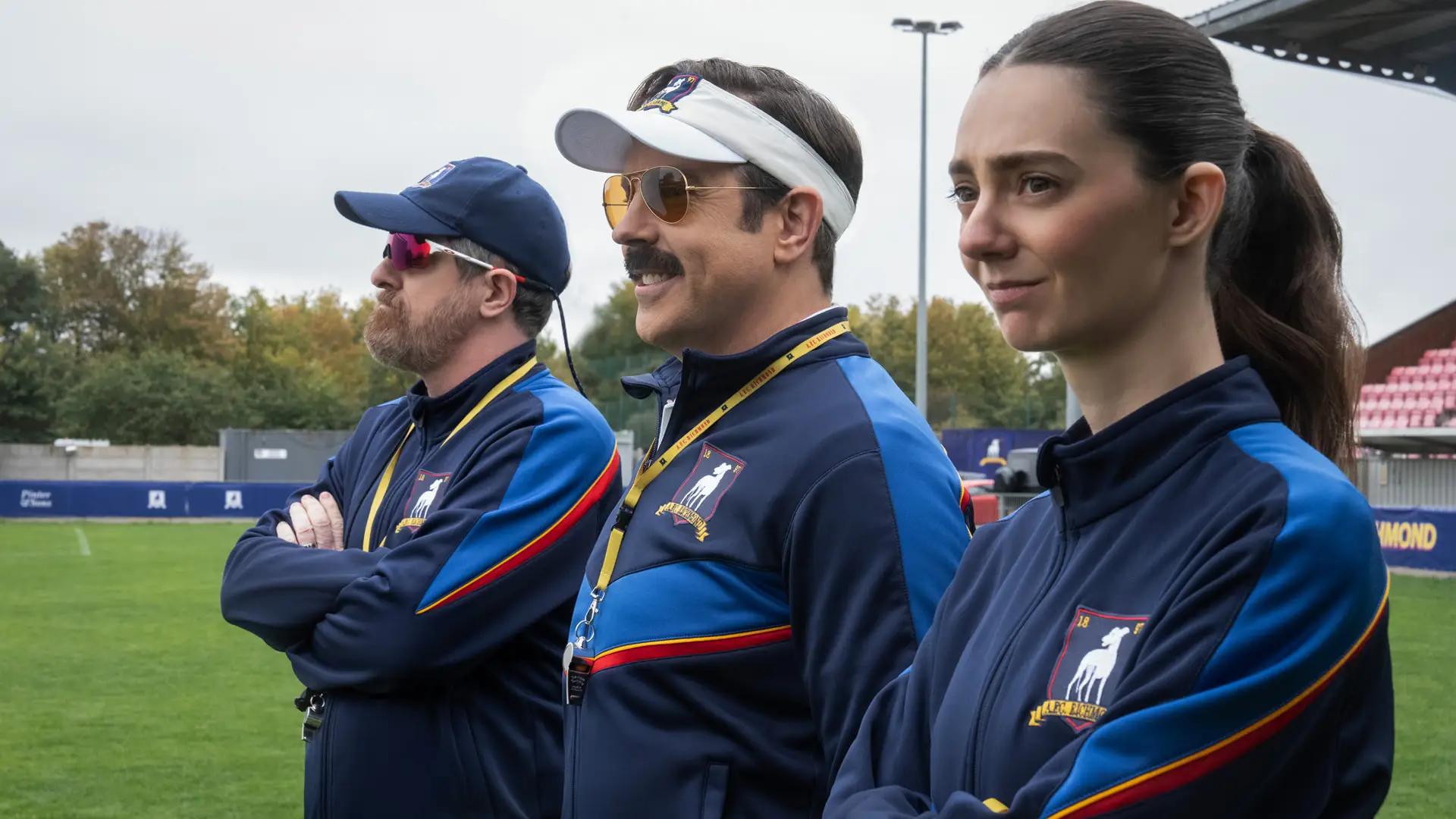
On Wednesday (5 August), the Apple TV show dropped the first episode of the new season, which follows the beloved football coach played by Jason Sudeikis as he returns to coach a second-division women’s team - AFC Richmond's Lady Greyhounds.
After getting the men’s team to the Premier League, in which they finished second, season three’s bittersweet ending saw Coach Lasso return to Kansas so he can spend more time with his young son Henry.
Advert
However, thanks to some impressive persuasion from Rebecca Welton (Hannah Waddingham), Keeley Jones (Juno Temple), and Leslie Higgins (Jeremy Swift), he decides to move his family over to the UK so he can take on the job and ‘create the culture’ and ‘lay the foundations’ he did for the men’s team.
“Women’s teams don’t have the following or the funding”
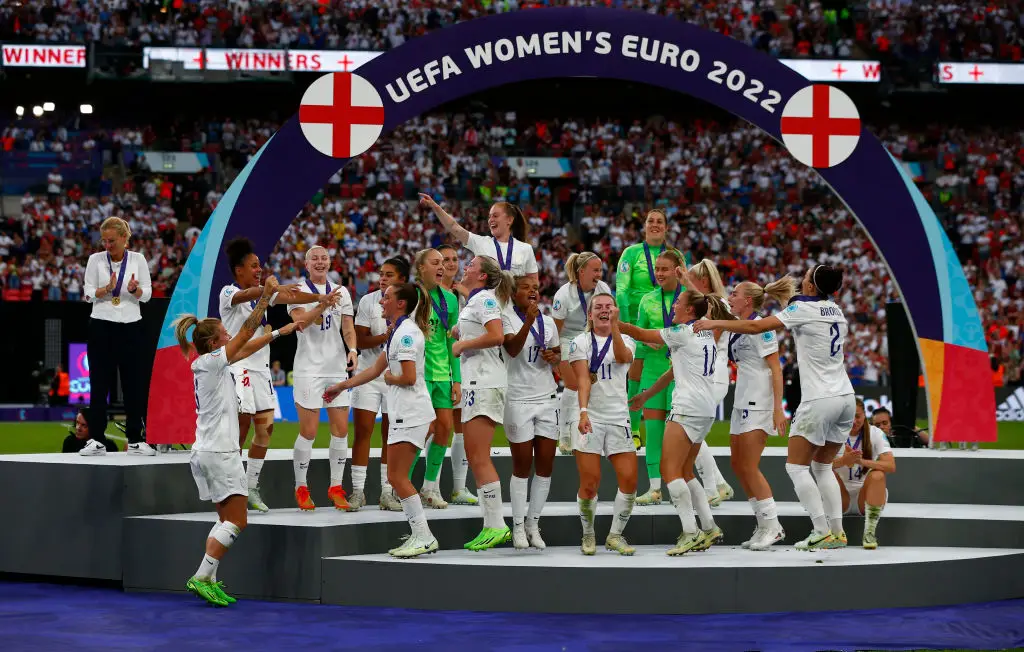
As interest in women's football continues to soar following the Lionesses' incredible 2022 and 2025 Euros victories, the TV series sets out to bring to light the real-life barriers that female footballers still face, both on and off the pitch.
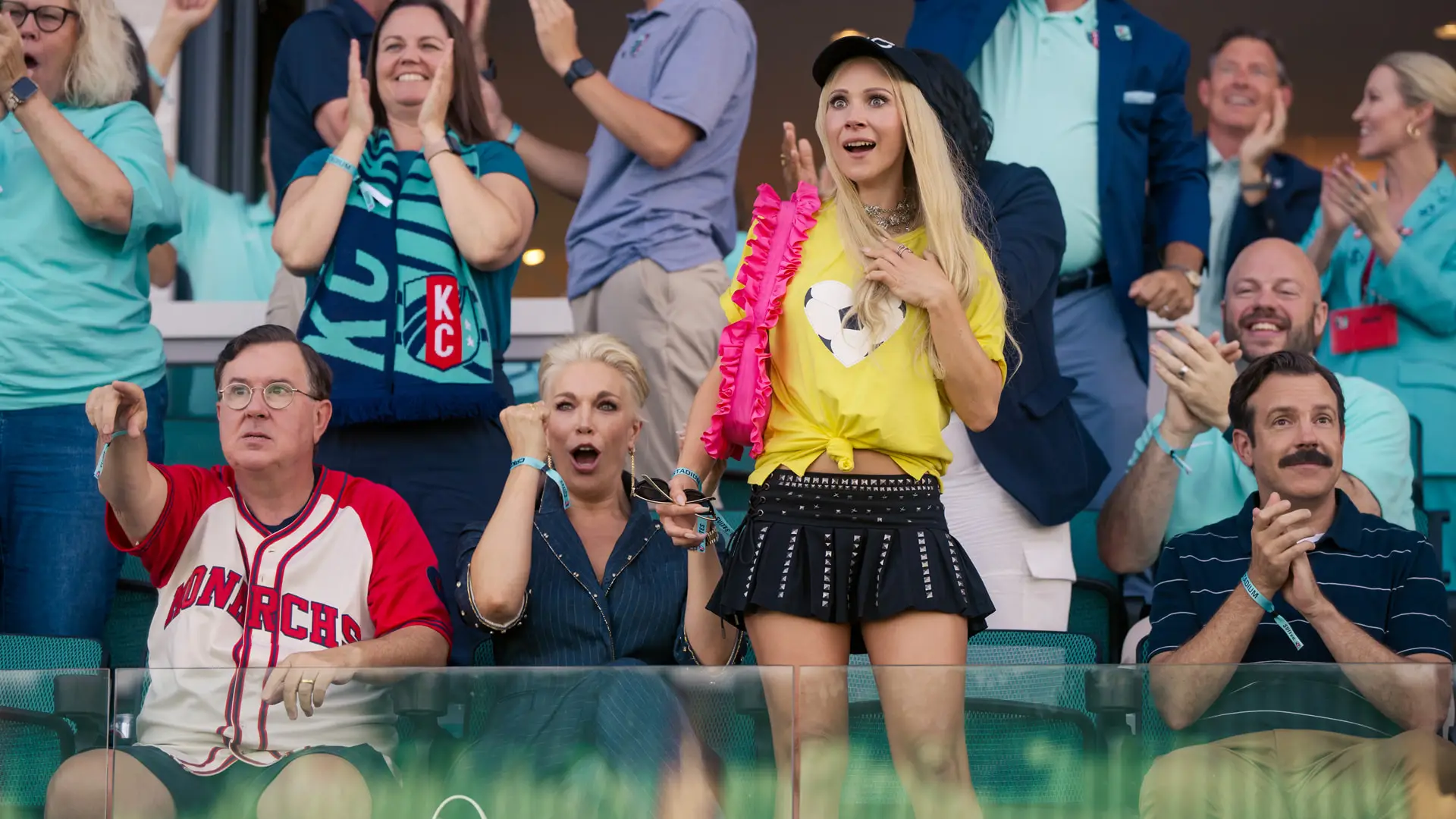
Temple, who plays the club’s marketing lead Keeley, told Women’s Health: “Women’s teams don’t have the following or the funding that men’s teams do.
“I think people can still be pretty scathing about it, which I really hope in this day and age genuinely starts to change because it’s just so boring hating these and being p****d off about things that do not change your world in any way.”
In episode one, while the group is laying out their grand plans to Ted, they find out that another team, the Twickenham FC Women’s Team, had folded.
Reading out a news article, operations manager Higgins says: “A well-intentioned but unsustainable financial liability that was draining resources from the men’s team,” and admits that he’s worried about the future of the Lady Greyhounds and the challenges they might face.
“Years of progress will quickly unravel”
Jeremy Swift, who plays the role of Higgins, told WH: "Preparations have been going on for the last three years, and Leslie's worry is the financial credibility of getting a women's team together for the first time at this club.
“That's the challenge without diminishing the work that they've done for the men's team."
This is a reality that’s reflected outside of fiction, as recent research by Starling Bank found that three-quarters of female players say they’ll hang up their boots if funding isn’t secured soon.
On top of this, nearly all coaches of grassroots female football clubs (97%) said that their team needs more funds, which is limiting the opportunities for girls.
Lioness Alessia Russo MBE said of the findings: “We have built so much momentum in the women’s game, but years of progress will quickly unravel if grassroots teams can’t access more financial support.
“Sponsorship unlocks everything from kit, equipment and transport, to access to suitable pitches - something I experienced first-hand earlier in my career.”
Women In Sport outlined that in the 2022-23 financial year, out of a total £35 million of support given to football, the women’s game received just £3 million.
It comes after Fifa president Gianni Infantino recently unveiled a plan to sell stakes in competitions, including World Cups, to private investors - something which has since been scrapped after days of backlash and Uefa's nations threatening to boycott all tournaments.
In the proposal, though, as reported by The Guardian, Infantino had shockingly given women’s football just a singular mention in the 25-page-long sales deck.
Former England defender Anita Asante told the BBC that if the doomed plans had gone ahead, the first ‘casualties’ would have been women’s football tournaments.
Sadly, funding and logistical issues aren’t the only barriers women in football face, and even though a lot of amazing progress has been made, sexism is still rearing its ugly head.
Research into primary school children by the charity Women In Sport found that even early in life, being good at football is seen as vital to a boy’s identity and ideas of masculinity; meanwhile, the idea that girls aren’t as good at sport, and nor are they meant to be, is ‘already deeply ingrained’.
Women have consistently spoken out about their experiences, whether it's a female sports journalist saying nobody spoke to her at a press conference, or female fans being told to ‘get back in the kitchen’.
Looking forward
The good news is that more women and girls than ever want to get involved in football.
The impact of the Lionesses’ second Euros victory last year was felt immediately in the UK, with a 196% increase in searches for female football playing opportunities the day after the final, as per research by England Football.
FIFA outlines in their strategy that they ‘remain committed to the sustainable growth of women’s football’ by achieving the key objectives of growing participation, enhancing commercial value, and building foundations.
The organisation has also launched a new initiative to advance research and knowledge for female athletes, after a study analysing 5,261 research articles published in sport and exercise science journals between 2014 and 2020 revealed that only 34% of study participants were female, with just 6% of sport science research exclusively focusing on women.
In April, FIFA Chief Football Officer and former United States women’s national team coach Jill Ellis stressed the need for a renewed commitment to investing in women’s football and youth development when she addressed the 76th FIFA Congress in Vancouver, Canada.
She said: “The most successful leaders don’t wait for perfect conditions. They recognise opportunity, and they act decisively.
“Women’s football is that opportunity. The numbers confirm what the streets already know. Two billion watched the last (FIFA) Women’s World Cup. Over one million Brazilians - saw Corinthians face Arsenal in the (FIFA) Women’s Champions Cup final.
“Seventy-five thousand filled the stadium last month in the (AFC) Women's Asian Cup final. These aren’t just numbers; they’re signals. The audience is here, and the demand is real."
As of right now, it's unknown exactly what Ted Lasso season 4 has in store, but we're looking forward to seeing women's football back in the spotlight.
Topics: Ted Lasso, TV And Film, Entertainment, Football, Life, Real Life
 Madison Burgess