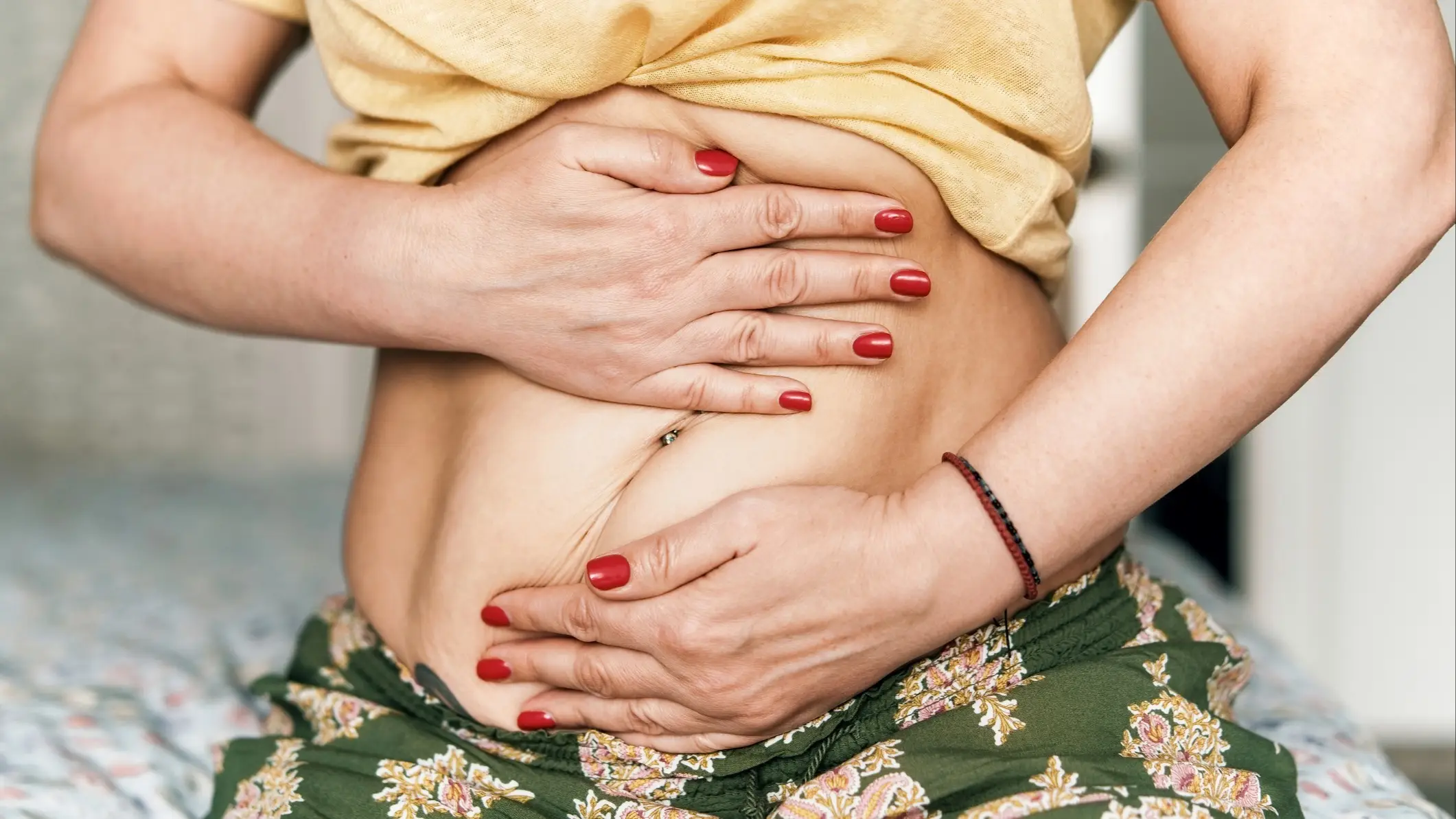
‘Menopause belly’ explained as women’s health doctor shuts down taboo around ‘very common’ symptom

A doctor has shed light on an unexpected symptom of the menopause that many women face but feel too embarrassed to talk about.
Menopause is when your periods stop due to lower hormone levels, and most women go through it between the ages of 45 and 55; however, it can happen earlier or later.
While we’re all well aware of the most talked-about side effects, such as mood changes, night sweats, and memory problems, there’s a lesser-known knock-on effect that women are taking to social media forums to seek advice on - we're talking about 'menopause belly'.
Boots Online Doctor explains that the term refers to fat that accumulates around the middle during the menopause transition.
Advert
Some people notice that fat that once appeared on the hips or thighs gradually shifts to the abdomen, while others experience bloating or abdominal fullness that comes and goes throughout the day.
In many cases, it’s down to a combination of hormonal changes, metabolism shifts, and lifestyle factors working together.
Taking to Reddit to discuss the phenomenon, one woman wrote: “I can’t be the only one. My lower belly looks like hell since menopause, and seems to be gradually getting worse. I have really good core strength. I do Pilates and have amazing abs hidden beneath extra skin and fat.”
While a second agreed: “I call it the menopause belly. Some women, myself included, just seem to have this.”
And a third wrote: “I feel your frustration! I had very little abdominal fat until my late 40s. I’m 52 now, and there it sits. I’m very uncomfortable with it.”
Of course, it’s important to note that it's so incredibly normal for your body to change as you get older, and there’s no reason to shy away from that.
But for some women, it’s simply a surprise change that they weren’t expecting, as it’s not discussed as much as other menopause symptoms.
Speaking to Tyla, intimate health, menopause, hormone health and women's wellness issues expert, Dr Shirin Lakhani, explained: “During the menopause, your body goes through huge hormonal changes. It decreases the amount of hormones it makes, particularly oestrogen and progesterone, which are produced by the ovaries, and bloating or weight gain are common symptoms of the perimenopause and menopause.”
She added: “Hormones help regulate many of our bodily functions, including metabolism, stress, hunger, and sex drive. If a person has a deficiency in certain hormones, it can result in weight gain around the abdomen, which is known as a hormonal belly. This can happen during menopause due to fluctuations in hormones, particularly oestrogen and progesterone.”
The expert said the average weight gain for a woman during and after menopause is around 4.5 pounds; however, it can be less or more as everyone’s experience is different.
Shutting down any taboo on the topic, Dr Lakhani reassured, “Struggling with excess stomach fat and sudden weight gain is very common in women through the perimenopausal period to post-menopause.
“A menopausal tummy can be very frustrating for women and people try all sorts of diets and exercise to get rid of it but it can be very difficult.”
Kiran Jones, Clinical Pharmacist at Oxford Online Pharmacy, has outlined some things you can try if sudden menopause weight gain is impacting your wellbeing and mental health.
Try and prioritise sleep
The expert advised: “Poor sleep doesn’t help anyone, but especially not those in the throes of menopause. Common symptoms like hot flushes and insomnia can disturb sleep, which can have a knock-on effect on hunger and stress levels.
“Try to go to bed and wake up at consistent times, even at weekends, and avoid staring at screens and drinking caffeine close to bedtime.”
She added: “Keeping a window open or having a fan nearby can keep the room cool to decrease the intensity of hot flashes, and ensuring the room is as dark as possible will help regulate your circadian rhythm.”
Find an exercise you enjoy
Jones explained that, despite what social media might try to tell you, a ‘daily high-intensity workout isn’t necessary to maintain your physical health’.
She urged: “The goal is to move your body each day, but this can be through activities like walking, yoga or a light jog.
“You’ll still get the endorphin boost and ease muscle and joint aches without pushing your body to the limit. Regular movement supports mental health just as much as physical wellbeing and can help reduce anxiety and improve sleep quality.”
 The expert advises finding activities you enjoy, but trying not to worry about a ‘daily high-intensity' workout (Getty Stock Image)
Focus on foods that make you feel good
It’s also important to remember that restrictive dieting isn’t the only option, and instead, you can ‘shift your focus to eating a balanced and nutritious diet’.
Kiran said: “Lean protein sources like chicken, red meat, fish, eggs and tofu can help preserve muscle mass, while high-fibre foods like fruit, vegetables and wholegrains can support digestive health and feeling full for longer.
“Healthy fats such as avocado and nuts will support heart health and brain function, and of course, there’s always the option to have some treats in moderation.
“Eating this kind of diet can establish a more positive relationship with food and improve body image.”
Speak to a health professional
Finally, if you’re really struggling with weight gain or any other menopause symptoms, you don’t have to manage it alone.
The expert advised: “Consulting a GP or pharmacist can help you access the right advice and treatment options, like hormone replacement therapy (HRT), which can rebalance hormones and address symptoms like fatigue, mood swings and weight gain.
“Discussing concerns with medical professionals can also include mental wellbeing. They may be able to support access to a counsellor or connect you with a support group for a better support network.”
Topics: Menopause, Women's Health, Health, Life, Real Life, Reddit
 Madison Burgess