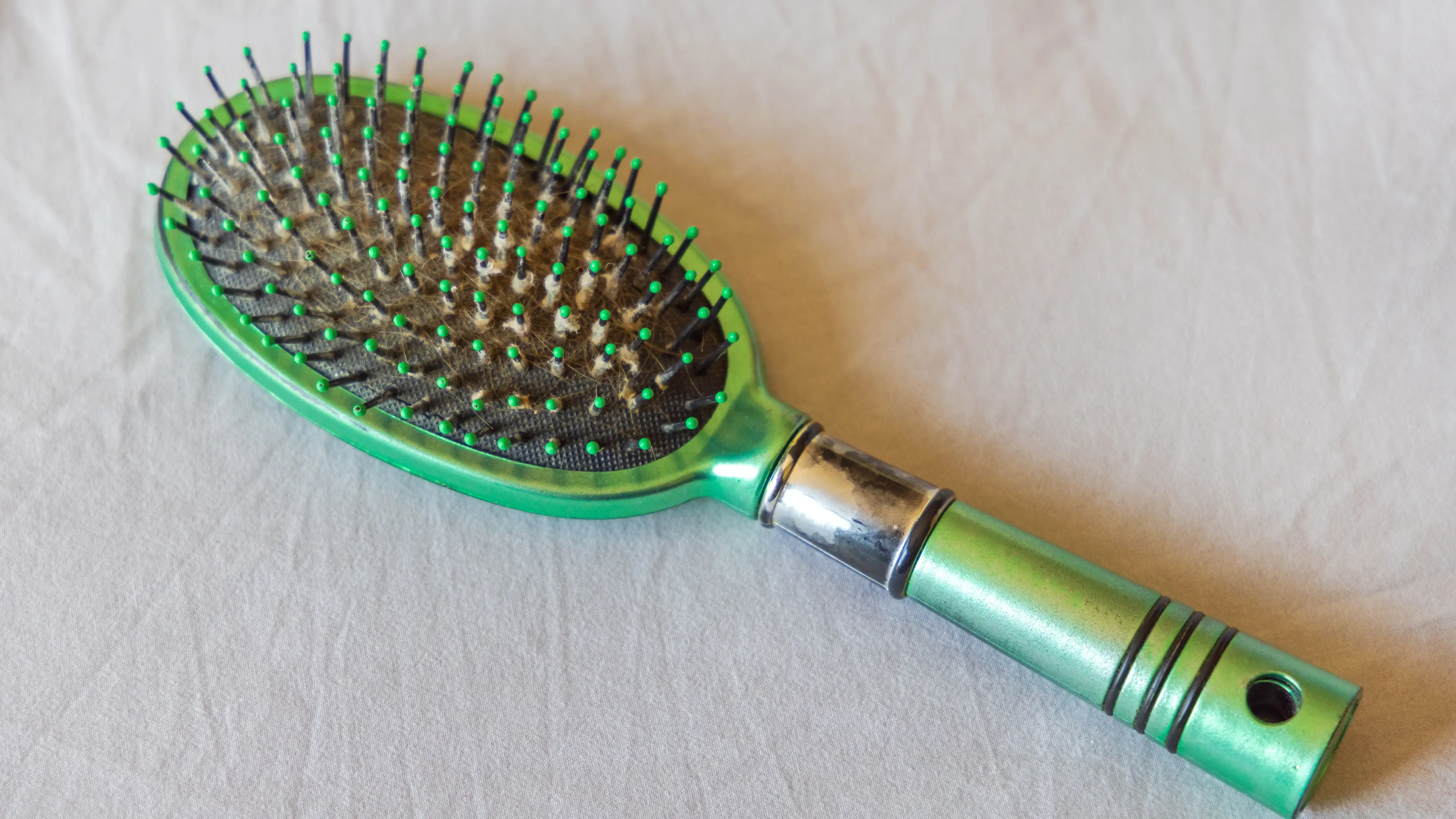
What the grey fuzz is in your hairbrush really is - it's grosser than you think

Most people probably assume the strange grey fluff caught in a hairbrush is nothing more than lint.
It is the sort of thing that tends to get ignored, even by people who are otherwise fairly strict about their beauty routine. Make-up brushes get washed, pillowcases go in the laundry, and skincare gets carefully rotated, but the humble hairbrush often escapes the same level of attention.
That may be because the build-up looks relatively harmless at first. Sitting between the bristles, it can easily pass for dust or loose fibres picked up from the bathroom or bedroom.
What’s more, because it gathers slowly, it is easy to dismiss it as one of those minor cleaning jobs that can always wait until next week.
Advert
However, experts say the reality is far less innocent.
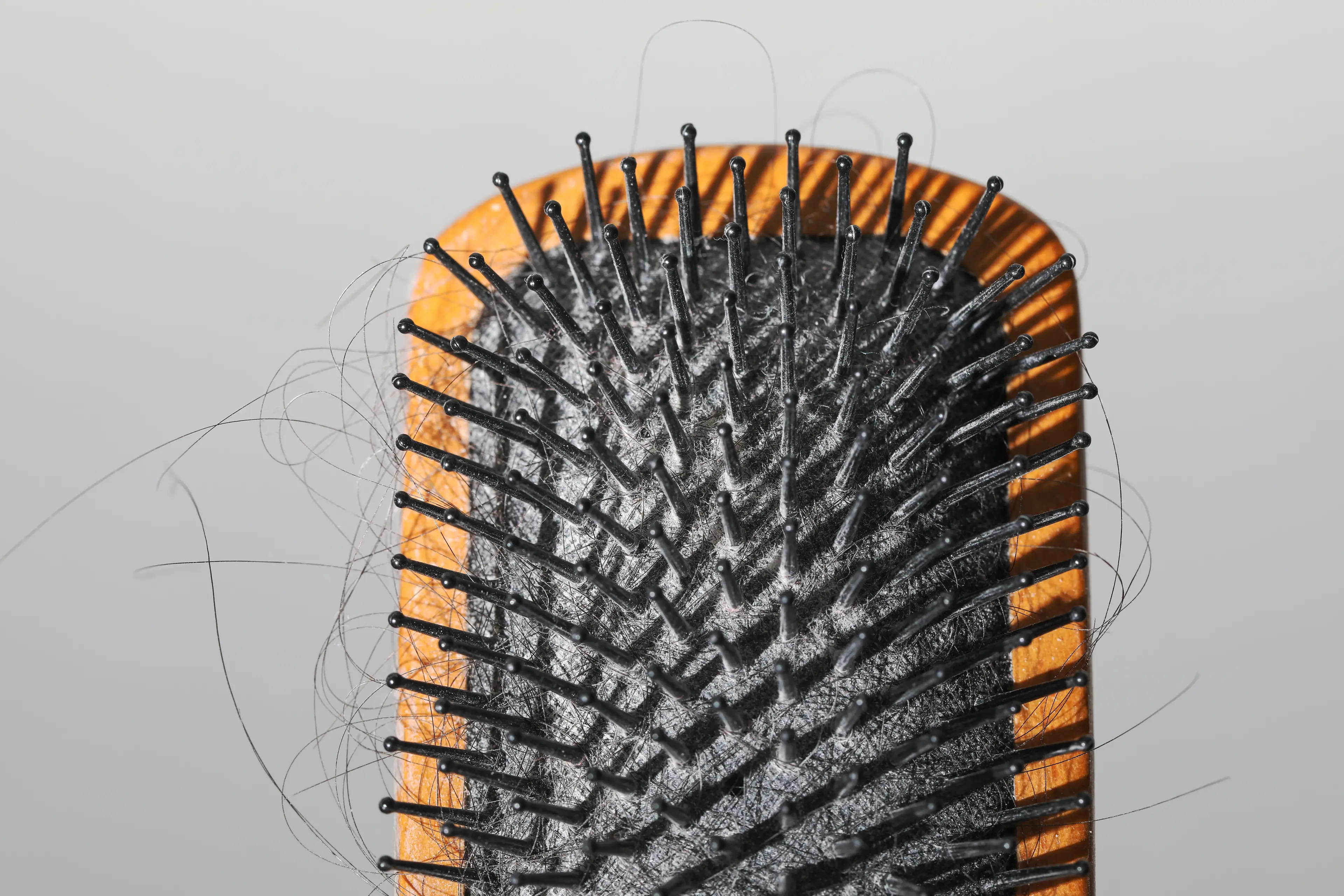
What is the grey fuzz in my hairbrush?
According to celebrity hairstylist Dean Banowetz, who spoke to Reader’s Digest, it's 'a mix of hair, scalp oils, dead skin cells and dust from the air', with leftover styling product playing a major role in binding it all together.
Dermatologist Dr Anna Chacon also explained how the build-up forms, saying: "When we brush our hair, it’s typical for hair to shed, and it can get tangled in the brush.
"That, mixed with dead skin cells, which are also naturally shedded, create some buildup, and if you have applied haircare products to your hair, those products can also transfer to the brush.
"Top that with dust or other environmental factors, and you get the fuzz."
In other words, the grey mass sitting in your brush is not just household fluff. It is a mixture of shed hair, skin, oils, environmental debris, and old product residue being collected in one place. Lovely.
The reason that this is a big deal is that it not only looks unpleasant, but as Banowetz also warned: "It holds onto bacteria and yeast, which can transfer back to your scalp."

That can create a whole list of problems, from irritation and breakouts to more tangling and breakage when brushing. Dr Chacon noted: "Any sort of buildup that you are reintroducing to your hair and scalp needs to be addressed to protect your hair and scalp health."
She also warned: "Bacteria thrives in dirty environments, which can include your brush if the buildup is not properly addressed."
The build-up can appear more quickly than many people might expect too. Banowetz said: "Grey stuff can build up in as little as a week to 10 days with daily use," especially for people using styling products regularly, washing their hair less often or living in dry, dusty environments.
How often should I clean my hairbrush?
As for how often hairbrushes should actually be cleaned, the advice is ultimately that daily users who rely on styling products should wash theirs once a week, while those who use their brush less often can usually leave it every two to three weeks.
Altogether, if there is already visible fuzz sitting in the bristles, Dr Chacon’s key advice is: "Anytime you see any buildup, it’s time to address it and give it a cleaning."
How to best clean a hairbrush
According to the experts, there are several steps to follow in order to keep your brush in tip-top condition.
- Remove the hair - Simply use your fingers to pull out any loose hair from your brush
- Soak it - Add a little bit of shampoo and a spoonful of baking powder to warm water before letting your brush soak for around 10 minutes
- Give it a good scrub - Use your fingers, or even an old toothbrush, to get between the bristles and remove any hidden fuzz. Once done, make sure you give it a proper rinse off
- Let it air dry - Leave your brush bristle-side down on a towel and voilà! You have a beautifully clean brush with no grey fuzz in sight.
 Ben Williams