Tragic story of 9/11 ‘Dust Lady’ Marcy Borders who died 14 years after the terror attacks

Warning: This article contains discussion of drug addiction and cancer which some readers may find distressing.
This weekend marks 25 years since the September 11, 2001 terrorist attacks on the World Trade Centre’s Twin Towers.
Around 3,000 people in New York City lost their lives on that devastating day, which saw four commercial planes carrying passengers get hijacked by 19 members of al-Qaeda.
Under terrorist control, two of those jets crashed into the two World Trade Centre Twin Towers in lower Manhattan.
Advert
Within the hour, both the North and South Towers had collapsed to the ground, as the world watched on in horror.
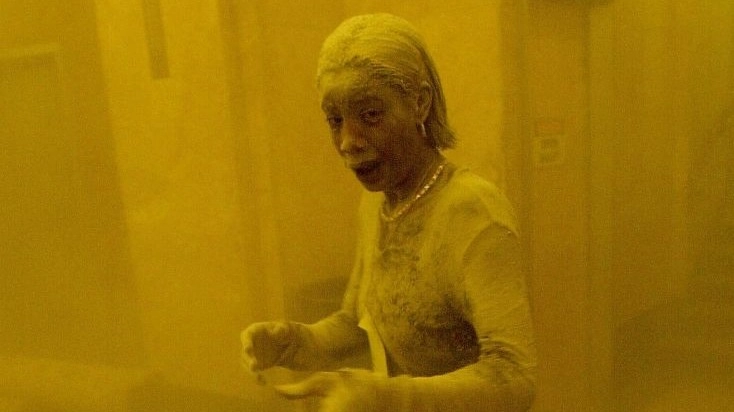
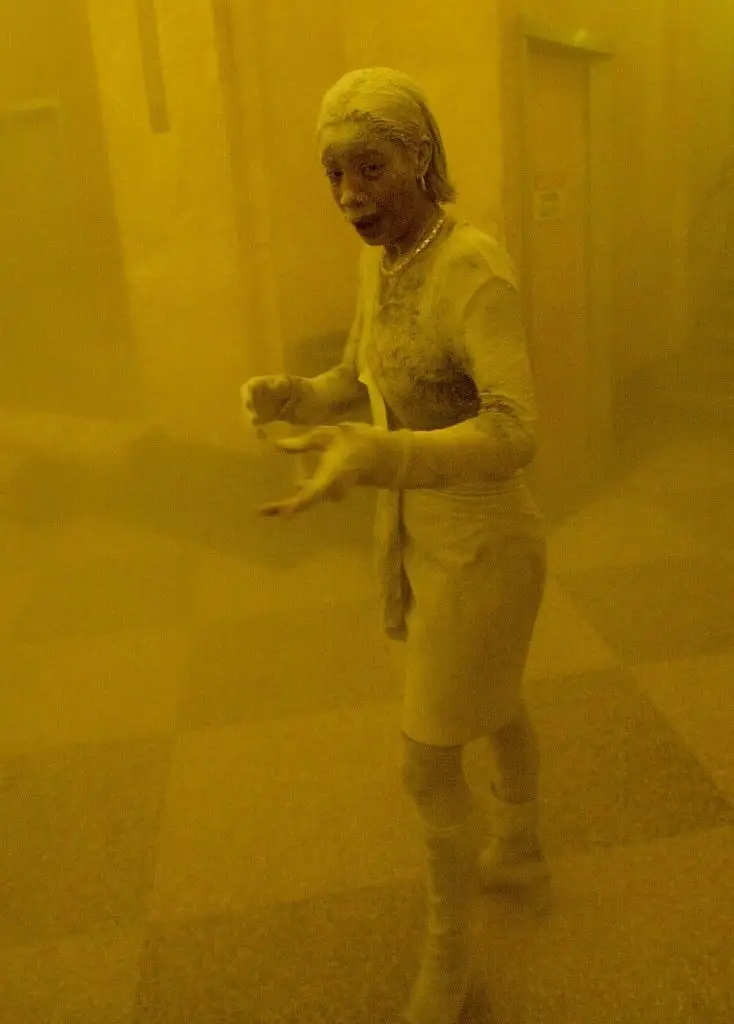
Among the images and videos from that fateful day is one picture that’s been etched into people’s minds: a woman standing, covered in dust and looking shocked, while fleeing from the North Tower, where she worked.
The photograph was circulated around the world and was later named on a Time Magazine list of the 25 most powerful images - its subject, Marcy Borders, therefore became known as the ‘Dust Lady’.
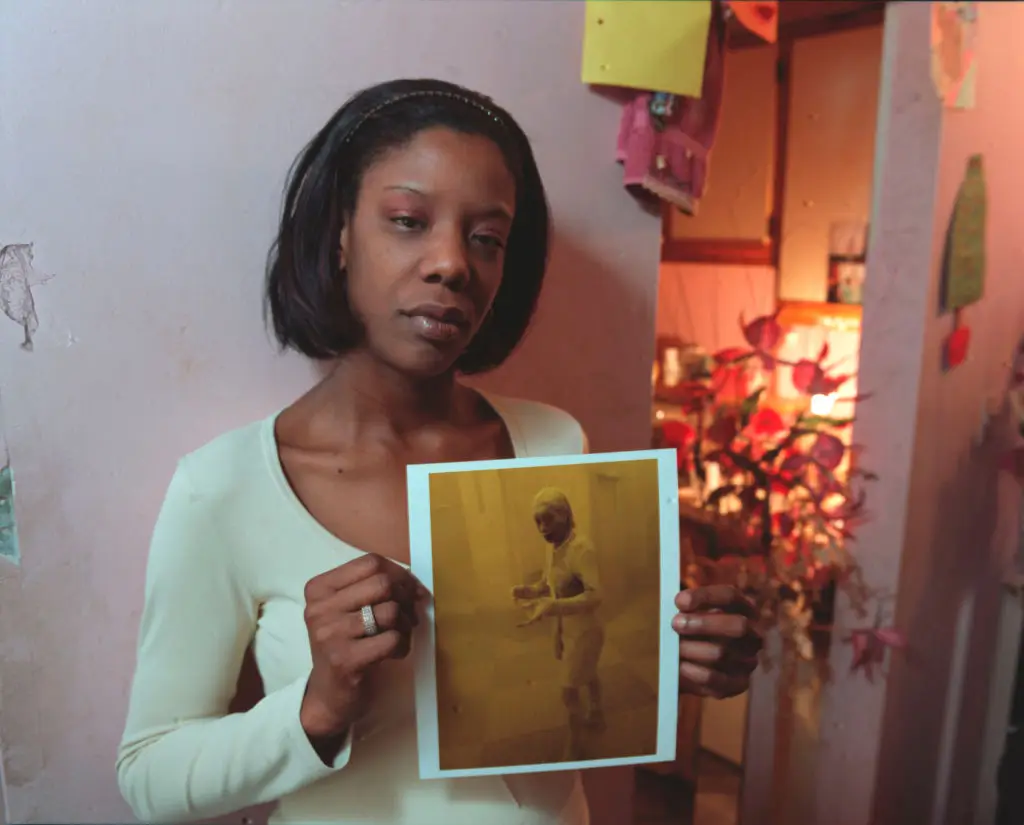
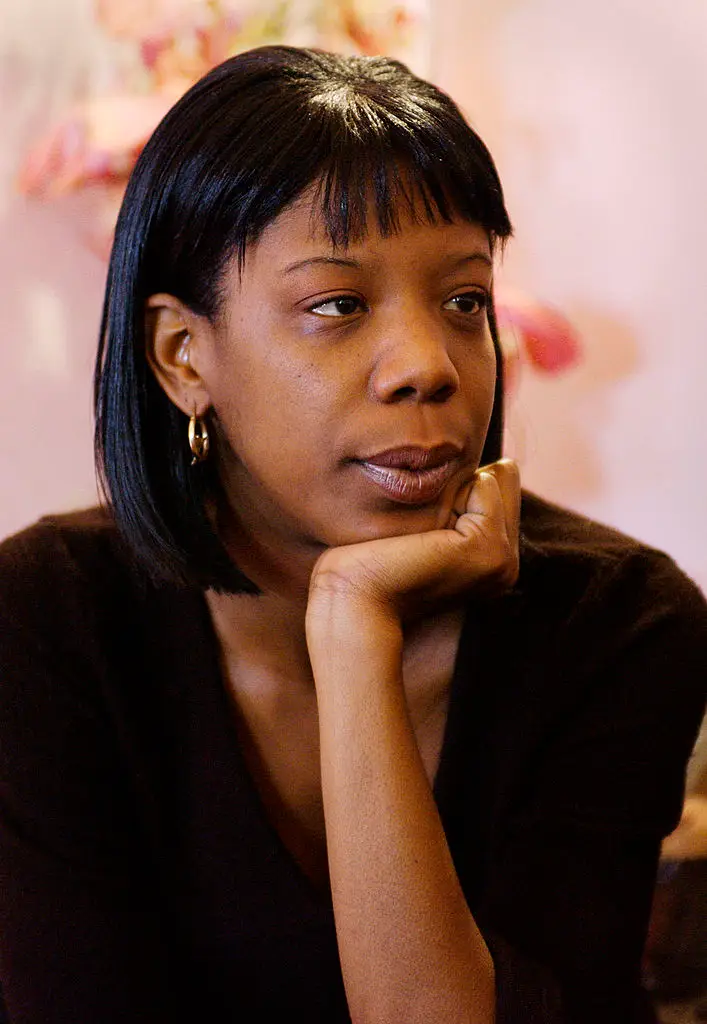
Marcy, a mother of two from New Jersey who managed to survive the terrorist attack, tragically died more than a decade later, in 2015, following a battle with cancer, which she believes was due to the dust she inhaled that day.
On the 11th September 2001, Marcy was a month into her new job as a legal assistant with the Bank of America on the 81st floor of the World Trade Center.
She told The Independent, "I was picking the junk off the desk, getting ready to start my day. That was when the plane hit."
Marcy was told by her supervisor to remain at her desk until the emergency services arrived, but ignoring that instruction was what saved her life.
She recalled: "Hundreds of people were trying to get out. My stairwell was badly damaged and we had to move stairwells, I was convinced we were going to die. I'm so glad I had the strength to get to the bottom.
“There were wounded and the injured, it was too much for one to witness. I saw people with things sticking out of them, covered head to toe in blood. I couldn't understand it.
“What I saw was carnage, and I thought, 'God, I'm going to die anyway'."
After managing to get out of the building and onto the street, she recalled: “Everything was falling, There was debris everywhere."
This was when the ‘Dust Lady’ photograph was taken by AFP’s Stan Honda.
However, as per the BBC, Marcy had no idea the picture had even been taken until her mother saw the image the next day and contacted Honda.
In the years following the terrorist attacks, Marcy battled depression and addiction, and lost custody of her two children.
Heartbreakingly, she told The New York Post in 2011: “It was like my soul was knocked down with those towers.
“My life spiraled out of control. I didn’t do a day’s work in nearly 10 years, and by 2011 I was a complete mess.
Every time I saw an aircraft, I panicked. If I saw a man on a building, I was convinced he was going to shoot me.
“I started smoking crack cocaine, because I didn’t want to live.”
After a spell in rehab that same year, Marcy overcame her addiction and regained custody of her children.
But tragically, she was diagnosed with stomach cancer in August 2014, and as we say, she believed this was due to the dust she inhaled during the attacks.
As reported by the BBC, she told the New Jersey Journal at the time: "I definitely believe it because I haven't had any illnesses. I don't have high blood pressure ... high cholesterol, diabetes.
"How do you go from being healthy to waking up the next day with cancer?"
After a year-long fight, Marcy died aged 42, on 24 August 2015.
Her daughter Noelle told The Post at the time: “Not only is she the 'Dust Lady' but she is my hero and she will forever live through me.”
Thousands of people continue to experience severe, long-term physical and mental health consequences resulting from the toxic dust clouds and extreme stress associated with the 9/11 attacks.
According to the World Trade Center Health Program, more than 9,000 people have died from illnesses linked to the attacks and their aftermath, including 600 firefighters.
This toll now exceeds the number of people who were killed on September 11, 2001.
If you’ve been affected by any of these issues and want to speak to someone in confidence, contact Macmillan’s Cancer Support Line on 0808 808 00 00, 8am–8pm seven days a week.
If you want friendly, confidential advice about drugs, you can talk to FRANK. You can call 0300 123 6600, text 82111 or contact through their website 24/7, or livechat from 2pm-6pm any day of the week
Topics: Real Life, Life, News, US News, True Crime, True Life
 Madison Burgess