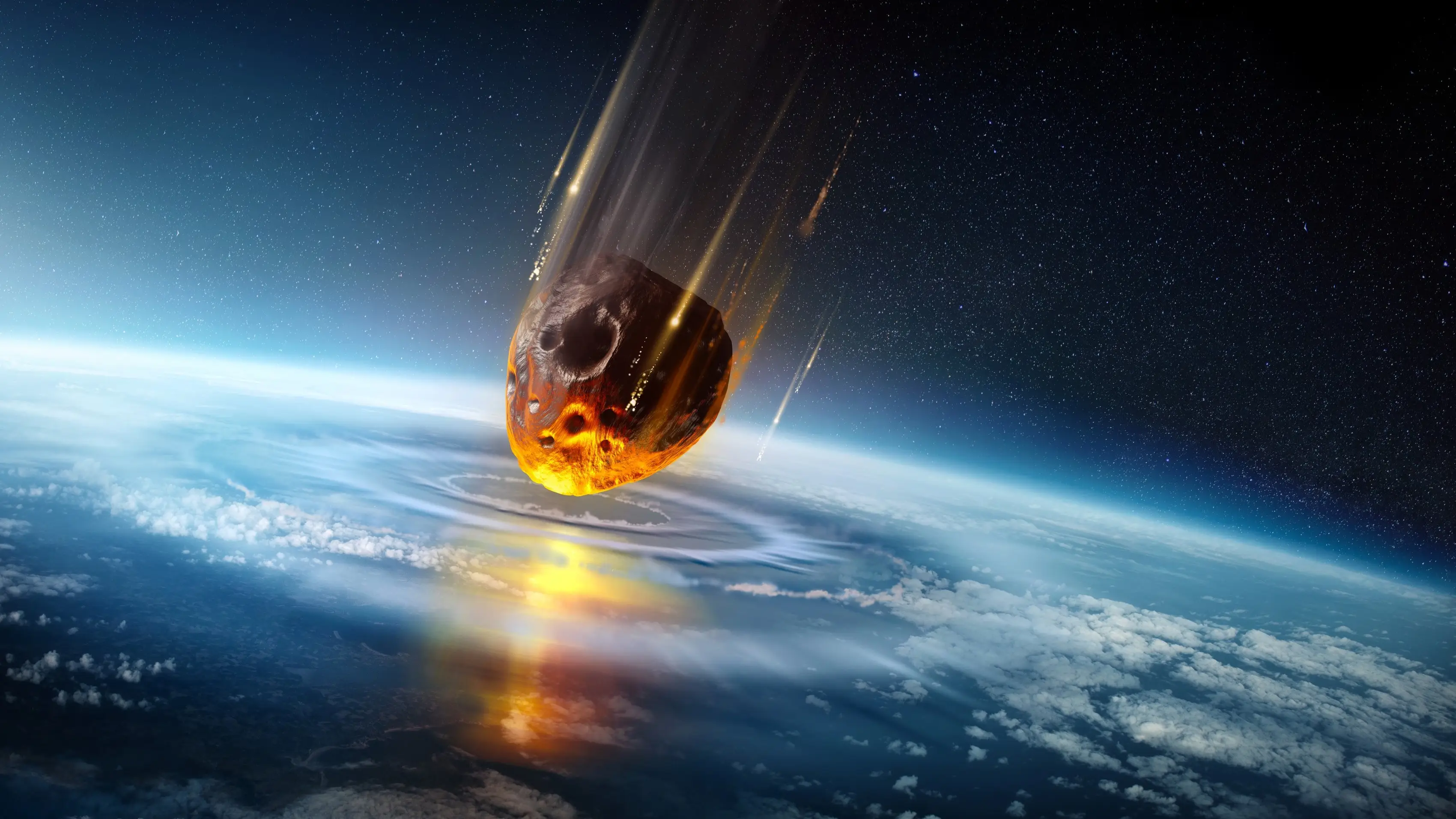
NASA gives terrifying update on thousands of ‘city-killer’ asteroids that could hit Earth

NASA has just issued quite the alarming update on thousands of so-called 'city-killer' asteroids that could hit Earth.
The space rocks, each around 140 metres wide, are moving through near-Earth space and could 'really cause regional damage' if one struck a populated area, according to the agency’s planetary defence chief.
Dr Kelly Fast, the head of planetary defence at the US agency overseeing efforts to track nearby asteroids and comets, said roughly 15,000 mid-sized objects remain unaccounted for, and scientists also warn Earth, which is now about halfway through its lifespan, currently lacks the means to stop one if it were heading our way.
Speaking at the American Association for the Advancement of Science (AAAS) conference in Arizona last week, Dr Fast said medium-sized asteroids pose the biggest worry, via The Sun.
Advert
"What keeps me up at night is the asteroids we don't know about," she said. "Small stuff is hitting us all the time, so we're not so much worried about that. And we're not so worried about the large ones from the movies because we know where they are."
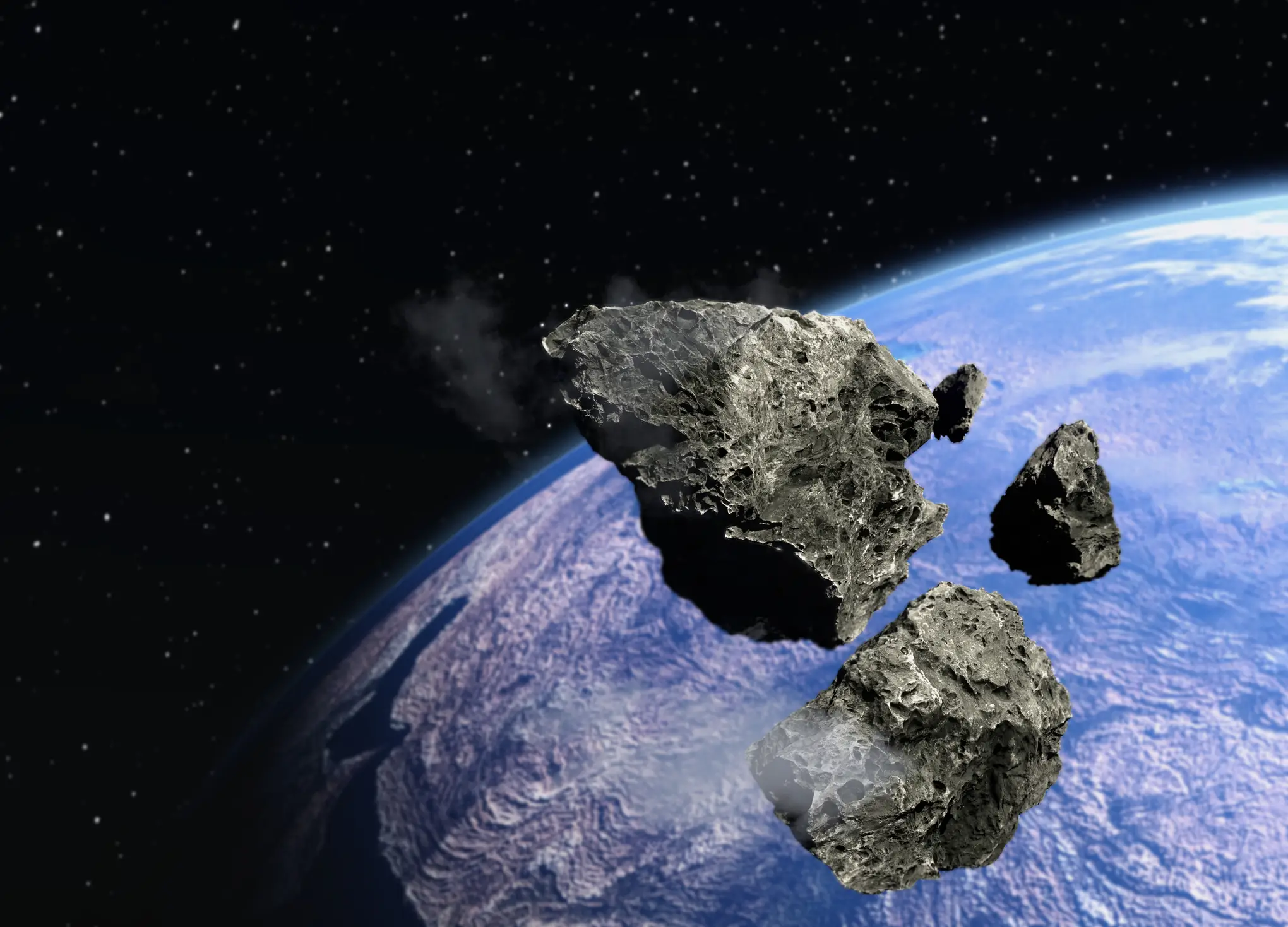
Dr Fast continued: "It's the ones in between, about 140 metres and larger, that could really do regional rather than global damage, and we don't know where they are. It's estimated there are about 25,000 of those, and we’re only about 40 per cent of the way through.
"It takes time to find them, even with the best telescopes."
Dr Nancy Chabot of Johns Hopkins University led the Double Asteroid Redirection Test (DART), which deliberately smashed a 610kg spacecraft into the asteroid moonlet Dimorphos at 14,000mph, shifting its orbit, via The Mirror.
The test was hailed as a breakthrough for planetary defence, but no comparable craft is ready for a real threat.
"We worry about these city-killer asteroids," Dr Chabot said. "DART was a great demonstration, but we don’t have that sitting around ready to go if there was a threat we needed to use it for. We don’t know where 50 per cent of the 140-metre asteroids are, which is a concern.
"We would not have any way to go and actively deflect one right now. We could be prepared, but I don’t see that investment being made."
A NASA spokesperson told Tyla in a statement: "NASA established the Planetary Defense Coordination Office in 2016 to manage the agency's ongoing mission of finding, tracking, and better understanding asteroids and comets that could pose an impact hazard to Earth.
"Small asteroids impact Earth routinely and harmlessly disintegrate when colliding with the planet’s atmosphere, resulting in small meteorites that reach the ground. Impacts by larger objects that could cause significant damage to Earth’s surface are a much rarer occurrence and currently there are no known asteroid or comet impact threats to Earth for the next 100 years.
"However, there are still an estimated 14,000 near-Earth objects 140 meters or larger to discover. Observatories funded by NASA’s Near-Earth Objects Observations Program actively search the skies each night for these objects, and NASA's upcoming NEO Surveyor mission is being built to accelerate the rate at which NASA can discover unknown potentially hazardous near-Earth objects."
Topics: Explained, Nasa, News, Space, US News, World News, Science
 Rhiannon Ingle