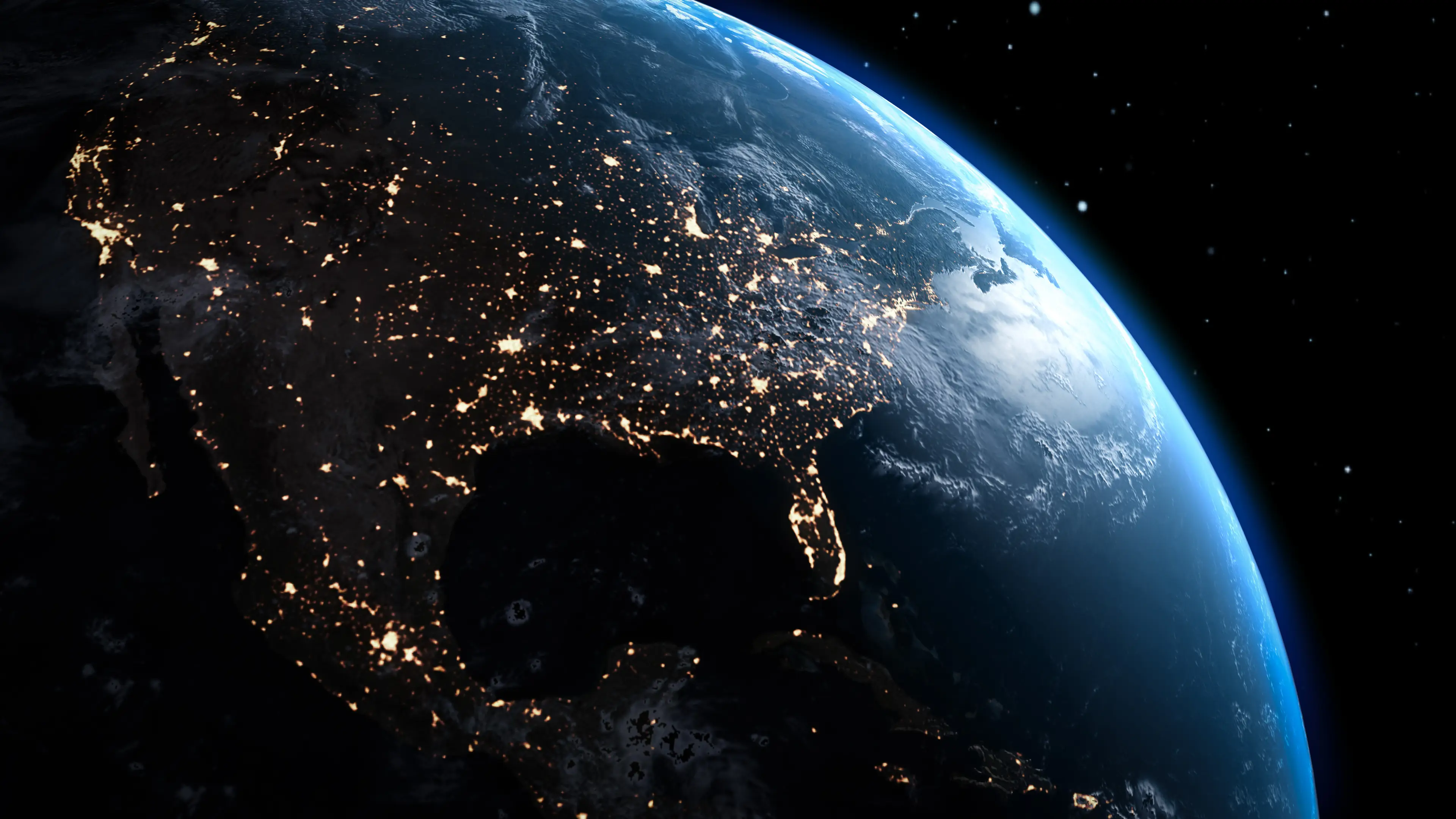
Earth is now about halfway through its lifespan

The Earth is apparently halfway through its lifecycle, and this was revealed using an unlikely neighbour in space – and it has a deep meaning for our future.
According to scientific theories, the Earth is currently around 4.55 billion years old, and has been through a lot of change since it first formed.
Whether you believe in the Big Bang Theory, or religion, no matter what, it can’t be disputed that it was created somehow.
The natural rock that’s spinning in space, was thought to have come to existence thanks to a phenomenon that occurs when gravity around an orbiting star (the Sun) causes particles to smash against other, bigger bodies.
Advert
Once these things collide, they form a planet, which also orbits around the star in question.
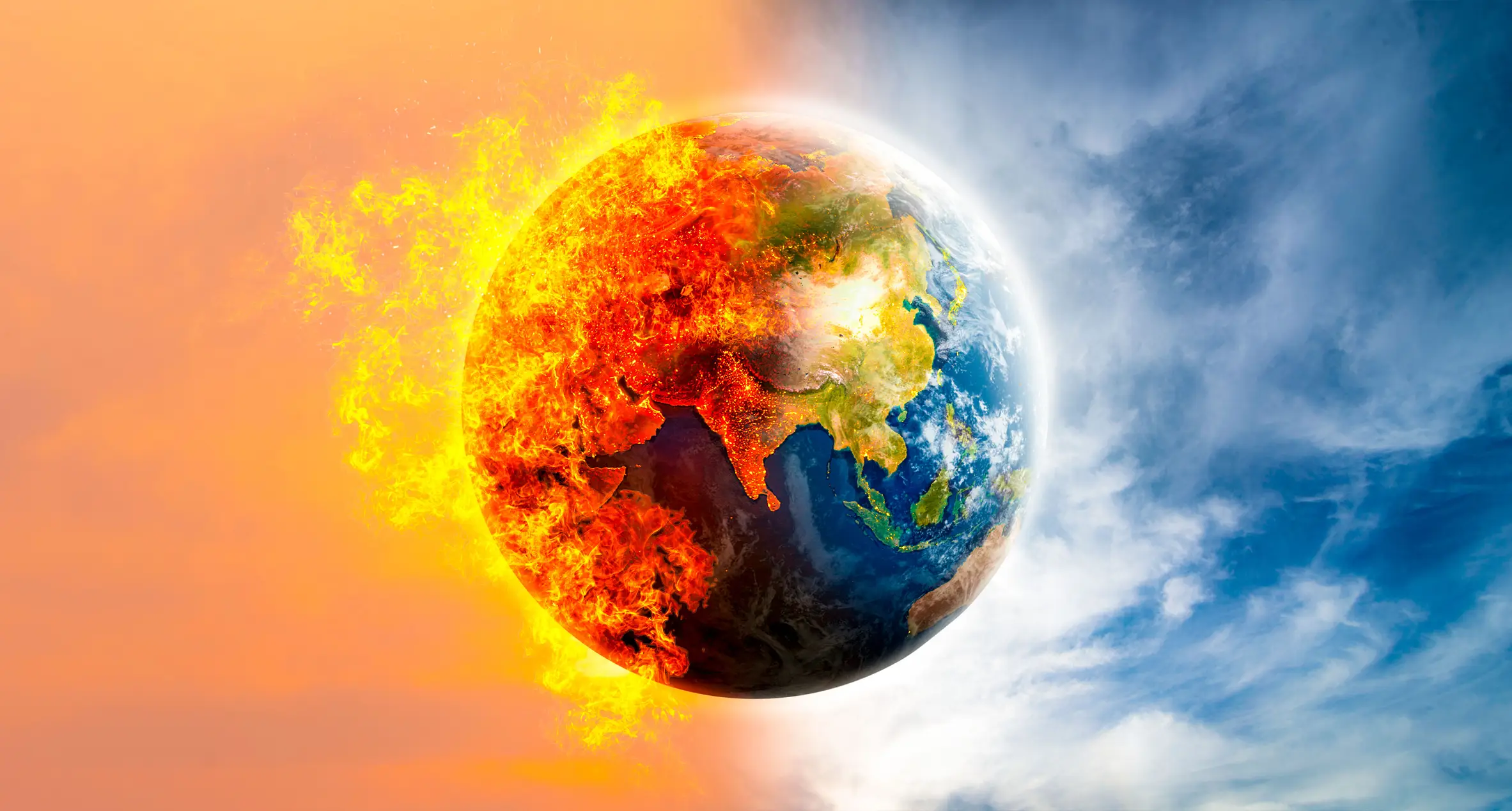
Apparently, per the BBC, the Sun formed 4.6 billion years ago, which in the grand scheme of things, isn’t too long before Earth.
But there are certain things that have occurred that indicate the Earth has reached middle aged.
Scientists have believed that the Earth will live for another five billion years after recognising planetary changes that suggest the green planet’s trajectory to dying.
Essentially, it’s all down to the life of the Sun.
According to NASA stars like the Sun slowly grow brighter as they age, which will have a major impact on our word.
Per researchers, in around one billion years, the Sun’s brightness will trigger seas to dry, the ground to become hot and dusty, and it to be a much different habitat than the one we know, studies say.
In about five billion years, as the Sun gets brighter and brighter, it should end up using up all its hydrogen core, turning into a red giant, says Fred Adams, a theoretical astrophysicist at the University of Michigan.
Red giants, which will expand and engulf nearby planets, scorching them.
Once that happens, it’ll have no heat left, and if Earth is still there...it might as well be an ice cube for all the heat it’ll get from the dead star.
Scarily, Adams said that without the Sun’s orbit, if anyone survives on Earth, they might end up experiencing horrors in the form of collisions.
"We're not just waiting until the universe is twice as old. We're waiting till it's a billion times older, a trillion times older, and a quadrillion times older," he explained. "If you wait, those enormous time scales and rare events start to add up. It's like, it's rare for you to win the lottery, but if you play a billion times, your chances will go up."
Topics: Climate Change, Science, Space, Nasa
 Britt Jones