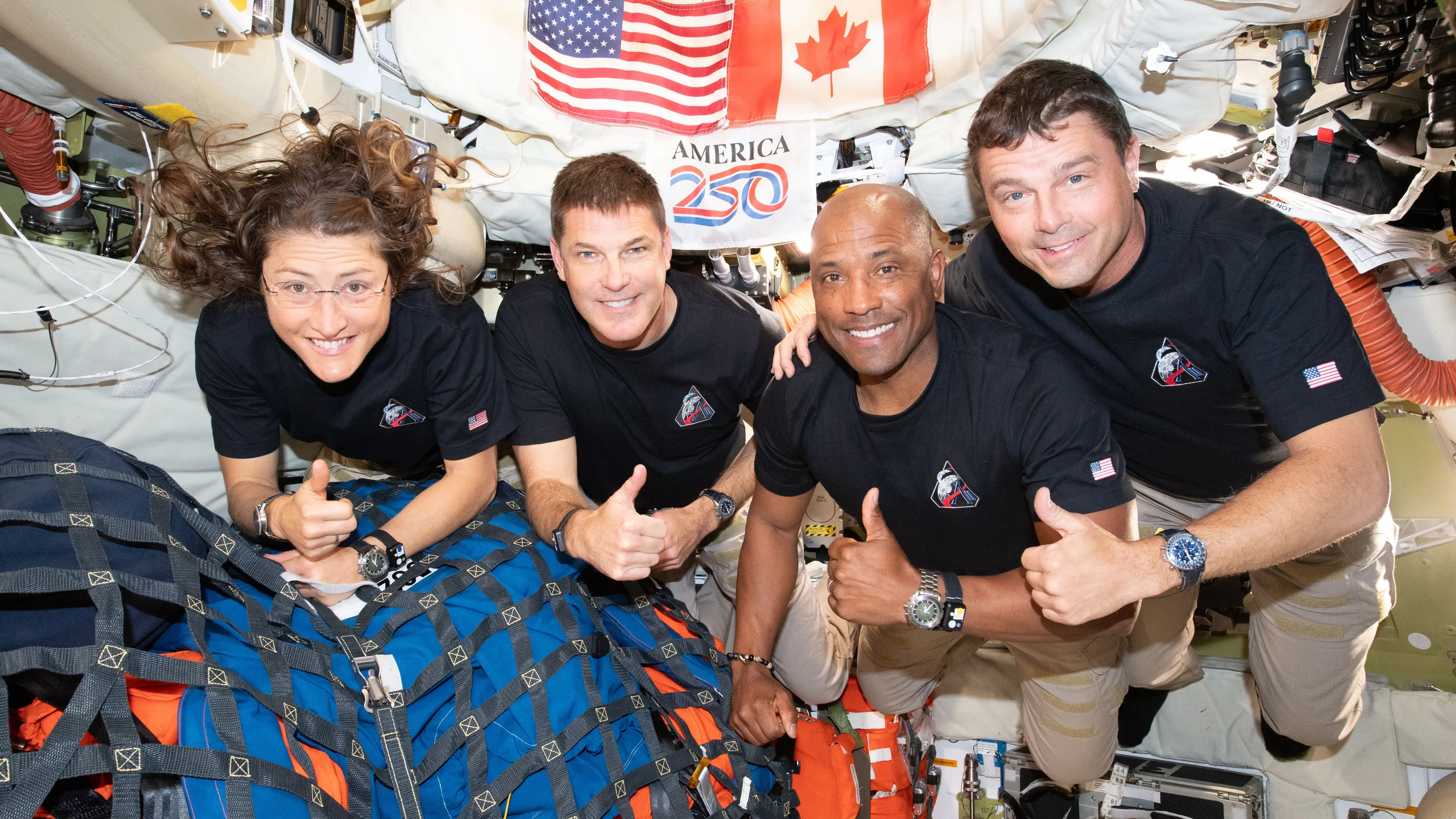
Artemis II crew shares 'greatest' moments from historic mission

As the historic Artemis II mission comes to a close, the crew has been reflecting on the 'greatest' moments of the experience.
It has been a record-breaking journey, which saw the crew break the long-held record of Apollo 13 for the furthest journey into space on a manned flight.
The previous record was 248,655 miles (400,171km), and Artemis II and team travelled roughly 252,760 miles (406,788km).
There has been many sweet moments, including the team taking a cuddly toy into space which had been designed by a child, to the emotional first words that mission expert Christina Koch said when their communications devices reconnected after experiencing a blackout as they travelled the far side of the moon.
Advert
On Wednesday evening, the crew was answering questions in a conference and were asked how they were feeling ahead of the re-entry back to Earth.
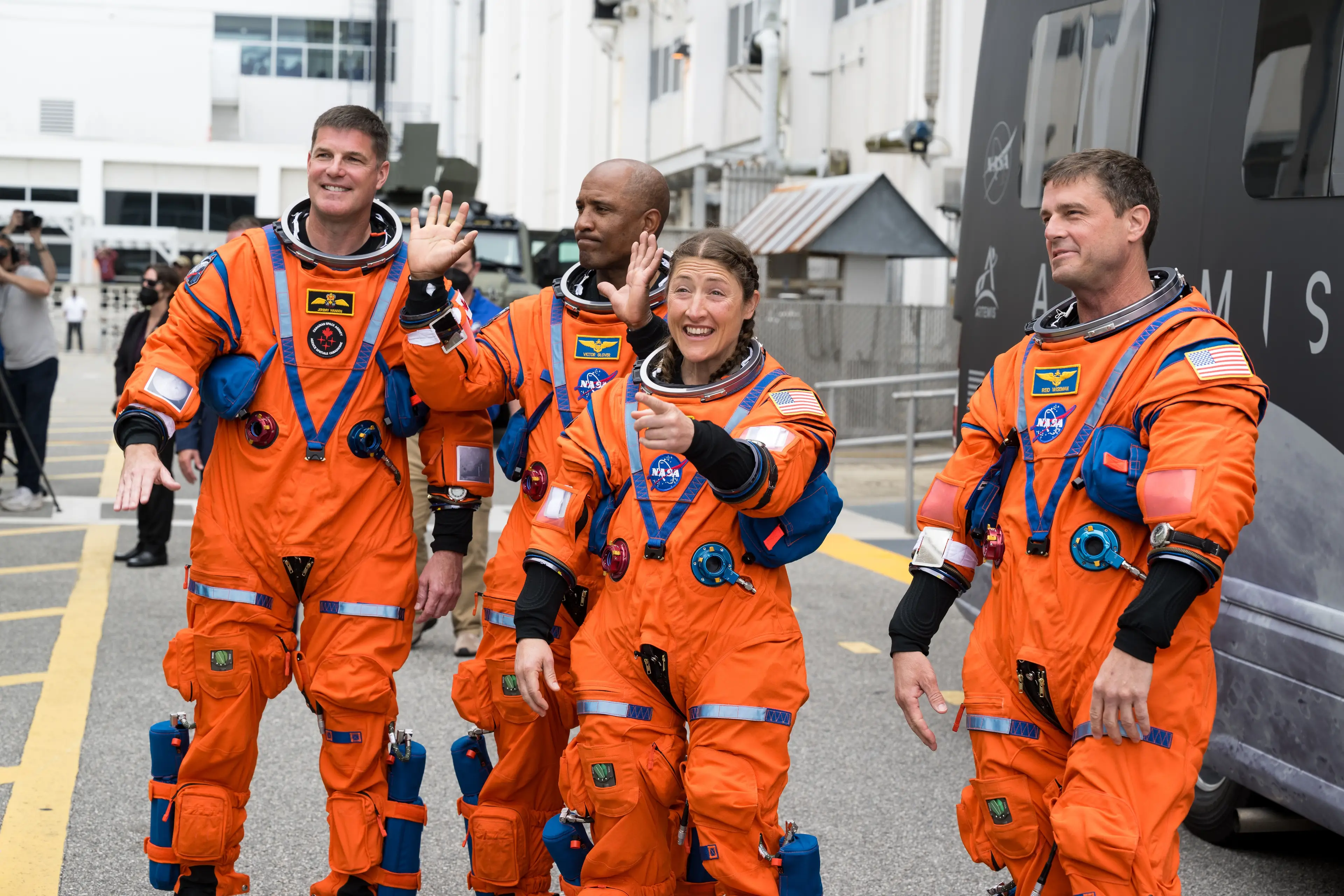
Pilot Victor Glover said: "We have to get back. There's so much data that you've already seen, but all the good stuff is coming back with us."
"There's so many more pictures, so many more stories," he advised, but added there was still 'two more days' to go, and that the crew would be taking the time to think about what they've witnessed.
"I'm going to be thinking about and talking about all of these things for the rest of my life," he said.
The LA Times asked the crew what the blackout period was like, when they lost connection with mission control in Houston, Texas, for around 40 minutes when the moon blocked all communication.
Commander Reid Wiseman said it was actually a pretty busy time for the team, and 'probably the most critical lunar observations for our geology team'.
However, they took the time to ensure there were some sweet moments and that they were able to really take it all in.
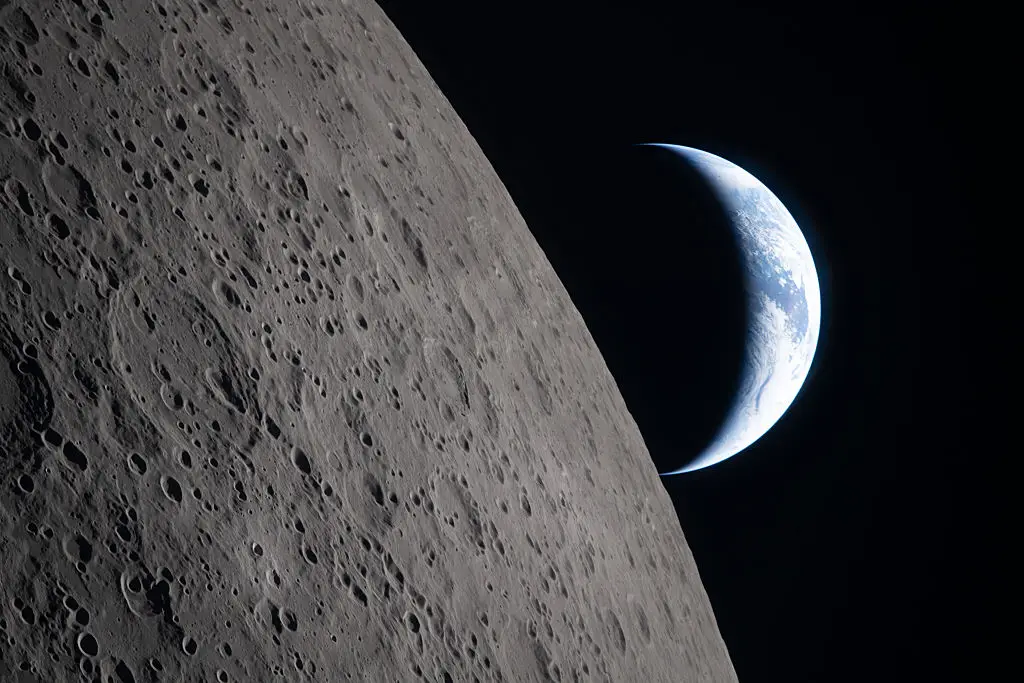
"The four of us took a moment, we shared maple cookies that Jeremy had brought, and we took about three or four minutes, just as a crew to really reflect on where we were," recalled Wiseman.
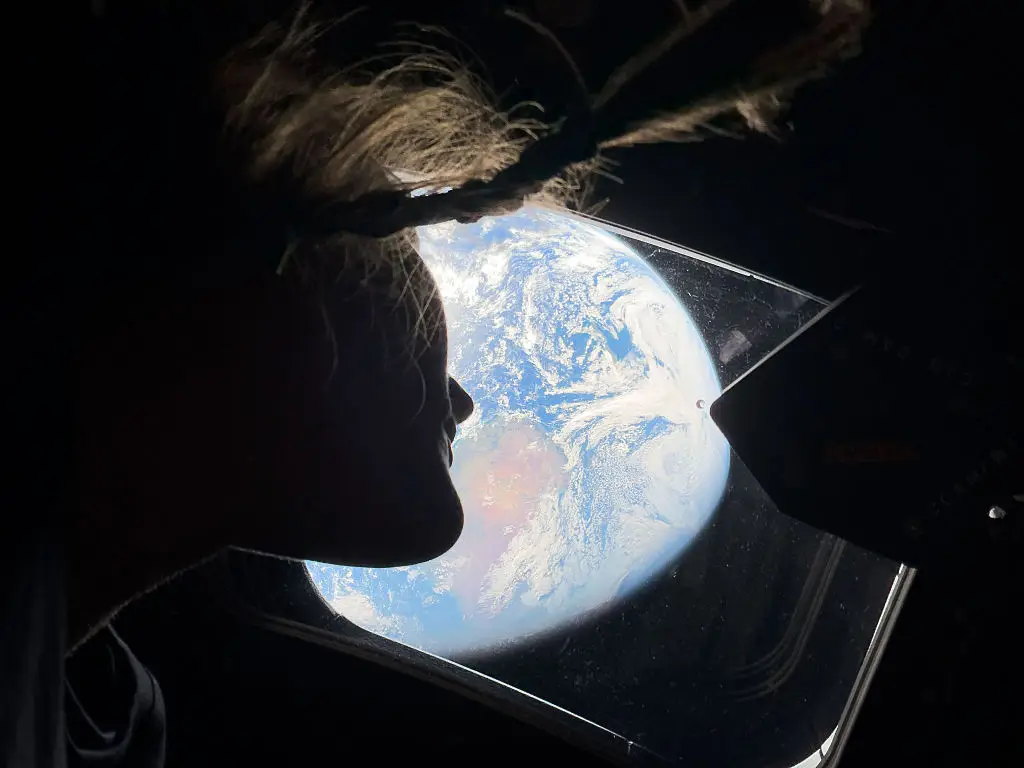
Glover said his highlight of the mission was getting to watch the lunar eclipse from the far side of the moon, calling it the 'greatest gift'.
Wiseman said the highlight for him was the heartbreaking moment where his team named a lunar crater after his late wife, Carroll, who died of cancer in 2020 at the age of just 46.
"I think when Jeremy spelled Carroll's name.... I think for me that is when I was overwhelmed with emotion and I looked over and Christina was crying," he said.
"Just for me personally, that was kind of the pinnacle moment of the mission for me," he added, unsurprisingly.
The crew was given the honour of naming one of two craters discovered there, and they radioed back to HQ: "We lost a loved one, her name was Carroll, she was a mother of Katie and Ellie.
"It’s a bright spot on the Moon. We would like to call it Carroll."
Jeremy Hansen added: "There is a feature on the near side boundary of the Moon, and so at certain times we will be able to see it from Earth."
What happens next after splashdown?
Getting the astronauts out of the Orion
Helping Reid Wiseman, Victor Glover, Christina Koch and Jeremy Hansen safely out of the Orion spacecraft falls to NASA and the Department of War.
Once they land back on Earth, a team of four helicopters will circle the spacecraft - two for rescue, the other two for pictures, according to Florida Today.
One of them will lower a stabilising collar, which will keep the Orion floating the right way up.
Then, once they’re ready, a basket will be sent down to lift the first astronaut up.
They’ll all be taken to a nearby naval vessel, the USS John P. Murtha, for a medical checkup, and then transported back to Houston.
What effect will 10 days in space have had on the astronauts’ bodies?
Even though the Artemis II crew have spent a relatively short time in space - poor Suni Williams and Butch Wilmore spent 608 days away from Earth over 2024 and 2025, remember - it will still have had an effect on their bodies.
Kevin Fong, founder of the Centre for Altitude, Space and Extreme Environment Medicine at University College London, told the BBC: “In some experiments with rats, they’ve seen up to a third of muscle from particular muscle groups being lost within seven to 10 days of flight – that’s a huge, huge loss.”
To try and combat muscle loss, the Artemis II team have incorporated workouts into their schedule, on something called a flywheel.
Since the Orion capsule is only 316 cubic feet, about the size of a smallish bedroom according to NPR, workout gear needs to be compact. The flywheel is a bit like a multi-purpose rowing machine.
Jeremy Hansen explained before launch: “We can change the dynamics of this device so that we can do weightlifting with it. So we can do squats. We can do dead lifts. We can do curls. We can do high pulls.”
What have other astronauts said about readjusting to life on Earth?
NASA astronaut Jasmin Moghbeli, who returned to Earth in 2024 after 200 days in space, said: “With eyes closed, it was almost impossible to walk in a straight line.”
That’s because the inner-ear balance humans use to orient themselves on Earth is effectively tuned out when they are in space.
ESA astronaut Andreas Mogensen, who was on the same mission, said: “I felt wobbly for the first two days. My neck was very tired from holding up my head.”
While NASA’s Jeanette Epps, who spent 235 days in space and returned in October 2024, said the main thing that took some getting used to was the heaviness of Earth.
She said: “You have to move and exercise every day, regardless of how exhausted you feel.”
Topics: Space, Nasa, US News, World News, Science
 Jen Thomas