tyla homepage
  • News
  • Life
  • TV & Film
  • Beauty
  • Style
  • Home
  • News
    • Celebrity
    • Entertainment
    • Politics
    • Royal Family
  • Life
    • Animals
    • Food & Drink
    • Women's Health
    • Mental Health
    • Sex & Relationships
    • Travel
    • Real Life
  • TV & Film
    • True Crime
    • Documentaries
    • Netflix
    • BBC
    • ITV
    • Tyla Recommends
  • Beauty
    • Hair
    • Make-up
    • Skincare
  • Style
    • Home
    • Fashion
    • Shopping
  • Advertise
  • Terms
  • Privacy & Cookies
  • LADbible Group
  • LADbible
  • UNILAD
  • SPORTbible
  • GAMINGbible
  • UNILAD Tech
  • FOODbible
  • License Our Content
  • About Us & Contact
  • Jobs
  • Latest
  • Archive
  • Topics A-Z
  • Authors
Facebook
Instagram
X
Threads
TikTok
Submit Your Content
Why aren’t Artemis II astronauts landing on the moon when they get there

Home> News

Published 13:58 2 Apr 2026 GMT+1

Why aren’t Artemis II astronauts landing on the moon when they get there

Yesterday's launch (1 April) made history as the last time NASA sent astronauts to the moon was over 50 years ago in 1972

Rhiannon Ingle

Rhiannon Ingle

google discoverFollow us on Google Discover
Featured Image Credit: Miguel J. Rodriguez CARRILLO / AFP via Getty Images

Topics: Space, Nasa, US News, News, World News, Explained, Science

Rhiannon Ingle
Rhiannon Ingle

Rhiannon Ingle is a Senior Journalist at Tyla, specialising in TV, film, travel, and culture. A graduate of the University of Manchester with a degree in English Literature, she honed her editorial skills as the Lifestyle Editor of The Mancunian, the UK’s largest student newspaper. With a keen eye for storytelling, Rhiannon brings fresh perspectives to her writing, blending critical insight with an engaging style. Her work captures the intersection of entertainment and real-world experiences.

Advert

Advert

Advert

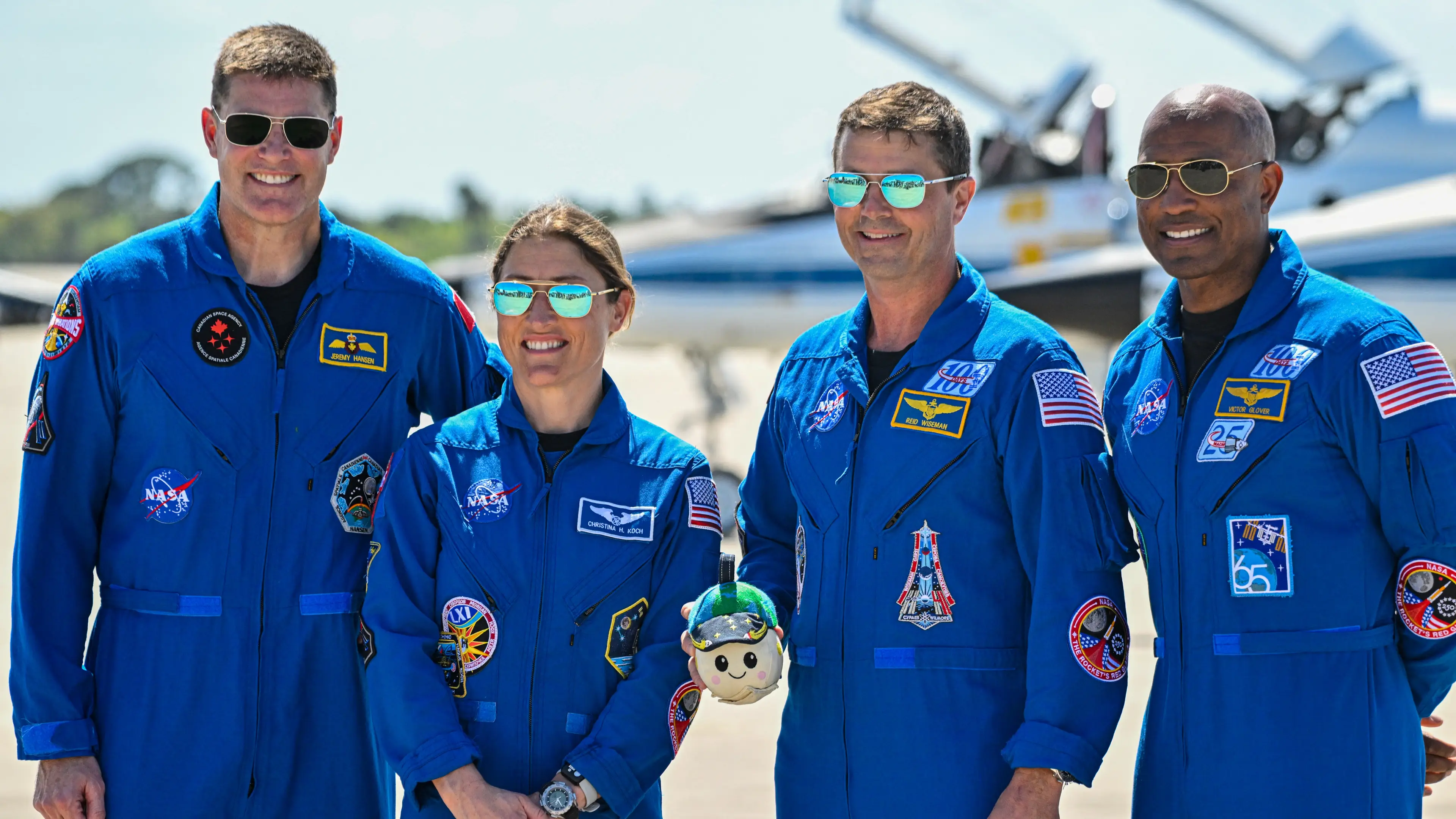
Four astronauts were sent up to the moon for the eagerly anticipated Artemis II launch on Wednesday (1 April).

NASA astronauts Reid Wiseman, Victor Glover, and Christina Koch, along with Canadian Space Agency astronaut Jeremy Hansen, reached orbit ahead of circling the Earth for about 25 hours before catapulting towards the moon with the 10-day mission, paving the way for a future lunar landing and also laying the foundation to send a crew to Mars one day.

However, the crew won't actually be landing on the moon's surface when they get there - marking a noticeable difference between their mission and the last time the space agency sent astronauts to the moon as part of the Apollo 17 mission in 1972.
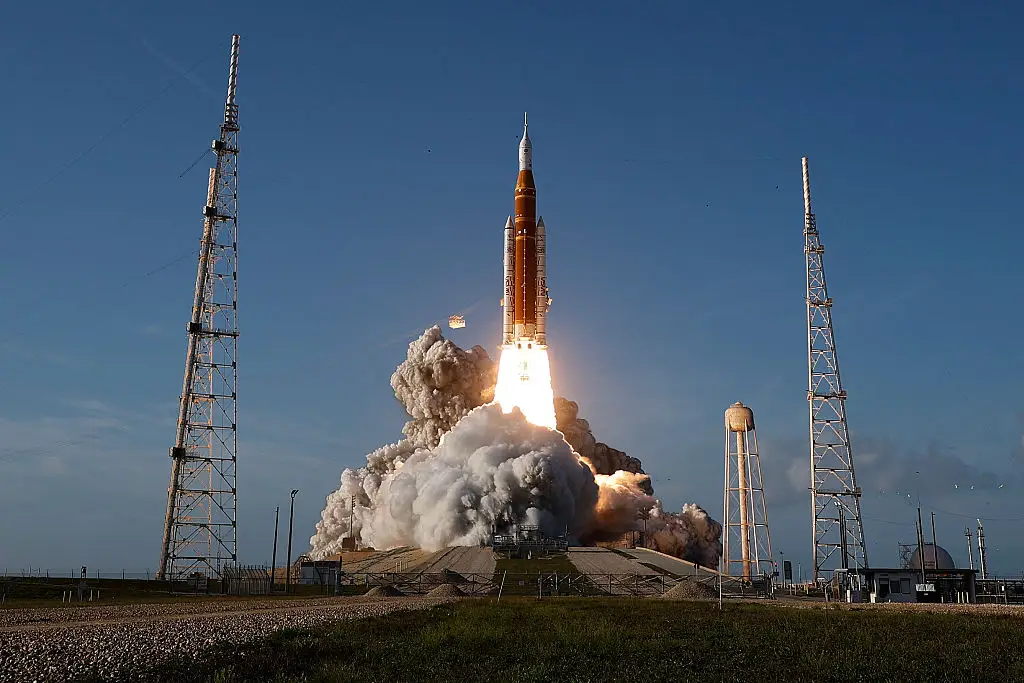
The Artemis II mission launched just yesterday (Chip Somodevilla / Staff / Getty Images)

Advert

We've got a few more years until the first moon landing of the Artemis programme, which is set to be no earlier than 2028.

The short answer as to why the moon landing isn't happening during this mission is that the programme isn't built to put Artemis II on the moon, per Space.com.

The Orion spacecraft the crew are travelling on doesn't have any landing capacity, with NASA opting for a staged testing approach before committing to a moon landing.

"Artemis II is NASA’s first mission with crew aboard our foundational deep space rocket, the SLS (Space Launch System), and Orion spacecraft and will confirm all the spacecraft’s systems operate as designed with crew aboard in the actual environment of deep space," NASA wrote in a mission description.

"The mission will pave the way for lunar surface missions, establishing long-term lunar science and exploration capabilities, and inspire the next generation of explorers."
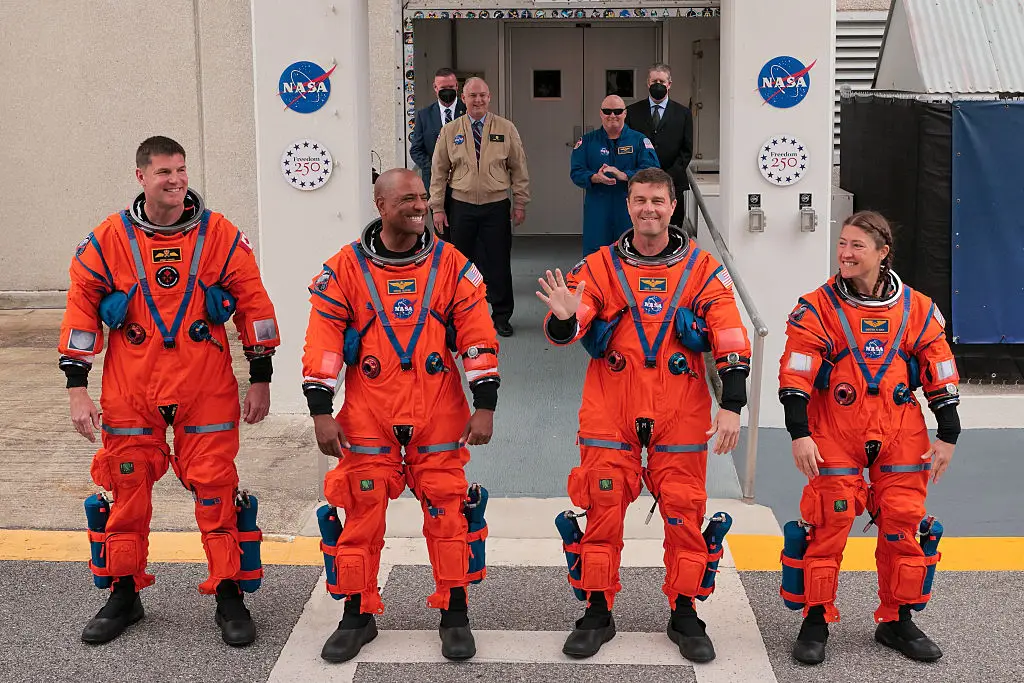
Four astronauts have been sent to the moon as part of the NASA mission, though they won't land on it (Chip Somodevilla / Staff / Getty Images)

Meanwhile, NASA Administrator Jared Isaacman said in a statement: "Artemis II is the start of something bigger than any one mission. It marks our return to the Moon, not just to visit, but to eventually stay on our Moon Base, and lays the foundation for the next giant leaps ahead."

And as for the crew's upcoming return?

Well, NASA explains that Orion will be pulled back naturally by Earth’s gravity for the free return portion of the mission.

"The crew will endure the high-speed, high-temperature reentry through Earth’s atmosphere before splashing down in the Pacific Ocean off the coast of San Diego, where they will be met by a recovery team of NASA and Department of Defense personnel who will bring them back to shore," the space agency writes.

Choose your content:

an hour ago
3 hours ago
  • (Getty Stock Images)
    an hour ago

    Unusual ‘Cicada’ Covid symptom that some people are experiencing as cases surge

    Experts say this strain may feel slightly different to usual

    News
  • (Roberto Schmidt/Stringer/Getty Images)
    3 hours ago

    Trump reveals brutal plans for Iran as he claims conflict could end within weeks

    His latest remarks could send fresh shockwaves through the crisis

    News
  • (Westend61/Getty Images)
    3 hours ago

    Mount Everest climbers allegedly being poisoned by guides in dark $20 million plot

    The mountain danger tourists never realised they were walking into

    News
  • Gregg Newton / AFP via Getty Images
    3 hours ago

    How Artemis II astronauts will poop in space as crew make horrifying discovery within minutes of mission

    The last time NASA sent astronauts to the Moon was as part of the Apollo 17 mission back in 1972

    News
  • Artemis II astronauts' food menu for space mission revealed
  • Christina Koch sets another new space record with Artemis II Moon mission
  • How Artemis II astronauts will poop in space as crew make horrifying discovery within minutes of mission
  • NASA's Artemis II astronaut quarantine begins as Christina Koch isolates for moon mission