
‘Orgasm gap’ explained - everyone is affected

The ‘orgasm gap’ has been revealed, and it doesn’t discriminate between rich, poor, dating, married or single.
Dating and going through those exciting first few years bring about one of the most important stages of any relationship - the sex.
Whether you decide to wait until you’re committed, or do the deed on the first night, you’re bound to have sex at one point or another (unless asexual or celibate).
From there, you’ll learn if you’re sexually compatible with your partner, and oftentimes, an indicator of this is if you orgasm. Or at the very least, enjoy the sex.
Advert
But more and more people are learning that not everyone cums, and it has been dubbed the ‘orgasm gap’.
What is the ‘orgasm gap’?
A 2017 survey, which looked into the sex habits of women aged 18 to 94 in the US, 37 per cent of women had to engage in clitoral stimulation to reach climax, while 18.4 per cent could climax via penile penetration alone.
Now, if you’re a woman, you might not be shocked at these figures and you might not even be surprised to learn that around 50 per cent or 60 per cent of women don’t orgasm at all during intercourse.
Nor will they ever be able to.
From celebrities to normal folk, if you’re a woman, you might be aware of the difference between how women orgasm versus how men orgasm. But you might not have known just how wide the gap is.
Why are women orgasming less?
There are a fair few theories about this, but the research is pretty low.
A study by Durex found that 20 per cent of women say they don’t orgasm, compared to only two per cent of men.
It also went on to show that 30 per cent of men admitted to believing the best way to help a woman orgasm is through penetration, while more than half of women thanked clitoral stimulation for making them finish.
According to the OMGYes survey, women typically liked to stay with one preference to how they like to be touched to bring about an orgasm.
While it clearly works for them, they could be missing out on finding new ways to come as they aren’t exploring different modes of stimulation.

To this, Debby Herbenick, a researcher at the Center for Sexual Health Promotion at Indiana University told Vice: “I was really intrigued that 41 percent of women really just honed in on one style of touching they liked. In a future study I think it would be fascinating to encourage those women to explore some other ways and see if they really do just like one style or if there is a second one if they explore it they like.”
She went on to say: “If that many people really just prefer one thing, you really have to talk to each other to find out what you like otherwise it’s such a guessing game.
“As part of my teaching of human sexuality, I’ve always encouraged people to say just because you’ve found one thing you like, try not to limit yourself. I guess I’m still a big proponent of exploration.”
Who is impacted by the gap?
Everyone!
Now, studies have said the orgasm gap mostly impacts heterosexual women in relationships with men, but all women can experience less orgasms compared to men.
It doesn’t even matter if you’re a celebrity as actress Rachel Bilson told Whitney Cummings two years ago that she didn’t orgasm vaginally via penetration until she was 38, which was when she was with comedian and actor, Bill Hader.
Amy Schumer has also been candid about her lack of climax experience, with the comedy queen previously telling Call Her Daddy host, Alex Cooper, that she has never orgasmed ‘from penetration’ in January this year.
“It’s a scary thing to say out loud,” she said. “It’s scary because nobody talks about it because we’re all, like, getting an Oscar.”
However, the 44-year-old noted that she had never thought to ask her male partners to attempt to give her an orgasm until she was in her 30s.
Lily Allen admitted to Dazed Digital in 2020 that she had only been able to reach climax after she started using sex toys.
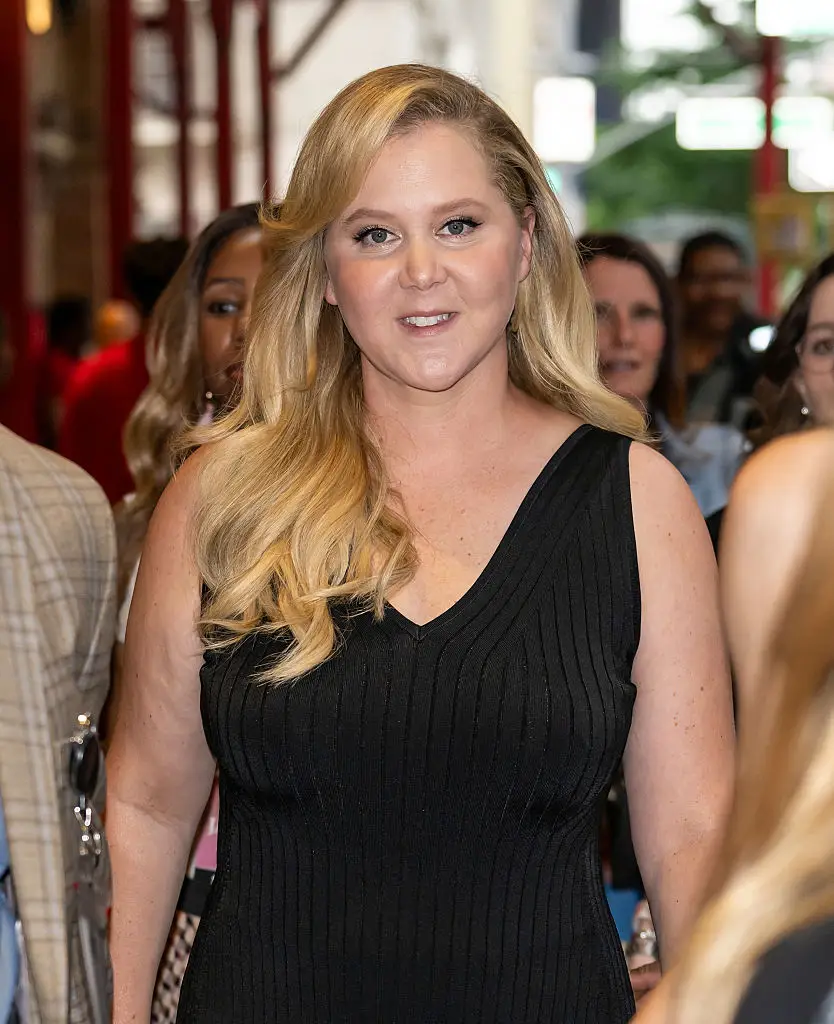
She said: "It wasn't until my mid-twenties. I wasn't very committed to self-love in that part of my life.
"Like, I’d never reached climax with a partner, probably because I was so drunk when sleeping with people that I became desensitised to feeling something.”
Why do we have an ‘orgasm gap’?
Before we blame men, many believe that it actually lies with the fact that culturally, we know very little about women’s sex organs.
Writing about the orgasm gap on Psychology Today Laurie Mintz Ph.D. wrote: “I am not blaming penises for the orgasm gap, nor am I blaming the men who own them. I’m also not blaming the women who have sex with the men who own them. The orgasm gap is a cultural problem.”
Researchers have attributed the orgasm gap to things like not understanding women’s anatomy, how people view the clitoris as something mysterious, and that nobody seems to know much about the vulva, including women.
Per a YouGov study 58 per cent of people couldn’t describe the function of the urethra, 47 per cent didn’t know what the labia was and 52 per cent didn’t know what the vagina was.
So, maybe we just need more education.
Topics: Sex and Relationships, Health, Dating, Dating trends, Science, Life, Celebrity
 Britt Jones