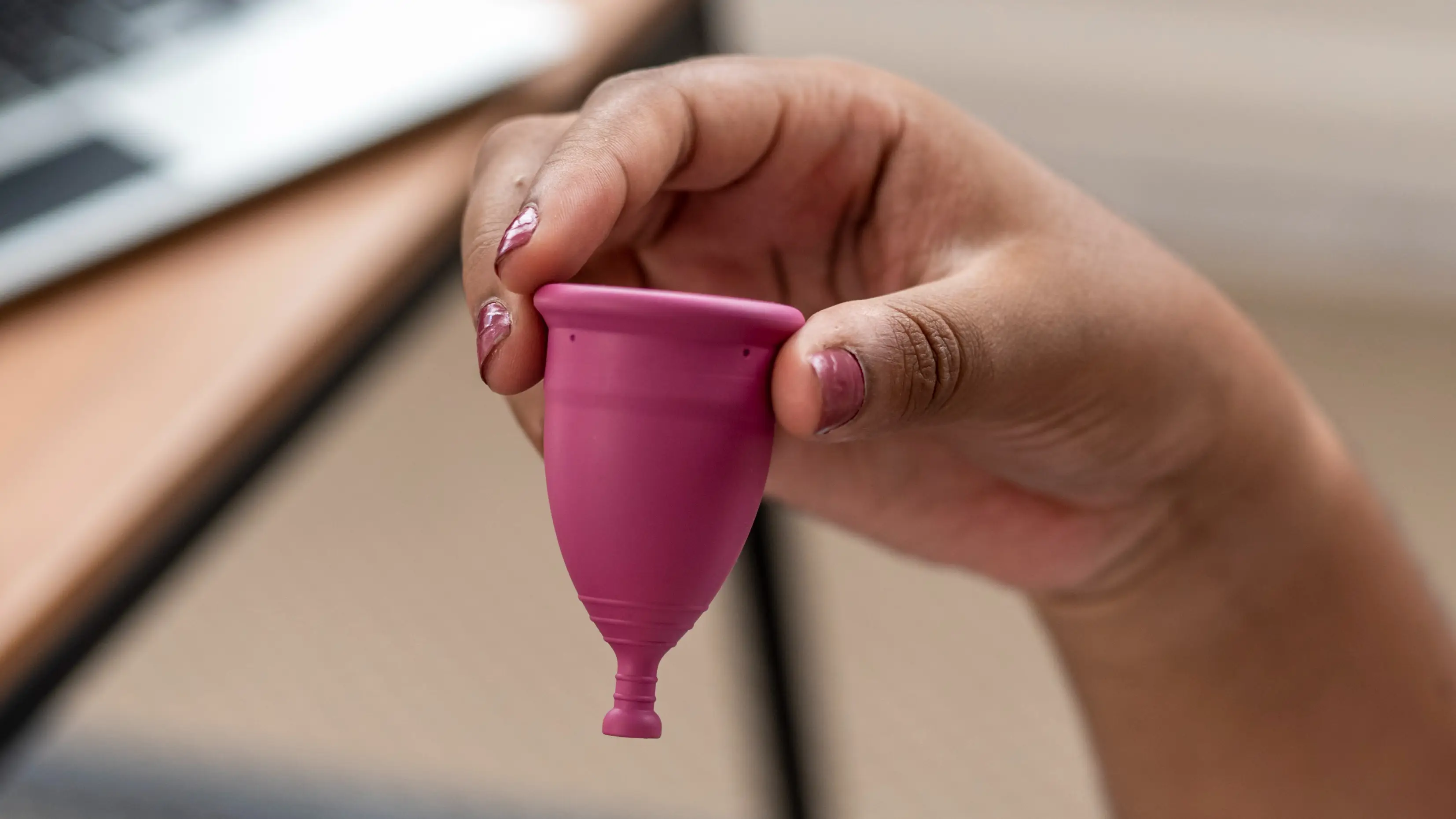
Doctor shares ‘worst’ time to have sex during your menstrual cycle

Period sex is a thing, guys, get over it.
Unfortunately, there's a whole load of utter nonsense out there that feeds into a bizarre stigma around getting it on when you're bleeding.
But, contrary to societal expectations, outdated misconceptions and baseless scientific myths, your sex life doesn't actually have to be put on the back burner during your time of the month.
Yes, there may be a little more admin involved in the practicalities (laying down a towel, removing your tampon, showering etc, etc), but that's not to say it's not worth it!
Advert
Also, while some people feel most horny during their period, other people genuinely feel too uncomfortable, some experience too much pain, and simply just don’t fancy it - and that's totally fine too!
Regardless of your stance, it can't hurt knowing a little more about the ins and outs of period sex with a doctor now sharing the best times to have sex during your menstrual cycle due to your hormones and libido levels.
Dr Susanna Unsworth, women's health expert for Intimina, the women’s intimate health brand, explained to Tyla exactly how hormones and different phases of the menstrual cycle affect libido.
According to the expert, hormones fluctuate throughout the menstrual cycle, and those changes can 'definitely' affect libido - AKA your sex drive.
"Oestrogen levels rise during the follicular phase (the first half of your cycle) and peak around ovulation, which often boosts sexual desire," Dr Susanna says, adding that this isn't surprising, 'as that is when the body is most fertile'.
"There’s also a small increase in testosterone around ovulation, which can heighten desire and arousal," she notes.
The doc went on to explain that, after ovulation, progesterone becomes the dominant hormone in the luteal phase (the second half of the cycle), which can 'sometimes dampen libido slightly'.
"That said, everyone’s hormonal rhythm is unique, and some people notice clear peaks and dips, while others find their libido is more stable throughout the month," Dr Susanna resolves.
She also shared her expertise on exactly what types of discharge, lubrication, or 'wetness' are considered normal before or after sex.
She said: "Vaginal discharge naturally changes throughout the menstrual cycle. Around ovulation, discharge is usually clear, and often slippery and stretchy, designed to help sperm travel more easily and increase the chances of conception.
"During arousal, vaginal fluid production increases due to a rise in blood flow to the genital tissues. This causes a gentle swelling and pressure in the vaginal walls, allowing moisture to pass through the tissue. This is why arousal fluid often feels watery or thin."
According to the expert, both physiology and psychology play a role in this process.
"Physical stimulation triggers the blood flow response, while emotional arousal and relaxation influence how readily the body produces lubrication. Before or after sex, it is normal for this fluid to look clear or white and have little to no odour," she notes.
And, if oestrogen levels are lower (for example, during menopause, while breastfeeding, or from certain hormonal medications), lubrication and discharge can decrease, which might make sex feel more uncomfortable.
Dr Susanna clearly outlined what is definitely not normal, and that is: "Discharge that is green, yellow, grey, thick, lumpy, frothy, or has a strong or unusual smell.
"Blood between periods, itching, or irritation are also signs to review with a healthcare provider to rule out infection or other causes."
Topics: Health, Sex and Relationships, Life, Explained, Tyla Exclusive, Dating, Women's Health, Periods
 Rhiannon Ingle