
'Office air' warning issued as UK heatwave sparks concerns over workers' rights

The UK’s scorching heatwave means that for those of us going to work in the extreme temperatures, ‘office air’ is worse than ever.
The Met Office has issued a rare red weather warning this week over the 'heat dome,' which could see highs of a sweltering 40°C by Wednesday (24 June).
A red heat alert indicates a risk to life for even the healthy population, with the forecast bringing a likelihood of record-breaking June temperatures and very high humidity.
Experts have warned that the worrying combination of heat and humidity will be ‘oppressive’ and bring ‘impacts across society’ from public health and infrastructure, to power and water supplies.
Advert
The last place anyone wants to be in the middle of a scorching heatwave is the office, but sadly, unlike some schools, most workplaces will not be closing - although they will have to make adjustments, as employers have a duty of care to ensure a safe working environment and protect the health and welfare of their employees.
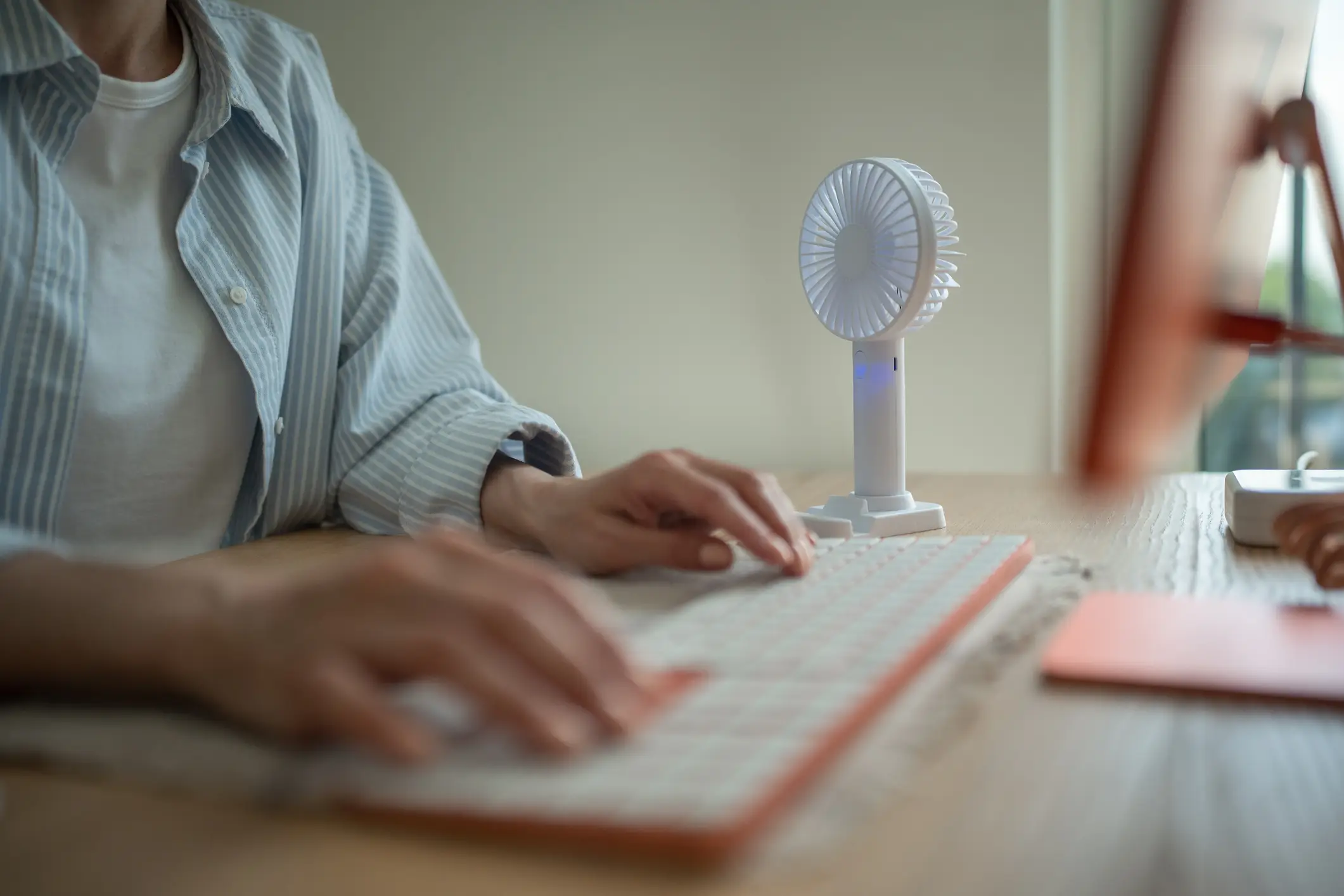
What is ‘office air’?
However, the hot temperatures do mean that, unfortunately, ‘office air’ will be rife, thanks to an increased use of air conditioning.
To explain the Gen Z term, ‘office air,’ refers to the common phenomenon of how the work environment can alter your appearance.
Picture this - you get up early, do your make-up and hair, and head to the office feeling confident, only to glance in the mirror on your lunch break and see that your skin looks dull, your hair’s frizzy, and you’re just not glowing the way you were when you left the house.
Essentially, it happens because of the low humidity, poor ventilation, and stagnant, recirculated air that’s often found in workplaces.
Darcy Laceby, skin expert at Absolute Collagen, previously explained: "Air conditioning works by extracting the moisture out of the air to reduce the humidity to then cool or heat a room.
“However, it could also be having a similar effect on your skin, resulting in dry, flaky skin.”

The expert added: "This can not only be uncomfortable, but it can also speed up the ageing process, with wrinkles and fine lines looking more pronounced. For those with certain skin conditions, such as eczema or psoriasis, this environment can even exacerbate your symptoms."
The bad news doesn’t end there, as sadly, air-con can have the same ‘drying effect’ on your hair, because ‘when your hair is exposed to cool air for extended periods of time it can become dry, brittle and more susceptible to breakage’.
So, as well as the hot temps, we also have ‘office air’ to contend with. Great!
Workers rights during a heatwave
On a more serious note, the heatwave has also prompted questions on workers’ rights, including whether there’s a maximum workplace temperature limit.
Speaking to Tyla, James Muller, Principal Associate in Weightmans’ Health & Safety Team, explained that while there are no specific laws that allow work to stop if it becomes too hot, UK employment rules mean that every employer has a duty of care to ensure a safe working environment and protect the health and welfare of their employees.
If an employer fails to meet this responsibility, they would face enforcement action, including potential criminal prosecution, from the Health and Safety Executive or Local Authority.
Muller added: "Employees might also be able to claim personal injury compensation if they become ill or injured as a result."
Adjustments that employers can make include allowing flexible hours, encouraging remote work, providing more frequent breaks, and allowing shorter working days where possible.

The Health and Safety at Work Act 1974 and the Workplace (Health, Safety, and Welfare) Regulations of 1992 detail that employers must additionally ensure a healthy work environment by providing ‘sufficient quantities of fresh or purified air, especially during a heatwave’.
However, it’s not a legal requirement to provide air-con, as long as there is a ‘sufficient quantity of fresh or purified air’.
There is controverisally also no specific set maximum temperature number in place, and instead, it depends on the work activity and the environmental conditions.
The UK’s regulations simply require employers to provide a ‘reasonable indoor temperature’ in the workplace.
Essentially, it’s up to employers to decide what a reasonable temperature should be in the workplace by assessing the risk, acting on any findings by putting controls in place, including temporary or seasonal ones, and using the government’s heat stress checklist if workers are at risk from extreme temperatures.
 Madison Burgess