
What your rights are in workplace during heatwave as UK temperatures soar

A lawyer has outlined what the laws are surrounding working during a heatwave, as temperatures in the UK continue to rise.
In the coming days, Brits will have to find ways to cool down in the sweltering weather, as a ‘heat-dome’ settling over western Europe could boost temperatures to staggering 40C by Wednesday (24 June).
The heatwave, which has prompted a red weather warning in areas of the UK, is expected to surpass the record for June set in Hampshire in 1976.
The temperature could even come close to the UK’s all-time high of 40.3C, which was measured in July 2022.
Advert
Schools in parts of the country are closing or sending children home early this week - but what about those of us at work?

Working in a hot and humid office is difficult enough, not to mention the difficulties faced by those who work in hospitality settings like kitchens or outdoor areas.
What are my rights in the workplace during a heatwave?
Speaking to Tyla, James Muller, Principal Associate in Weightmans’ Health & Safety Team, has outlined that while there are sadly no specific laws that allow workers to stop working if it becomes too hot, UK employment rules mean that every employer has a duty of care to ensure a safe working environment and protect the health and welfare of their employees.
He explained: "If an employer fails to meet this responsibility, they would face enforcement action (including potential criminal prosecution) from the Health and Safety Executive or Local Authority.
"Employees might also be able to claim personal injury compensation if they become ill or injured as a result."
The expert outlined that employers must take all ‘reasonably practicable measures’ to ensure the health and welfare of their employees.
Muller added: "This means they must provide a safe environment where staff are not at risk of heat-related illnesses.
"Employers must also consider those with existing health conditions that could be more severely affected by high temperatures, such as medically vulnerable individuals or pregnant employees."
The UK’s Workplace regulations require employers to provide a ‘reasonable indoor temperature’ in the workplace.

However, there is no specific set maximum temperature number in place, and instead, it depends on the work activity and the environmental conditions.
But there are important adjustments that should be made to help everyone feel safe and comfortable at work.
What adjustments can employers make during a heatwave?
During a heatwave, the expert explains that it’s recommended that employers seek to be as flexible as possible, taking into consideration their employees’ well-being, any health conditions, and the needs of the business.
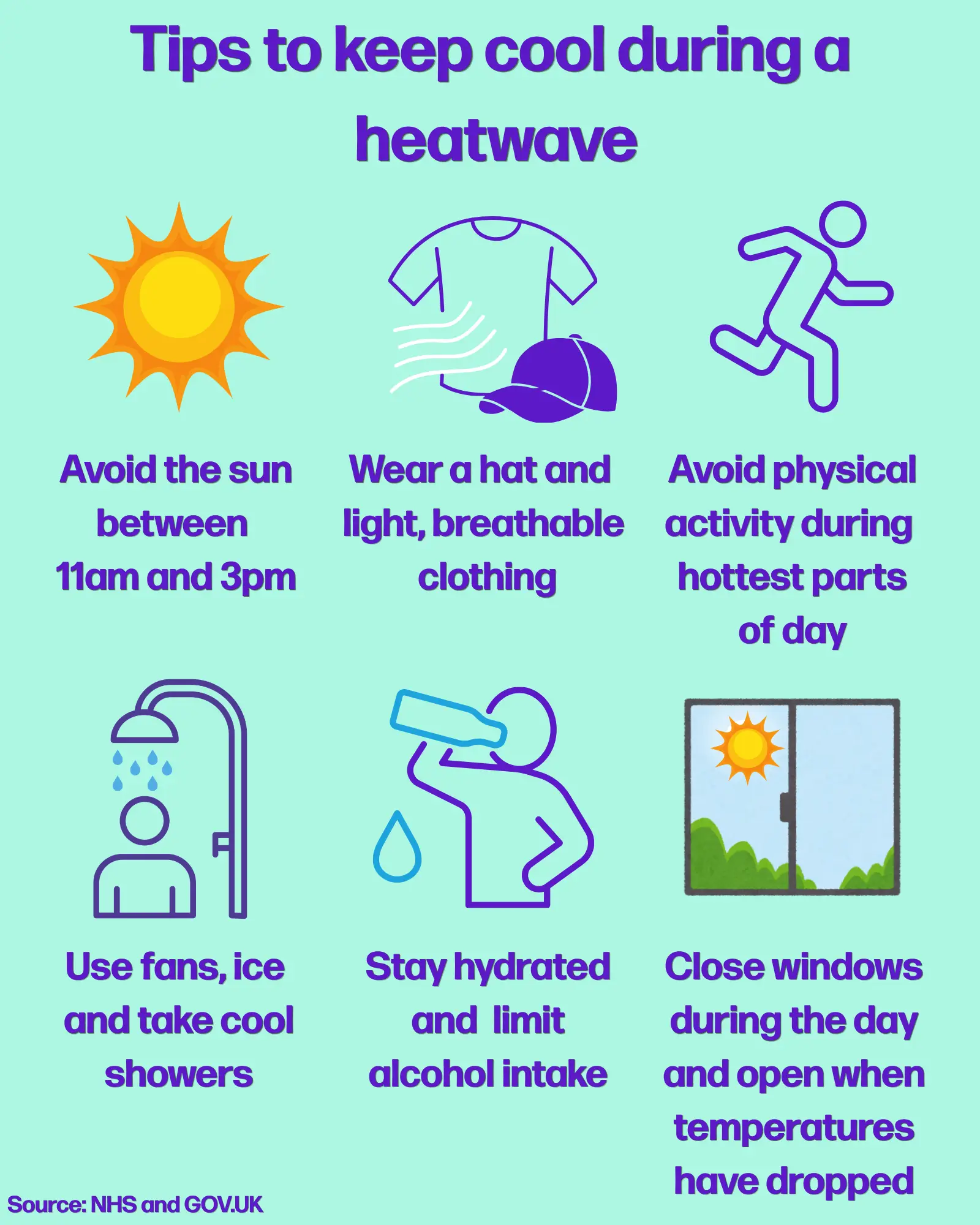
This can include allowing flexible hours, encouraging remote work, providing more frequent breaks, and even allowing shorter working days where possible.
Meanwhile, employees in physically demanding roles who face higher risks during heatwaves should be offered hydration stations, shaded rest areas, and breathable protective gear.
Muller said: "Rotating tasks to limit heat exposure is also beneficial. For office environments without air conditioning, optimising ventilation, designating cooler break areas, and allowing lighter clothing can help."

The lawyer also points out that the Health and Safety at Work Act 1974 and the Workplace (Health, Safety, and Welfare) Regulations of 1992 detail that employers must ensure a healthy work environment by providing ‘sufficient quantities of fresh or purified air, especially during a heatwave’.
Essentially, regularly maintaining air conditioning systems and replacing filters is ‘crucial,’ while enhancing ventilation through fans and open windows, adding indoor plants to improve air quality, and using dehumidifiers to control humidity levels are also important.
However, it’s not a legal requirement to provide air-con, as long as there is a ‘sufficient quantity of fresh or purified air’.
When the working environment is uncomfortably warm, employers should consider:
- Using fans or air conditioning (including mobile air conditioning units) if available/possible
- Providing cool water and encouraging employees to stay hydrated
- Adjusting dress code requirements, if suitable

Because the Health and Safety Executive requires employers to ensure a ‘reasonable and safe working environment,’ if the extreme heat poses a risk to health and safety, employers must take appropriate actions, which could include sending employees home’.
The expert added: "It is an employer's responsibility to determine what constitutes reasonable comfort in specific situations.
"Employers should also consider this in the context of any employees who have health conditions or are pregnant.
"As with many scenarios, discussing matters and agreeing a reasonable way forward is usually the best approach."
 Madison Burgess