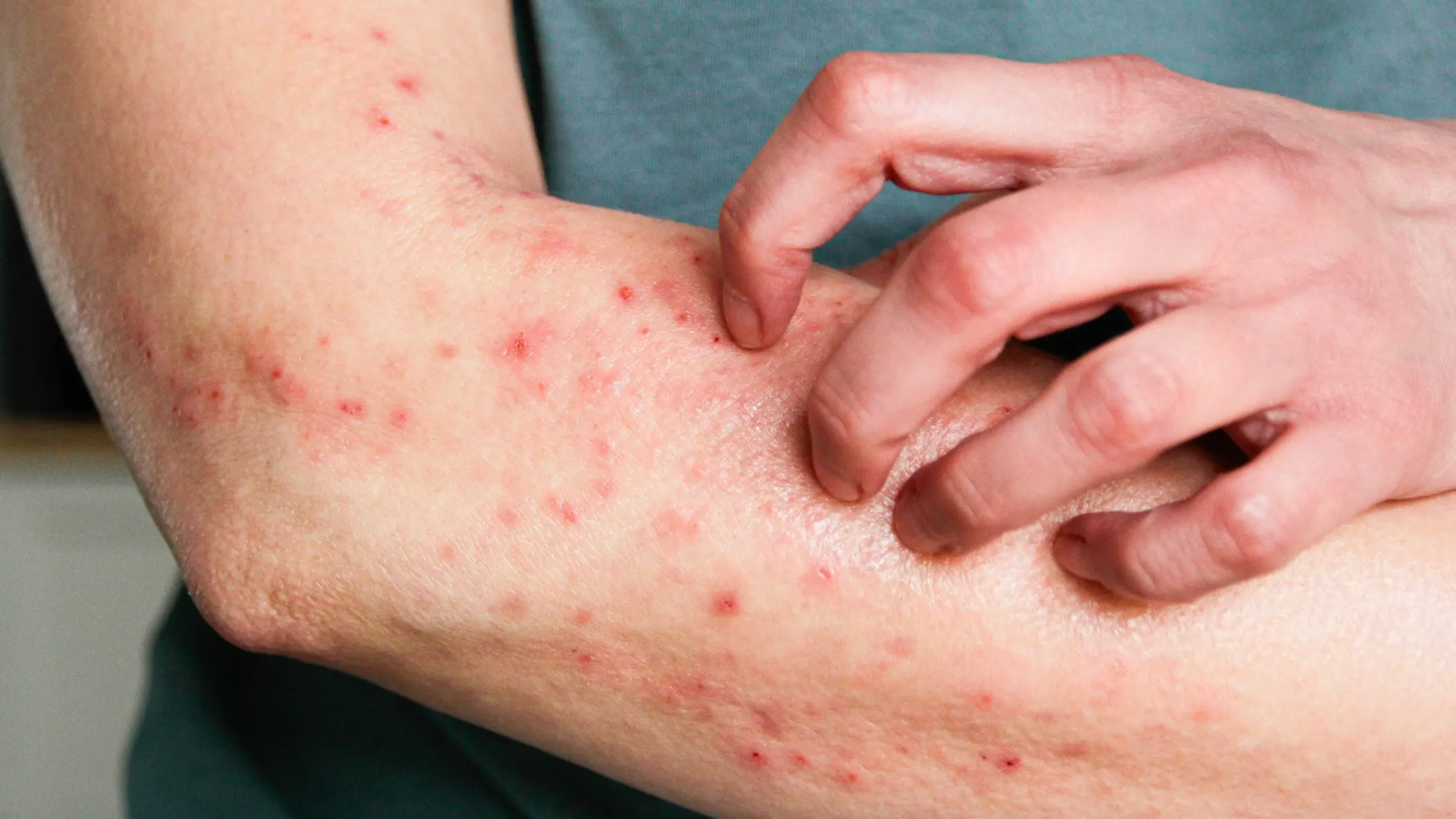
Reason psoriasis and eczema are flaring up for so many Brits right now

The weather in the UK has been doing all sorts this year and it's clear that, for many of us, our skin hasn't been having a good time.
Repeated heatwaves have brought soaring temperatures, before sudden dips have sent the mercury tumbling again.
Those abrupt changes in temperature can be uncomfortable enough for the rest of us, but for people with sensitive skin, they can cause even more trouble.
Going from hot, humid days to cooler, drier conditions can leave skin struggling to adjust, potentially triggering flare-ups of common health conditions including eczema and psoriasis.
Advert
Dr Memee Ahmad of SkinCouture exclusively explained to Tyla all we need to know on the matter and how to best navigate a skin flare-up amidst the crazy weather.
"Your skin relies on a barrier layer that keeps water in and irritants out," he said. "During a heatwave, you sweat more, and sweat itself can irritate skin that’s already prone to eczema, sometimes triggering flares on its own."
The expert added that the air is also usually more humid, so your skin gets used to that.
"Then the temperature drops fast, the air turns dry, and your skin can’t keep up," Dr Ahmad continued. "That mismatch is often worse than the cold itself."
For eczema, Dr Ahmad singled out cold dry air as 'the main problem'.
"It pulls moisture out through a barrier that’s already weaker than normal, so irritants and allergens get in more easily, and the itching gets worse," he outlined. "Turning the heating on indoors makes this worse too, since it dries the air out even further."
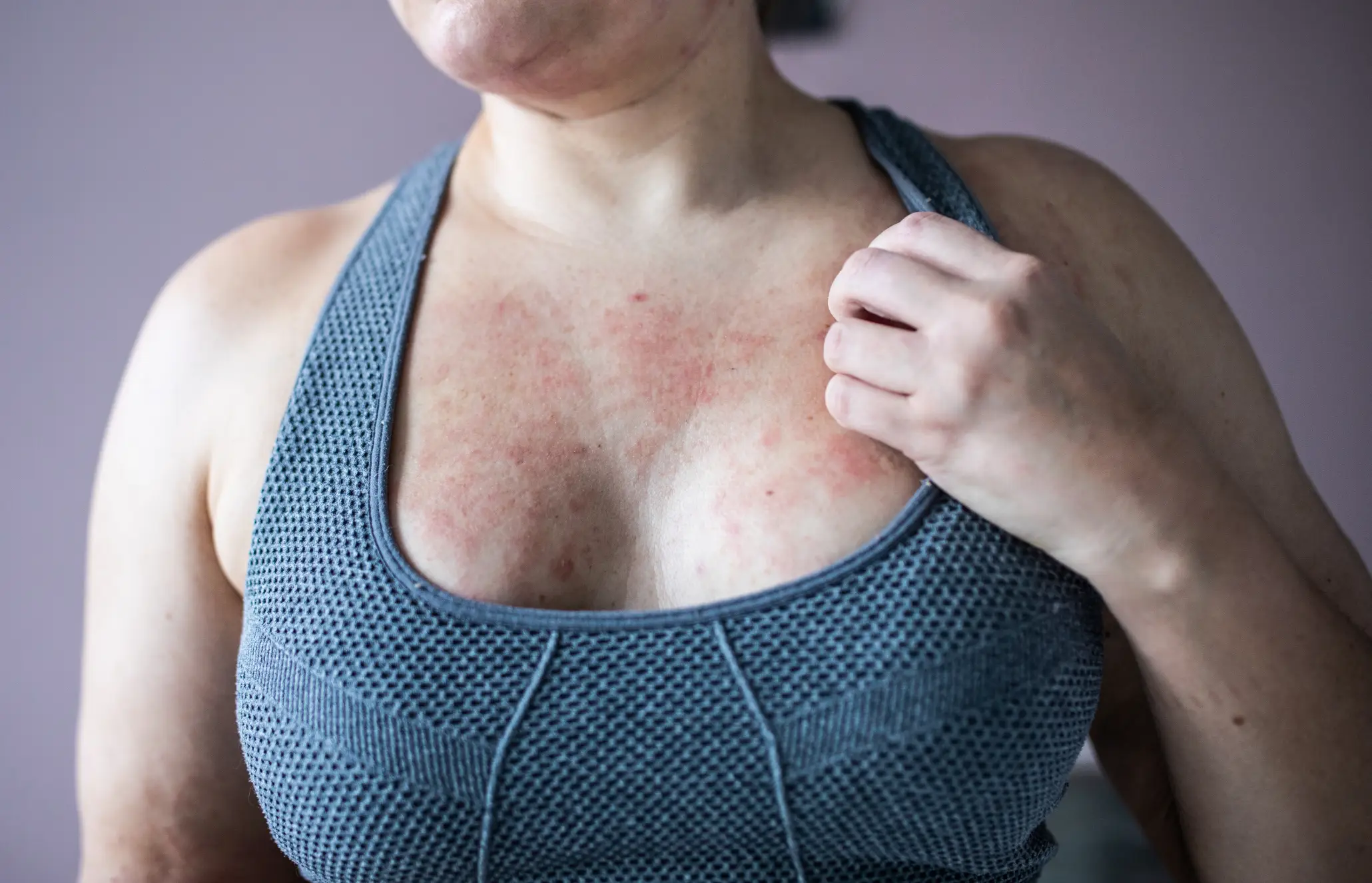
Psoriasis, however, flares in winter for slightly different reasons.
"Less sunlight means less vitamin D production in the skin, and vitamin D actually helps calm down the skin cell turnover that drives psoriasis," Dr Ahmad said.
"Cold weather also makes skin more prone to cracking and minor injury, and in psoriasis, any trauma to the skin, even a scratch, can trigger a new patch to form nearby. This is a well-documented effect called the Koebner phenomenon."
The expert also pointed to several studies tracking psoriasis severity through the year that consistently show it’s worse in winter than summer.
"So it’s not really about heat being bad or cold being bad," Dr Ahmad resolved. "It’s the switch between them that catches skin out, especially when it happens quickly.
"The best approach if you know your skin is sensitive to this is to get ahead of it: keep using a good emollient and try to keep indoor humidity up, rather than waiting for the flare to start before you act."
Topics: Health, Skincare, Tyla Exclusive, Weather
 Rhiannon Ingle